Fabric Protection in Saratoga Springs
24/7 fabric protection in Saratoga Springs and surrounding areas. IICRC-certified, insurance billing accepted. Call (801) 995-2437.
A glass of red wine tips over on your cream-colored sofa. A muddy dog bounds across the living room carpet. A child grinds a crayon into the upholstered dining chair. In each case, the difference between a permanent stain and a quick cleanup often comes down to whether a protective barrier was already in place, applied correctly, at the fiber level, before the spill ever happened. Fabric protection is preventive work, and like most preventive work, it’s dramatically cheaper than the restoration it replaces.
What fabric protection actually involves
Professional fabric protection means applying a fluoropolymer or silicone-based treatment, products like Scotchgard or equivalent commercial-grade formulations, that bonds to individual carpet and upholstery fibers and creates a hydrophobic, oleophobic barrier. That barrier doesn’t make fabric bulletproof, but it buys you time: liquids bead up and sit on the surface rather than wicking into the fiber core, giving you a realistic window to blot and remove a spill before it sets.
The difference between a professional application and a DIY spray-can approach is penetration and uniformity. Over-the-counter products deposit a thin, uneven coat that wears off quickly, often within weeks under foot traffic. Professional application uses higher-concentration solutions, commercial spray equipment calibrated to the fiber type, and a grooming step that works the treatment into the pile rather than just coating the tips. On carpet, that means the protection survives vacuuming and moderate foot traffic for 12–18 months under normal household conditions. On upholstery, where abrasion patterns differ, reapplication every 12 months is typical.
The process works on most natural and synthetic fibers, wool, nylon, polyester, olefin, and blended fabrics, though the product formulation and dwell time vary by fiber content. Silk and certain delicate weaves require a different approach or may not be candidates at all, which is why fiber identification is part of every job.
Our process
-
Fiber identification and pre-inspection. Before any product touches your fabric, the technician identifies the fiber content, either from the manufacturer tag or with a burn test for unlabeled pieces, and checks for existing stains, wear patterns, and any areas where the fiber is damaged or delaminated. Treating over existing stains can lock them in permanently, so pre-existing spots are flagged and addressed first.
-
Pre-cleaning. Fabric protection bonds to clean fibers, not to embedded soil, oils, or residue from previous protector applications. Carpet receives a thorough vacuuming; upholstery is vacuumed with an upholstery tool and inspected for surface oils from skin contact (common on armrests and headrests). If the fabric needs a full professional cleaning first, that’s scheduled before protection, not skipped.
-
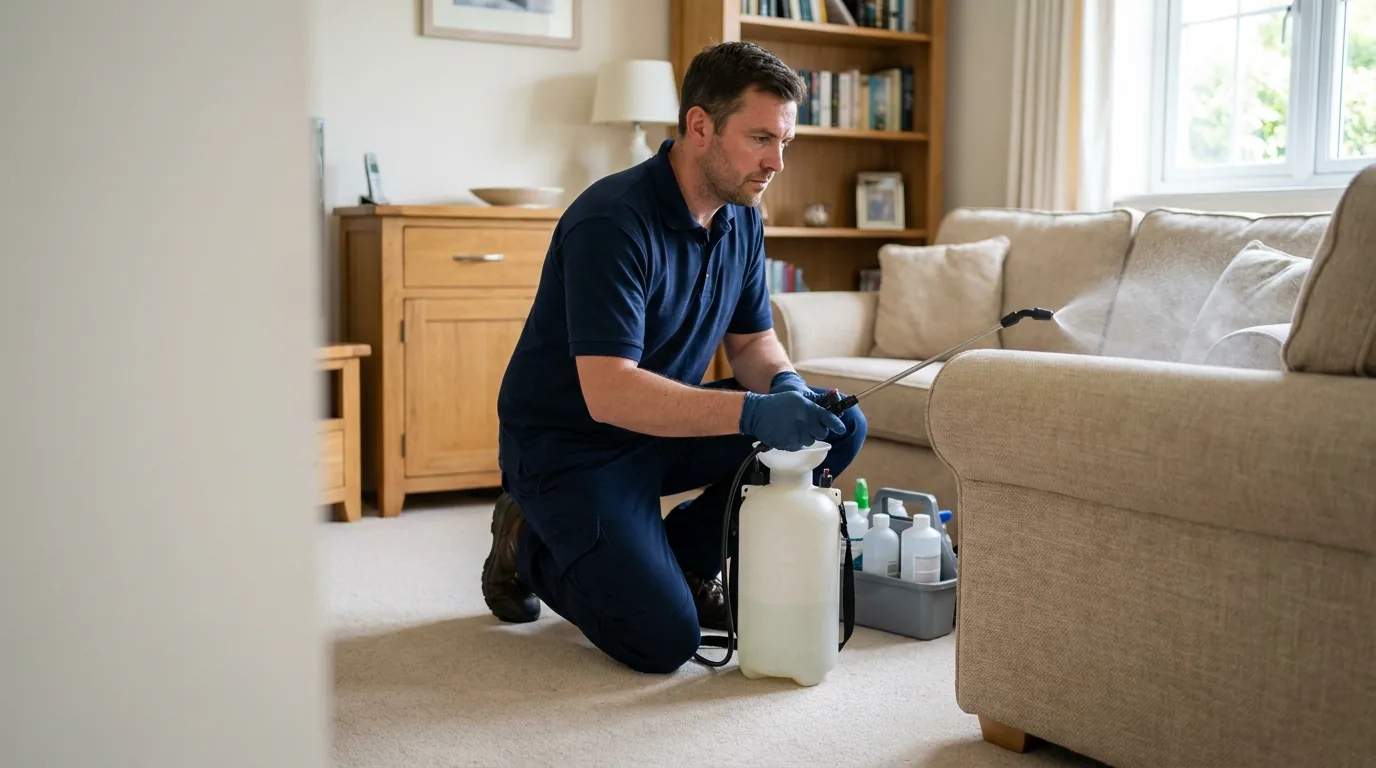
Application. The protector is applied using a commercial sprayer set to the appropriate pressure and droplet size for the substrate. Carpet is treated in overlapping passes to ensure even coverage, then groomed with a carpet rake to distribute the product into the pile. Upholstery is sprayed in sections, working with the fabric’s nap or weave direction. Application rate is measured, too light and the barrier is insufficient; too heavy and the fabric can feel stiff or attract soil faster.
-
Dwell and cure. The treated area needs time to cure before use. Carpet typically requires 2–4 hours of drying time; upholstery may need slightly longer depending on fabric weight and ambient humidity. Fans are used to accelerate drying without disturbing the treatment. The technician confirms the surface is dry and the protector has cured before the area is returned to use.
-
Documentation and care instructions. You receive written documentation of what was treated, the product used, and the recommended reapplication timeline. The technician walks through care instructions, specifically, how to respond to a spill in the window before the protector is overwhelmed, so the investment actually performs as intended.
What separates a good fabric protection application from a bad one
The most common failure point is skipping the pre-clean. A protector applied over soiled carpet or oily upholstery doesn’t bond uniformly to the fiber, it bonds to the soil, which then releases, taking the protection with it. The fabric looks treated but performs like it wasn’t.
The second common mistake is using diluted or expired product. Commercial protectors have shelf lives and mixing ratios that matter. A solution that’s too weak won’t form an adequate barrier; one that’s been improperly stored may have degraded entirely. Professional-grade product, properly mixed and applied within its working life, is what produces the 12–18 month performance window.
A subtler issue is applying protection to fabric that’s already been damaged by a previous improper stain removal attempt, scrubbing, bleach, or the wrong solvent. Those areas won’t accept the protector evenly and may show as dull or stiff patches after treatment. A thorough pre-inspection catches this before application.
Seasonal and regional considerations
Saratoga Springs sits at roughly 4,500 feet elevation, and Utah’s high-desert climate means low ambient humidity for much of the year, which is actually favorable for fabric protection work. Protectors cure faster in dry conditions, and the arid climate means fabrics aren’t fighting ongoing moisture absorption the way they would in a coastal environment. That said, the region’s sandy, alkaline soil tracks in easily on shoes and pet paws, and the UV intensity at elevation accelerates fiber degradation over time. Both factors make a durable protective barrier more valuable here than in milder climates, and both argue for annual reapplication on high-traffic areas.
Service area
Home Pride Restoration and Cleaning is based in Saratoga Springs and serves the surrounding communities throughout Utah County and beyond, including Eagle Mountain, Lehi, American Fork, Cedar Hills, Highland, and Pleasant Grove. City-specific pages for each area link back here for the full technical detail on how fabric protection works.
Ready to protect your carpets and upholstery before the next spill happens? Call (801) 995-2437 to schedule your fabric protection application, and ask about bundling it with a professional cleaning for the best long-term results.
Frequently Asked Questions
How long does professional fabric protection actually last on carpet versus upholstery?
Does the carpet or upholstery need to be cleaned before fabric protection is applied?
What fibers can and can't be treated with fabric protection?
If a spill happens on treated fabric, what's the correct way to respond?
Is there a meaningful difference between professional fabric protection and store-bought Scotchgard spray cans?
Looking for the best fabric protection company in Saratoga Springs?
Home Pride Restoration and Cleaning provides licensed and insured fabric protection in Saratoga Springs, UT and the surrounding area, and has served local property owners since 1997. Customers rate us 5.0 out of 5 stars across 36 Google reviews. We answer calls 24/7 — call (801) 995-2437 for immediate help.
Need Fabric Protection now?
We respond 24/7 across Saratoga Springs and surrounding UT cities.
Related Coverage
- Our Restoration Services
- Contact Home Pride Restoration and Cleaning
- Fabric Protection in American Fork
- Fabric Protection in Eagle Mountain
- Fabric Protection in Herriman
- Fabric Protection in Lehi
- Fabric Protection in Orem
- Fabric Protection in Pleasant Grove
- Fabric Protection in Provo
- Fabric Protection in Riverton
- Fabric Protection in South Jordan