
Fabric Protection in Saratoga Springs
24/7 fabric protection in Saratoga Springs, UT. IICRC-certified, insurance billing accepted. Call (801) 995-2437.
Our IICRC-certified technicians are headquartered right here in Saratoga Springs and are typically on-site within 60 minutes of your call.
Saratoga Springs sits at roughly 4,500 feet elevation on the western bench of Utah Lake, where high-desert sun, alkaline dust off the dry lakebed, and hard water from the local municipal supply create a surprisingly punishing environment for upholstered furniture and carpet. That fine white mineral dust works deep into fiber loops and accelerates dye fading, while the intense UV exposure from 300-plus sunny days a year breaks down factory-applied stain resistance faster than you’d see in a shadier climate. Applying a professional fabric protection treatment before those conditions do their damage is one of the highest-return investments a Saratoga Springs homeowner can make.
Why Saratoga Springs Fabrics Take a Harder Hit Than Most
The soil around Utah Lake is high in calcium carbonate and silica — the same minerals that leave white rings on your shower door also grind against carpet fibers with every footstep, cutting the yarn and opening it up to staining. Combine that with the hard water delivered through the city’s system (measured consistently above 300 mg/L total dissolved solids in this service area), and you get a one-two punch: abrasive particulates weaken the fiber, then mineral-laden water wicks stains deeper and makes them harder to lift.
Saratoga Springs has grown rapidly since the early 2000s, and the majority of the housing stock consists of production-built homes in the 1,800–3,200 square-foot range, most with wall-to-wall carpet in bedrooms and main living areas. These homes typically shipped with builder-grade carpet that carried a light factory scotchgard application — one that’s largely depleted after two or three professional cleanings if it isn’t refreshed. Upholstered sectionals and microfiber sofas in open-concept great rooms face direct afternoon sun through west-facing windows, accelerating that breakdown even faster.
Our Fabric Protection Process in Saratoga Springs
Before any protectant goes down, the surface has to be genuinely clean — not just visually clean. Alkaline dust and hard-water mineral deposits left under a protectant layer will continue abrading fibers and can actually trap odors beneath the treatment. Our technicians start with a thorough pre-vacuum and, where needed, a low-moisture pre-treatment to neutralize mineral residue, particularly on carpet installed in homes near the lake corridor where windblown dust accumulation is heaviest.
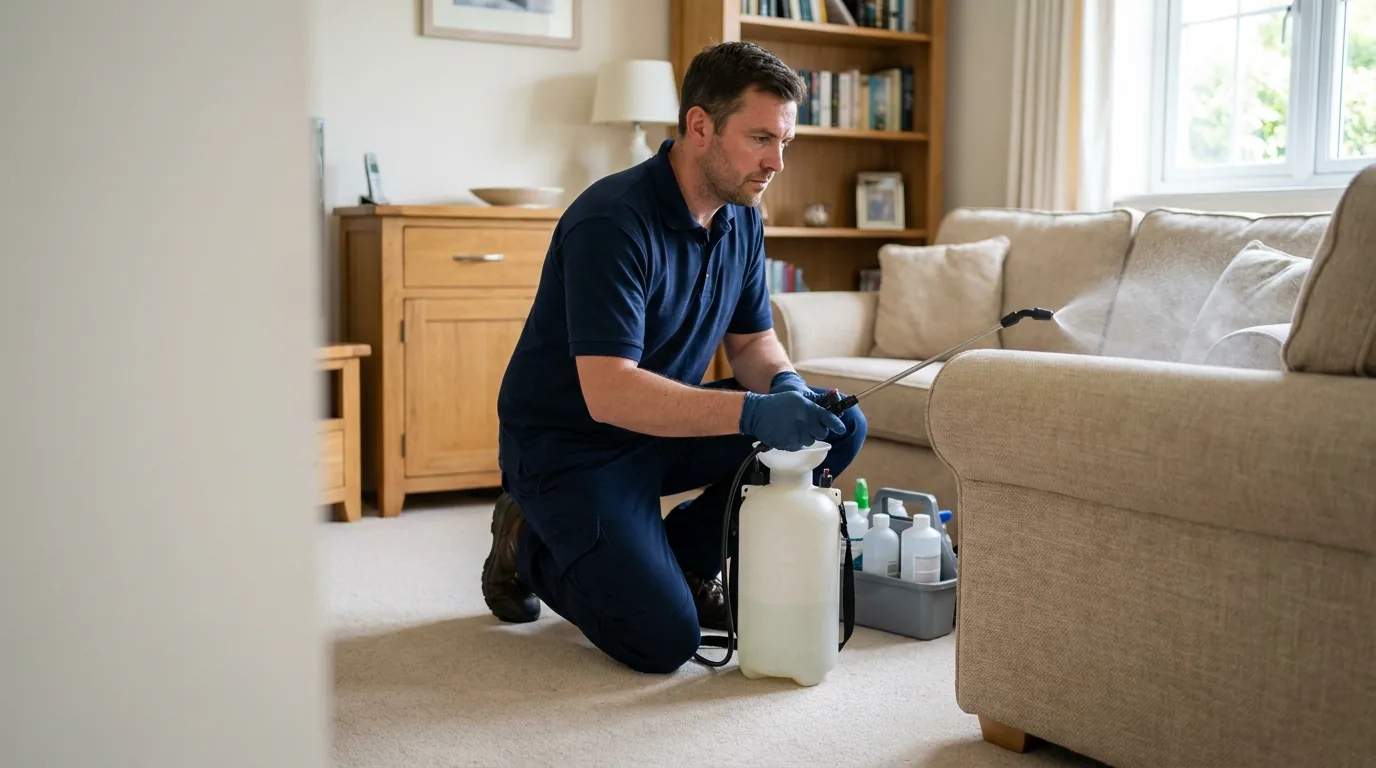
Once the surface is prepped, we apply a fluoropolymer-based fabric protectant — the same chemistry behind professional-grade stain guard products — using a fine-mist pressurized sprayer calibrated for even coverage without over-saturation. For upholstery, we work section by section, paying extra attention to seat cushion tops, armrests, and any areas that see direct sun exposure. Dwell time and drying conditions matter: in Saratoga Springs’s low-humidity climate (average indoor relative humidity often drops below 20% in winter), the protectant cures faster than it would in a coastal environment, which means we can typically clear furniture for light use within two hours rather than the four-hour window common in higher-humidity regions.
For carpet, we apply the treatment after any scheduled cleaning service and groom the fibers with a pile brush to ensure the protectant bonds uniformly rather than pooling at the base of the yarn.
Equipment and Application Methods
The sprayer pressure and nozzle tip size we use are adjusted based on fabric weight and weave. A tight-weave performance fabric on a sectional needs a finer mist at lower pressure than a cut-pile carpet that benefits from slightly deeper penetration. We carry multiple tip configurations on every truck so the calibration happens on-site, not by guessing.
For delicate upholstery — silk blends, linen, or any fabric with a dry-clean-only label — we use a solvent-carrier protectant rather than a water-carrier formula, which eliminates any risk of water rings or shrinkage. We test a small inconspicuous area before full application on any fabric we haven’t treated before, and we document the test result.
All protectants we use are low-VOC formulations that meet current indoor air quality standards, which matters in a community where many households include young children and pets.
Local Note
One pattern we see consistently in newer Saratoga Springs subdivisions: homes built between 2010 and 2018 often have carpet installed over a thicker pad than current builds, which means the carpet sits slightly higher and gets more airflow — good for drying after cleaning, but it also means the carpet acts almost like a filter, trapping more of that fine Utah Lake dust per square foot than you’d expect. Homeowners in these neighborhoods who vacuum weekly still notice their carpet looking dull faster than neighbors with harder flooring. A refreshed protectant application every 12–18 months, timed after a professional cleaning, makes a measurable difference in how long that carpet holds its original color and texture.
If you’re ready to protect your carpet and upholstery before Saratoga Springs’s next dry, dusty stretch, call Home Pride Restoration and Cleaning at (801) 995-2437. We’re headquartered here in Saratoga Springs, and most appointments in the 84045 area can be scheduled within a day or two — no long waits, no subcontractors.
Headquartered right here in Saratoga Springs — ★ 5.0 · 34 Google reviews
“I’ve hired Curt multiple times for carpet cleaning and once for a couch cleaning and he does a great job every time! Affordable, friendly, reliable. 10/10 recommend!” — Shannon, June 2026
Fabric Protection in Saratoga Springs: Service Coverage Map
Frequently Asked Questions
How fast can you arrive for fabric protection in Saratoga Springs?
How does Saratoga Springs's hard water affect how long fabric protection lasts?
Does the intense UV exposure in Saratoga Springs change how you apply protectant on upholstery near windows?
My home in the 84045 ZIP code was built around 2012 with builder-grade carpet — is it worth protecting at this point?
What's the drying time after a fabric protection application in Saratoga Springs's dry climate?
Can fabric protection be applied to outdoor patio furniture cushions common in Saratoga Springs backyards?
Will my homeowners insurance cover fabric protection in Saratoga Springs?
Fabric Protection response in Saratoga Springs
Most Saratoga Springs calls see a technician on-site within 60 minutes from our Saratoga Springs headquarters.