Storm Damage Restoration in Saratoga Springs
24/7 storm damage restoration in Saratoga Springs and surrounding areas. IICRC-certified, insurance billing accepted. Call (801) 995-2437.
A storm doesn’t announce when it’s done damaging your home. The wind stops, the rain moves on, and then the real problems start. Water pools under roof decking before you notice the ceiling stain. A downed tree punches through the fascia and leaves a gap that soaks the wall cavity for days. Hail cracks flashing that looks fine from the ground but lets every subsequent rain in deeper. Storm damage restoration is the work of finding every entry point, stopping the bleeding, and rebuilding what the weather took apart, before secondary damage turns a repair into a reconstruction.
What storm damage restoration actually involves
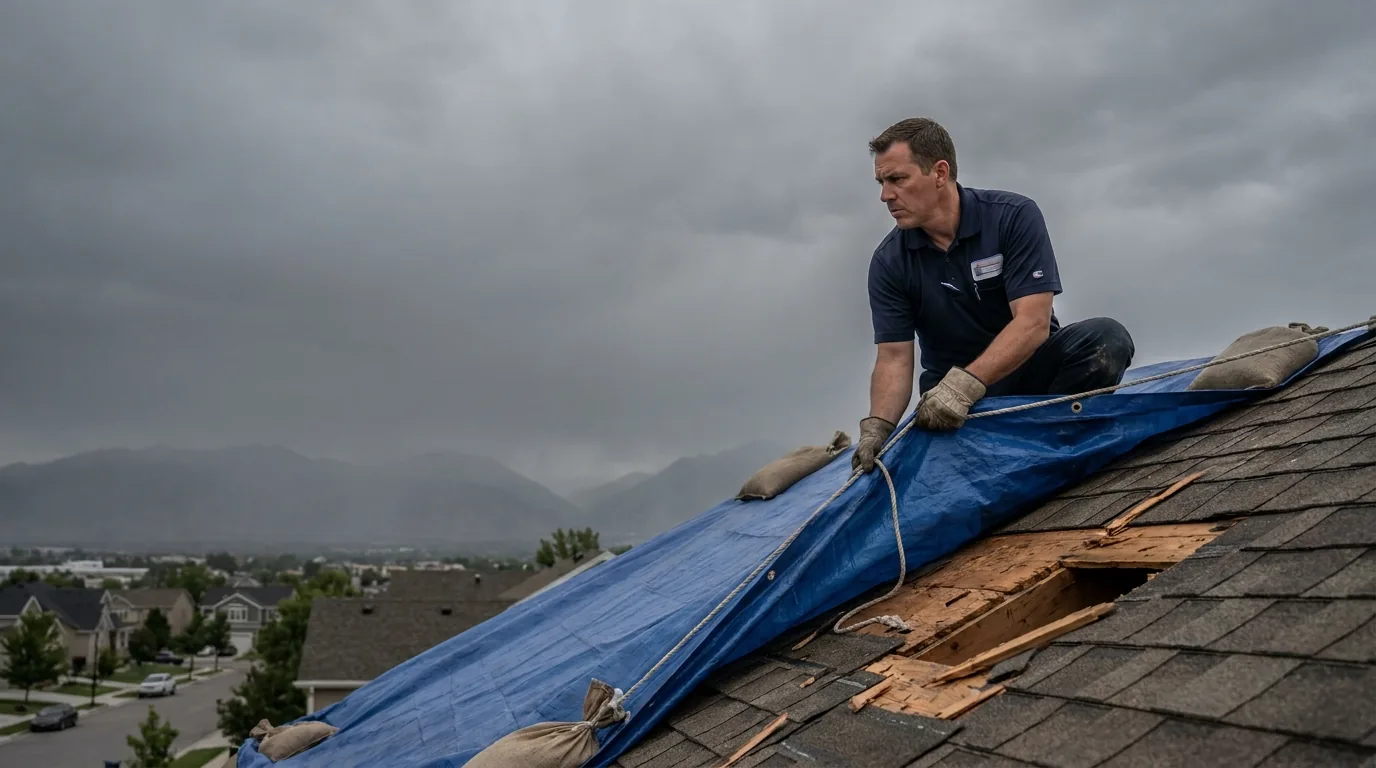
Storm damage is rarely one thing. A single severe weather event can combine structural impact (a tree limb through the roof), wind-driven water intrusion (rain forced horizontally behind siding or through window gaps), and hail damage to roofing, gutters, and exterior finishes, all at once. The work involves emergency tarping and board-up to stop ongoing exposure, water extraction and structural drying for any intrusion that’s already occurred, debris removal, and then the repair and rebuild phase that restores the envelope of the home.
Equipment on a storm job typically includes industrial-grade tarps and fastening systems rated for continued weather exposure, truck-mounted or portable extraction units for standing water, high-capacity desiccant or refrigerant dehumidifiers, and thermal imaging cameras to locate moisture that’s migrated into wall cavities or subfloor systems. Depending on how long the structure was exposed before crews arrived, moisture readings in framing can be significantly elevated even when surfaces appear dry to the touch.
Timeline varies with severity. Emergency stabilization, tarping a breached roof, boarding a broken window, extracting standing water, happens within hours of your call. Structural drying typically runs 3–5 days with active equipment in place. Repair and reconstruction scope is scoped after drying is complete and a full damage assessment has been documented.
Our process
-
Emergency stabilization. The first priority is stopping new damage. That means roof tarping over any breached decking, boarding up broken windows or doors, and sandbagging or diverting water away from the foundation if drainage is compromised. Every hour a structure stays open to weather adds to the scope.
-
Full-envelope damage assessment. Once the structure is stabilized, a systematic inspection documents every point of entry and every area of secondary moisture migration. This includes thermal imaging of walls, ceilings, and floors adjacent to the breach, not just the obvious impact zone. This documentation is also what your insurance adjuster will need to process the claim accurately.
-
Water extraction and structural drying. Any water that entered the structure gets extracted and then dried with calibrated equipment. Moisture readings are logged daily against drying targets so there’s an objective record that framing, sheathing, and finish materials have returned to acceptable moisture content before any repairs begin. Rebuilding over wet framing is one of the most common and costly mistakes in storm repair.
-
Debris removal and structural repair. Once the structure is dry and documented, debris is cleared, damaged framing is sistered or replaced, roofing and siding are repaired or replaced, and interior finishes are restored. Work is performed under Utah contractor license #RC-25-0737.
-
Final inspection and documentation package. A completed job includes a written damage and repair summary, moisture log records, and photo documentation, the package your insurance carrier needs to close the claim and that you keep as a record of the repairs made.
What separates a good storm damage response from a bad one
The most common failure in storm damage work is treating the visible damage as the whole job. A tree limb through a roof is obvious. The water that ran down the interior of that wall for three days before anyone arrived is not, until mold colonizes the cavity six weeks later or the drywall starts to buckle. Experienced operators use thermal imaging and calibrated moisture meters on every surface adjacent to the breach, not just the breach itself.
A second common gap is inadequate emergency tarping. A tarp that’s undersized, improperly fastened, or not lapped correctly over the ridge will admit water in the next rain event, which in Utah’s spring and monsoon seasons can be the very next day. The tarp is a temporary roof, and it needs to be installed like one.
Insurance adjusters look for dated photo documentation of the breach before and after stabilization, moisture readings with equipment serial numbers and calibration dates, and a clear line between storm-caused damage and pre-existing conditions. A well-documented job moves through the claims process faster and with fewer disputes.
Seasonal and regional considerations
Saratoga Springs and the broader Utah Valley see a specific storm calendar worth knowing. Late spring brings the highest risk of high-wind events and hail, often with little warning. Summer monsoon moisture pushes in from the southwest in July and August, producing fast, intense storms that can overwhelm gutters and window flashing on homes that handled spring storms without obvious damage. Early fall can bring wet, heavy snow before trees have dropped their leaves, the combination that puts the most limbs through roofs in this region. Homes in the newer developments along the west bench tend to have larger roof planes and fewer mature trees, while older neighborhoods closer to the lake have mature cottonwoods and box elders that become projectiles in high-wind events.
Service area
Home Pride Restoration and Cleaning is based in Saratoga Springs and responds to storm damage throughout Utah Valley and the surrounding region, including Eagle Mountain, Lehi, American Fork, Highland, Cedar Hills, and Pleasant Grove. The storm damage restoration × city pages for each of these communities link back here for full service detail.
If your home or property took damage in the last storm, or if you’re looking at a ceiling stain and wondering whether that old wind event is the reason, call (801) 995-2437 to schedule a storm damage assessment. The sooner the structure is documented and dried, the smaller the repair scope stays.
Frequently Asked Questions
My roof was breached during the storm but it's not raining right now. Do I still need emergency tarping right away?
How do I know if water got into my walls after a storm, even if I don't see visible staining?
What documentation does my insurance company typically require for a storm damage claim?
A tree fell on my roof but the damage looks minor from the attic. Can I just patch it myself?
How long after a storm can mold begin developing in water-damaged areas of my home?
Looking for the best storm damage restoration company in Saratoga Springs?
Home Pride Restoration and Cleaning provides licensed and insured storm damage restoration in Saratoga Springs, UT and the surrounding area, and has served local property owners since 1997. Customers rate us 5.0 out of 5 stars across 36 Google reviews. We answer calls 24/7 — call (801) 995-2437 for immediate help.
Need Storm Damage Restoration now?
We respond 24/7 across Saratoga Springs and surrounding UT cities.
Related Coverage
- Our Restoration Services
- Contact Home Pride Restoration and Cleaning
- Storm Damage Restoration in American Fork
- Storm Damage Restoration in Eagle Mountain
- Storm Damage Restoration in Herriman
- Storm Damage Restoration in Lehi
- Storm Damage Restoration in Orem
- Storm Damage Restoration in Pleasant Grove
- Storm Damage Restoration in Provo
- Storm Damage Restoration in Riverton
- Storm Damage Restoration in South Jordan
- Storm Damage Insurance Claim Checklist (Use This Before You Call Your Insurer)