Fabric Protection in American Fork
24/7 fabric protection in American Fork, UT. IICRC-certified, insurance billing accepted. Call (801) 995-2437.
Our IICRC-certified technicians are dispatched from our Saratoga Springs, UT headquarters and are typically on-site in American Fork within 60 minutes of your call.
American Fork sits at roughly 4,600 feet elevation along the Wasatch Front, where summer afternoons bring intense UV exposure, dry heat, and the kind of fine red-clay dust that blows in from the surrounding benchlands and settles deep into upholstery fibers before you even notice it. That combination, UV degradation, low humidity that makes fabrics brittle, and gritty particulate soil, means the sofas, area rugs, and carpets inside American Fork homes face stressors that coastal or humid-climate products aren’t engineered to handle the same way. Fabric protection applied correctly here isn’t just about spills; it’s about extending the life of textiles against a genuinely harsh environment.
Why American Fork Homes Benefit from Fabric Protection
The housing stock in American Fork skews toward large, family-oriented floor plans, many built in the 1990s and 2000s boom that accompanied tech-corridor growth along the I-15 corridor near 84003. Those homes tend to feature wall-to-wall carpet in bedrooms and finished basements, plus microfiber and performance-fabric sectionals that are popular with growing families. Microfiber looks stain-resistant on the showroom floor, but without a proper fluoropolymer treatment, its tight weave actually traps fine soil and oils at the fiber base where standard vacuuming can’t reach. Meanwhile, the low relative humidity common to Utah Valley winters, often dropping below 20% indoors, causes untreated fabric fibers to lose elasticity, making them more susceptible to abrasion and permanent soiling.
Spring and early summer bring another challenge: the Jordan River Parkway corridor and the open fields near the mouth of American Fork Canyon funnel wind events that carry cottonwood seed, pollen, and fine silica dust directly into homes through screen doors and HVAC intakes. That airborne debris accumulates on horizontal upholstery surfaces and works into carpet pile, where it acts like sandpaper on fiber strands over time. A fluoropolymer stain-guard treatment creates a molecular barrier that keeps those particles from bonding to the fiber, making routine vacuuming dramatically more effective.
Our Fabric Protection Process in American Fork
Every fabric protection job starts with a fiber identification step, wool, nylon, polyester, olefin, and natural-blend textiles each respond differently to protective chemistry, and using the wrong product can cause yellowing or change the hand-feel of the fabric. For most residential carpet in American Fork, a water-based fluoropolymer formula is applied after a thorough hot-water extraction cleaning, because protection bonds best to a clean fiber surface. Applying stain guard over embedded soil just seals the problem in.
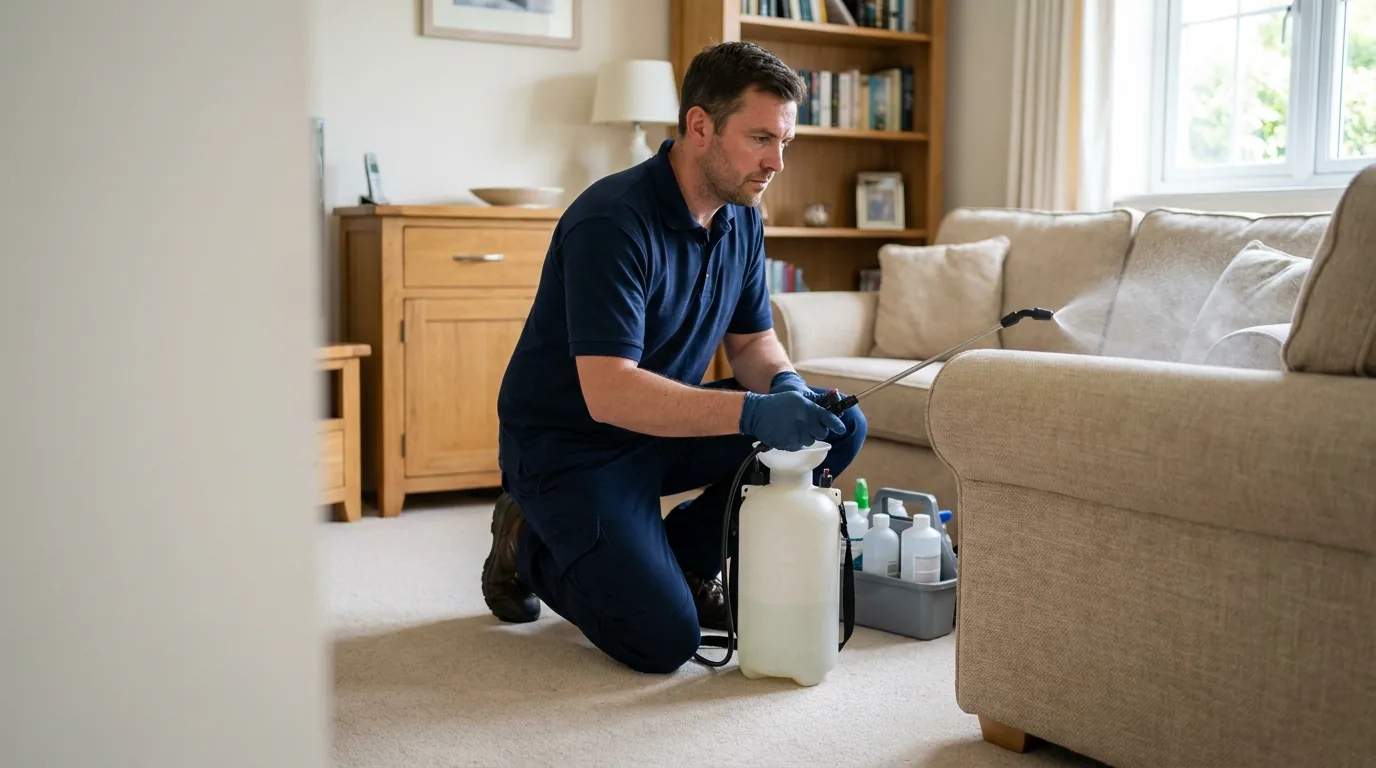
For upholstered furniture, sectionals, dining chairs, ottomans, the application method shifts. A fine-mist spray ensures even coverage across seams and tufted areas where liquid tends to pool. Drying time in American Fork’s low-humidity climate is actually faster than the national average; most treated pieces are dry to the touch within 45–60 minutes rather than the 90-minute window common in more humid regions. We test the cure with a water-bead check before leaving the home, so there’s no guesswork about whether the treatment took.
For area rugs, especially the wool and wool-blend rugs popular in newer American Fork construction, we apply protection on-site after cleaning, then advise on rotation schedules to account for the UV exposure that comes through south- and west-facing windows common in the valley’s grid-oriented neighborhoods.
Local Note: Dust and the American Fork Canyon Wind Effect
Something worth knowing if you live near the mouth of American Fork Canyon: the canyon acts as a natural wind tunnel on summer afternoons, accelerating air down toward the valley floor and carrying fine limestone and granite particulate from higher elevations. Homes within roughly a mile of the canyon mouth, particularly those on the east side of town near the canyon road, see noticeably heavier airborne soil loading than properties closer to the freeway corridor. If your home is in that zone, we typically recommend re-treating high-traffic upholstery and carpet annually rather than the standard 18–24 month interval, and we’ll note that recommendation in the service record we leave with you.
Scheduling and Response for American Fork
Home Pride Restoration and Cleaning operates out of Saratoga Springs, roughly 10–12 minutes from most American Fork addresses via UT-73 east to US-89 north. For fabric protection appointments, which are scheduled rather than emergency calls, we offer morning and afternoon windows Monday through Saturday. Most residential jobs covering a living room, one or two bedrooms, and a sectional are completed in two to three hours. We confirm the appointment window the day before and send a technician arrival notification so you’re not waiting around.
For homeowners in the 84003 ZIP code who are also scheduling a carpet cleaning in the same visit, combining services saves a mobilization trip and ensures the protection is applied immediately after extraction while fibers are still in optimal condition for bonding.
If your furniture or carpet is still under manufacturer warranty, ask us about documentation, some warranties require proof of professional protective treatment to remain valid, and we provide a written service record that satisfies most manufacturer requirements.
Ready to protect your home’s textiles before the next round of canyon dust or a summer full of family traffic? Call Home Pride Restoration and Cleaning at (801) 995-2437 to schedule fabric protection service in American Fork.
Serving American Fork from our Saratoga Springs headquarters — ★ 5.0 · 36 Google reviews
“He did an amazing job! My stairs were so bad and they looked brand new when he got done!” — B, August 2026Read our reviews on Google →
Fabric Protection in American Fork: Service Coverage
Frequently Asked Questions
How fast can you arrive for fabric protection in American Fork?
How does American Fork's dry climate affect how long fabric protection lasts?
Does fabric protection work on the microfiber sectionals common in newer American Fork homes?
Can fabric protection be applied to wool area rugs in American Fork homes?
How much does fabric protection typically cost for a home in the 84003 ZIP code?
Do American Fork HOAs or builder warranties require professional fabric protection documentation?
Will my homeowners insurance cover fabric protection in American Fork?
Fabric Protection response in American Fork
Most American Fork calls see a technician on-site within 60 minutes from our Saratoga Springs headquarters.