Mold Remediation in Saratoga Springs
24/7 mold remediation in Saratoga Springs and surrounding areas. IICRC-certified, insurance billing accepted. Call (801) 995-2437.
You notice it first by smell, a damp, earthy odor behind the drywall that wasn’t there last season. Then you spot the discoloration along the baseboard, or the fuzzy patch spreading across the ceiling corner above the shower. Mold colonizes fast: given moisture and an organic surface, certain species can establish visible growth within 24 to 48 hours. By the time most homeowners call, the colony is already weeks old and the spore count in the air has climbed well above what a box fan and a bottle of bleach can address.
What mold remediation actually involves
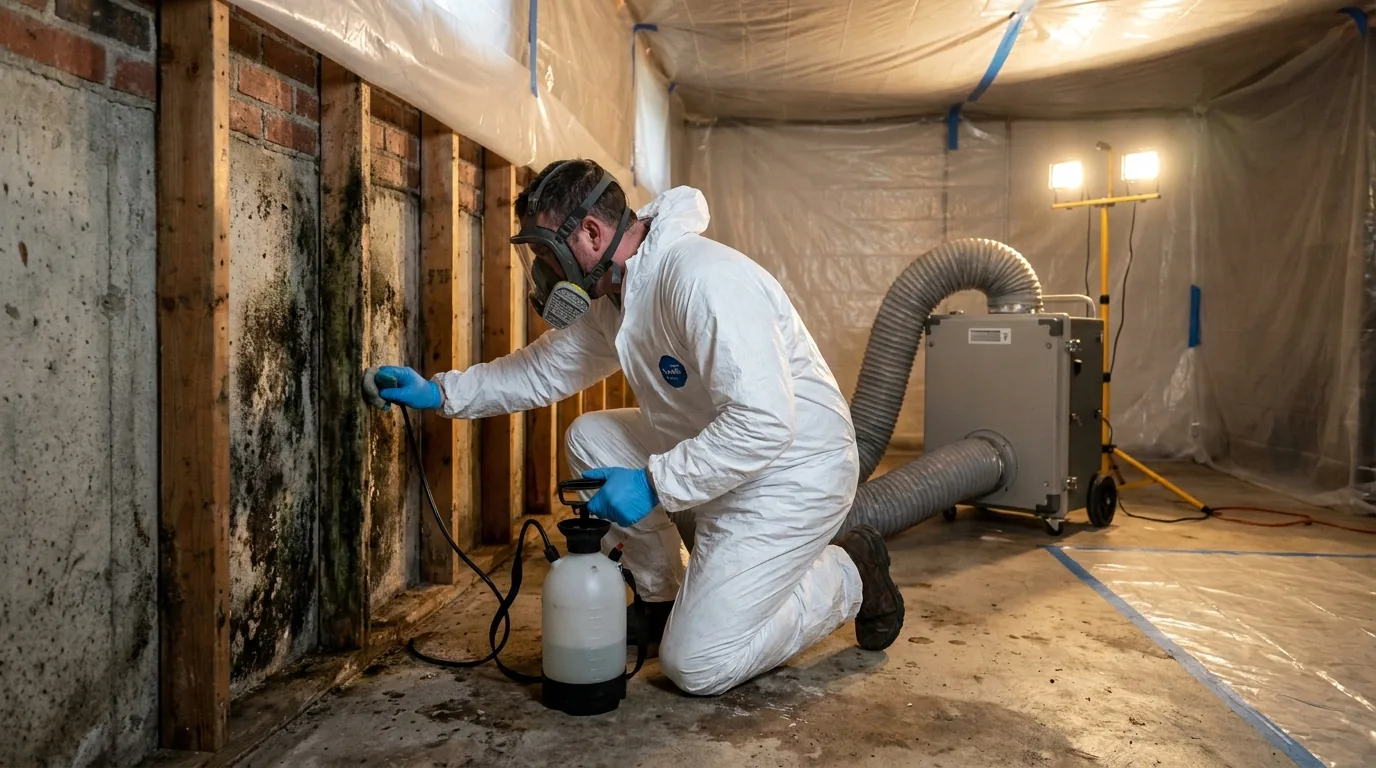
Mold removal is not cleaning. The distinction matters because scrubbing a surface without controlling airborne spores typically makes the problem worse, disturbed colonies release spores that travel through HVAC systems and resettle on new surfaces within hours. Professional mold abatement is a containment-first discipline: the work area is sealed, air pressure is managed, and every step is sequenced to prevent cross-contamination before a single affected material is touched.
The equipment on a legitimate remediation job includes negative air machines with HEPA filtration (capturing particles down to 0.3 microns), industrial air scrubbers, containment barriers with zipper-door access, and moisture meters to confirm the source has been addressed. Depending on the extent of growth, affected drywall, insulation, and framing may need to be removed entirely, mold that has penetrated porous materials cannot be cleaned off the surface; the substrate has to go. Jobs in Saratoga Springs homes frequently involve crawl spaces and basement rim joists, where Utah’s seasonal temperature swings create persistent condensation points that feed long-term mold growth.
A full remediation project typically runs two to five days for a contained area (a single bathroom or crawl space), longer when growth has spread across multiple rooms or into the HVAC system.
Our process
-
Inspection and moisture source identification. Before containment goes up, we locate the moisture source driving the growth, whether that’s a slow pipe leak, inadequate vapor barrier in the crawl space, or condensation from a poorly insulated duct. Remediating mold without fixing the moisture source is a temporary fix at best.
-
Containment and negative air pressure setup. We seal the work area with 6-mil poly sheeting and establish negative air pressure using HEPA-filtered negative air machines. This keeps disturbed spores inside the containment zone rather than migrating to clean areas of the home.
-
Controlled removal of affected materials. Porous materials, drywall, insulation, carpet, and in severe cases structural wood, are removed in sealed bags and disposed of per EPA guidelines. Non-porous surfaces (concrete, metal, tile) are HEPA-vacuumed and treated with an EPA-registered antimicrobial agent.
-
HEPA air scrubbing and surface treatment. After removal, air scrubbers run continuously to reduce airborne spore counts. Treated surfaces are allowed to dry completely before any reconstruction materials are introduced.
-
Post-remediation verification (clearance testing). We conduct or coordinate clearance air sampling after the work area is cleaned and before containment comes down. Spore counts in the remediated area should be at or below outdoor baseline levels. This documentation matters for insurance claims and for your own peace of mind.
What separates a good mold remediation response from a bad one
The most common failure in mold abatement is skipping containment because the job looks small. A 2-square-foot patch on a bathroom wall can have hidden growth extending a foot or more behind the surface, and opening that wall without containment turns a localized problem into a whole-house air quality issue.
A second common mistake is treating the visible growth without confirming the moisture source is resolved. Insurance adjusters reviewing mold claims look specifically for documentation that the underlying cause was identified and corrected; a remediation invoice without a moisture source report raises flags and can complicate coverage.
Finally, clearance testing is frequently skipped by contractors who want to close the job quickly. IICRC S520 standards, the industry benchmark for mold remediation, specify post-remediation verification as a required step, not optional. Without it, there is no objective confirmation the remediation was successful. Home Pride Restoration and Cleaning holds IICRC certification (license #RC-25-0737) and follows S520 protocols on every project.
Black mold removal in Saratoga Springs
Homeowners searching for black mold removal are usually reacting to a specific sight: dark, slimy-looking growth in a bathroom, a basement corner, or around a window that sweats through the winter. “Black mold” most often refers to Stachybotrys chartarum, a species that thrives on cellulose-rich materials — drywall paper, wood framing, cardboard — that have stayed wet for days. Color alone doesn’t confirm the species, and it doesn’t change the core of the work: the remediation protocol is driven by how far the growth has spread and what material it’s living in, not by what color it is.
What black mold removal does demand is discipline about two things — containment and the moisture that fed the growth. Because Stachybotrys releases spores readily when it’s disturbed, cutting into affected drywall without sealing the room and running negative air pressure is the fastest way to spread it through the rest of the house. We contain first, remove the colonized material into sealed bags, HEPA-scrub the air, and only call the job finished after clearance sampling confirms spore counts are back to baseline — the same IICRC S520 process described above, applied with extra attention to the containment step.
Seasonal and regional considerations
Utah’s high-desert climate is drier than most of the country, which leads some homeowners to assume mold is less of a concern here. In practice, the combination of cold winters and poorly ventilated crawl spaces creates reliable condensation zones that sustain mold growth year-round. Late winter and early spring are peak discovery periods, snowmelt and freeze-thaw cycling push moisture into foundations and rim joists, and by March the growth that started in November is visible.
Saratoga Springs homes built in the 2000s and 2010s, the bulk of the housing stock in this part of Utah County, often have vapor barriers that have shifted or torn over time, and HVAC systems that run into unconditioned crawl spaces. Both are common contributors to recurring mold problems that return after surface-only treatments.
Service area
Home Pride Restoration and Cleaning is based in Saratoga Springs and provides mold remediation throughout Utah County and the surrounding region, including Eagle Mountain, Lehi, American Fork, Herriman, and South Jordan. Each city-specific service page links back here for a full explanation of the remediation process; if you’re looking for information specific to your area, those pages cover local housing stock and common moisture patterns in more detail.
If you’re seeing discoloration, smelling something that shouldn’t be there, or you’ve recently had a water intrusion and want to know what’s growing behind the walls, call (801) 995-2437 to schedule an air quality test and moisture inspection. The sooner the source is identified, the smaller the remediation scope.
Frequently Asked Questions
What level of mold growth requires full containment under IICRC S520 standards?
What is post-remediation verification, and do I actually need it?
Can mold grow back after professional remediation?
Is black mold more dangerous than other mold types, and does it change the remediation process?
What should I do — and avoid — while waiting for a remediation team to arrive?
Looking for the best mold remediation company in Saratoga Springs?
Home Pride Restoration and Cleaning provides licensed and insured mold remediation in Saratoga Springs, UT and the surrounding area, and has served local property owners since 1997. Customers rate us 5.0 out of 5 stars across 36 Google reviews. We answer calls 24/7 — call (801) 995-2437 for immediate help.
Need Mold Remediation now?
We respond 24/7 across Saratoga Springs and surrounding UT cities.
Related Coverage
- Our Restoration Services
- Contact Home Pride Restoration and Cleaning
- Mold Remediation in American Fork
- Mold Remediation in Eagle Mountain
- Mold Remediation in Herriman
- Mold Remediation in Lehi
- Mold Remediation in Orem
- Mold Remediation in Pleasant Grove
- Mold Remediation in Provo
- Mold Remediation in Riverton
- Mold Remediation in South Jordan
- How To Choose a Restoration Company in (Without Getting Burned)
- 7 Signs You Have Hidden Mold (and What To Do Next)
- Black Mold vs Regular Mold: How To Tell the Difference