Fabric Protection in South Jordan
24/7 fabric protection in South Jordan, UT. IICRC-certified, insurance billing accepted. Call (801) 995-2437.
Our IICRC-certified technicians are dispatched from our Saratoga Springs, UT headquarters and are typically on-site in South Jordan within 60 minutes of your call.
South Jordan’s rapid growth has brought thousands of new homes to the Daybreak and Rosecrest communities, and with that growth comes a particular challenge: the fine reddish-brown soil that blows off the undeveloped parcels along Bangerter Highway settles into carpet fibers and upholstery before most homeowners even notice it. Once that grit works its way past the surface, ordinary vacuuming won’t pull it out, and without a protective barrier already in place, the abrasion starts breaking down fabric fibers within weeks. A professional fabric protection application stops that cycle before it starts.
Why South Jordan Homes Are Especially Hard on Fabrics
The Salt Lake Valley’s semi-arid climate means low humidity most of the year, which sounds like good news for textiles, but the flip side is that static charge builds up easily in dry indoor air, and static acts like a magnet for the fine particulate dust that’s common across South Jordan’s newer subdivisions. Homes in the 84095 ZIP code that sit near active construction corridors see measurably more airborne grit than comparable homes in fully built-out suburbs. That dust carries trace minerals that can bond to synthetic fibers and dull color over time.
Beyond dust, South Jordan households tend to run large. The community skews toward young families with children and pets, which means carpets and upholstered furniture absorb a high volume of foot traffic, spills, and tracked-in debris. A fabric protection treatment creates a microscopic barrier around each fiber, giving liquids time to bead on the surface so they can be blotted away before they wick down to the backing, the point of no return for most stains.
Our Fabric Protection Process in South Jordan
Before any product goes down, a technician does a thorough pre-inspection of the fabric type, wool, nylon, polyester, and natural blends each respond differently to protective treatments, and applying the wrong product can actually seal in existing soil or alter the texture of a delicate weave. We test a small inconspicuous area first, every time.
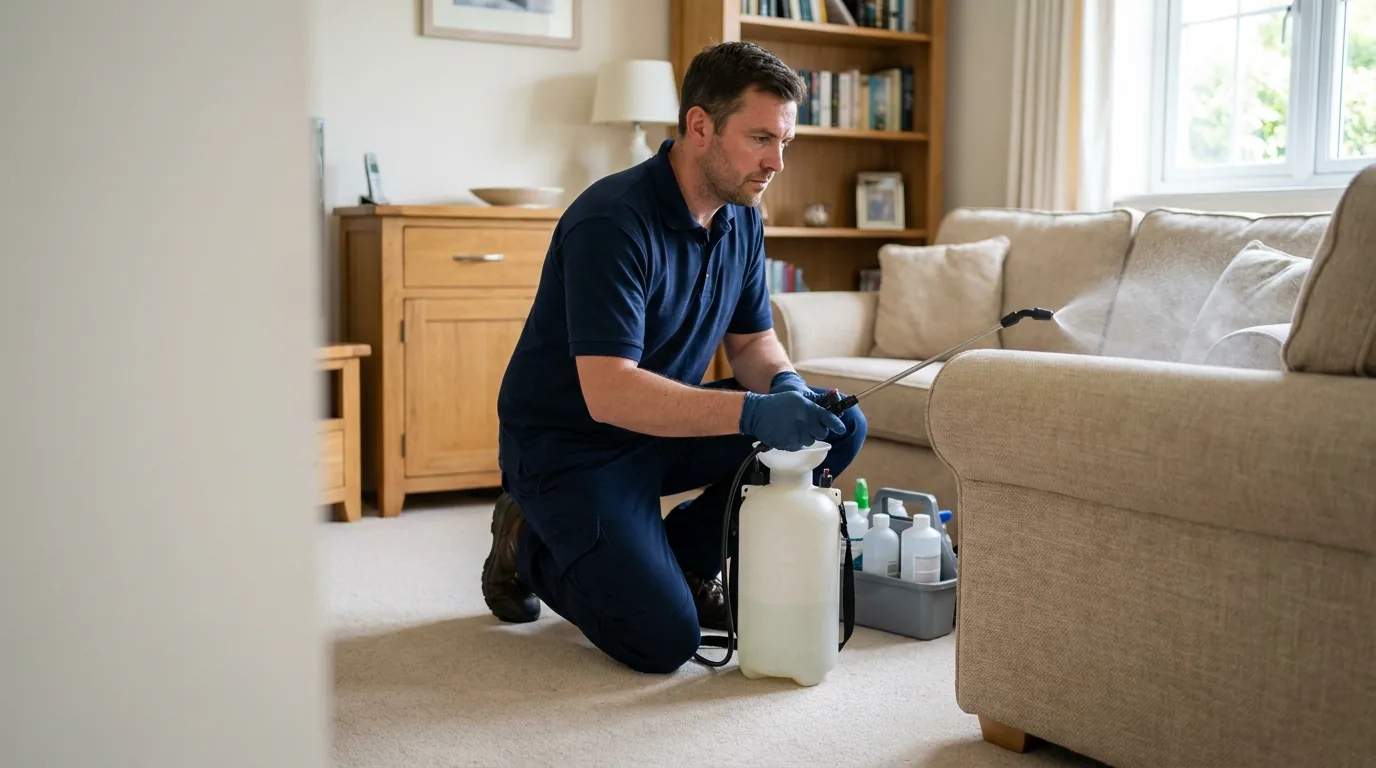
Once fiber type is confirmed, we apply a professional-grade fluoropolymer treatment, the same chemistry behind commercial-grade stain guard products, but applied at the correct concentration for residential use. The product is worked into the fabric with low-pressure equipment that ensures even penetration without over-saturating the backing. Drying time in South Jordan’s dry climate typically runs 2–4 hours for carpet and 3–5 hours for heavier upholstery, somewhat faster than the same process in more humid markets.
After the treatment cures, the technician does a water-bead test on treated areas so you can see the barrier working before we leave the home.
Equipment and Methods We Use
Home Pride has been doing this work since 1997, and the equipment reflects that experience. We use low-moisture application systems that deliver the protective agent uniformly without leaving residue or stiffening the pile, a common complaint with consumer spray-can products that apply too heavy a coat in one spot and too light in another. Our IICRC-certified technicians are trained to adjust dwell time and application pressure based on fiber density, which matters especially on the thick-pile carpets common in Daybreak’s newer construction homes.
For upholstery, we use a hand-tool applicator that follows the grain of the fabric, which is critical on microfiber and performance fabrics that are popular in South Jordan’s newer builds. Those fabrics are marketed as stain-resistant from the factory, but the factory treatment degrades with cleaning, a professional re-application restores and often exceeds the original protection level.
Local Note
Something worth knowing if you live near the newer phases of Daybreak or along the South Jordan Parkway corridor: many of these homes were built with open-concept floor plans and large great-room carpeted areas that connect directly to tiled entryways. That transition zone, where outdoor debris gets tracked from hard surface to carpet, is the highest-wear spot in the house and the first place factory protection fails. We pay extra attention to those transition areas during application and recommend a maintenance re-treatment every 12–18 months for households with dogs or kids who use those back-door entries heavily.
If you have questions about timing or want to schedule a treatment before the next winter season brings tracked-in road salt and slush, call Home Pride Restoration and Cleaning at (801) 995-2437. We cover all of South Jordan from our Saratoga Springs headquarters, and most appointments in the area are available within a few business days.
Serving South Jordan from our Saratoga Springs headquarters — ★ 5.0 · 36 Google reviews
“Curt was fast, responsive, and handled everything to restore our rental unit back to move-in ready condition at a fair price. Carpet cleaning, drywall repair, paint matching, trash removal, fixture repair etc. Thank you!” — Ben, June 2026Read our reviews on Google →
Fabric Protection in South Jordan: Service Coverage
Frequently Asked Questions
How fast can you arrive for fabric protection in South Jordan?
How long does fabric protection last on carpets in South Jordan's dry, dusty climate?
Do Daybreak HOA guidelines affect what fabric protection products can be used inside the home?
Can fabric protection help with the reddish soil that tracks in from undeveloped lots near Rosecrest?
What's the difference between the stain resistance that comes on new carpet and a professional stain guard application?
How far is your Saratoga Springs location from South Jordan, and how quickly can you schedule a fabric protection appointment?
Will my homeowners insurance cover fabric protection in South Jordan?
Fabric Protection response in South Jordan
Most South Jordan calls see a technician on-site within 60 minutes from our Saratoga Springs headquarters.