Fabric Protection in Provo
24/7 fabric protection in Provo, UT. IICRC-certified, insurance billing accepted. Call (801) 995-2437.
Our IICRC-certified technicians are dispatched from our Saratoga Springs, UT headquarters and are typically on-site in Provo within 60 minutes of your call.
Provo’s high-desert elevation sits just above 4,500 feet, and the combination of intense UV exposure, low humidity, and the fine red-clay dust that blows in from the surrounding Wasatch foothills creates a punishing environment for fabric surfaces. Carpets, sofas, and dining chairs in Provo homes lose their factory-applied protective coatings faster than in wetter, lower-elevation cities, and once that barrier breaks down, a single spilled glass of punch or a muddy boot from a Utah Lake trail walk can leave a stain that no amount of household cleaner will fully lift. Applying a professional-grade fabric protectant before that happens is far cheaper than a full cleaning or replacement.
Why Provo Fabric and Carpet Surfaces Wear Down Faster
The Wasatch Front’s climate is deceptively hard on textiles. Provo averages fewer than 12 inches of precipitation a year, which means static electricity builds up easily in carpet fibers, attracting the fine particulate dust that settles across the valley floor. That dust carries a mild alkaline charge from the surrounding limestone and sandstone geology, over time it slowly degrades synthetic fiber coatings and dulls the natural luster of wool or cotton upholstery.
Brigham Young University’s campus draws tens of thousands of students and visitors into surrounding neighborhoods, and the foot traffic in rentals and owner-occupied homes near campus reflects it. High-traffic entryways, living rooms, and stairwells lose their stain resistance within 12 to 18 months under normal household use, faster when kids, pets, or frequent guests are in the picture. A professionally applied fluoropolymer-based protectant bonds at the fiber level rather than sitting on the surface the way an aerosol can product does, which means it holds up through multiple vacuumings and light cleanings.
Our Fabric Protection Process in Provo
Before any protectant goes down, a technician inspects the fiber type and current condition of each surface. Wool, nylon, polyester, and olefin each require a different product formulation and dwell time, applying a product calibrated for synthetic carpet to a natural-fiber area rug can cause discoloration or premature breakdown. In Provo’s dry air, application technique also matters: low humidity causes water-based carriers to flash off faster than the label assumes, so our technicians adjust spray pressure and work in smaller sections to ensure even coverage before the carrier evaporates.
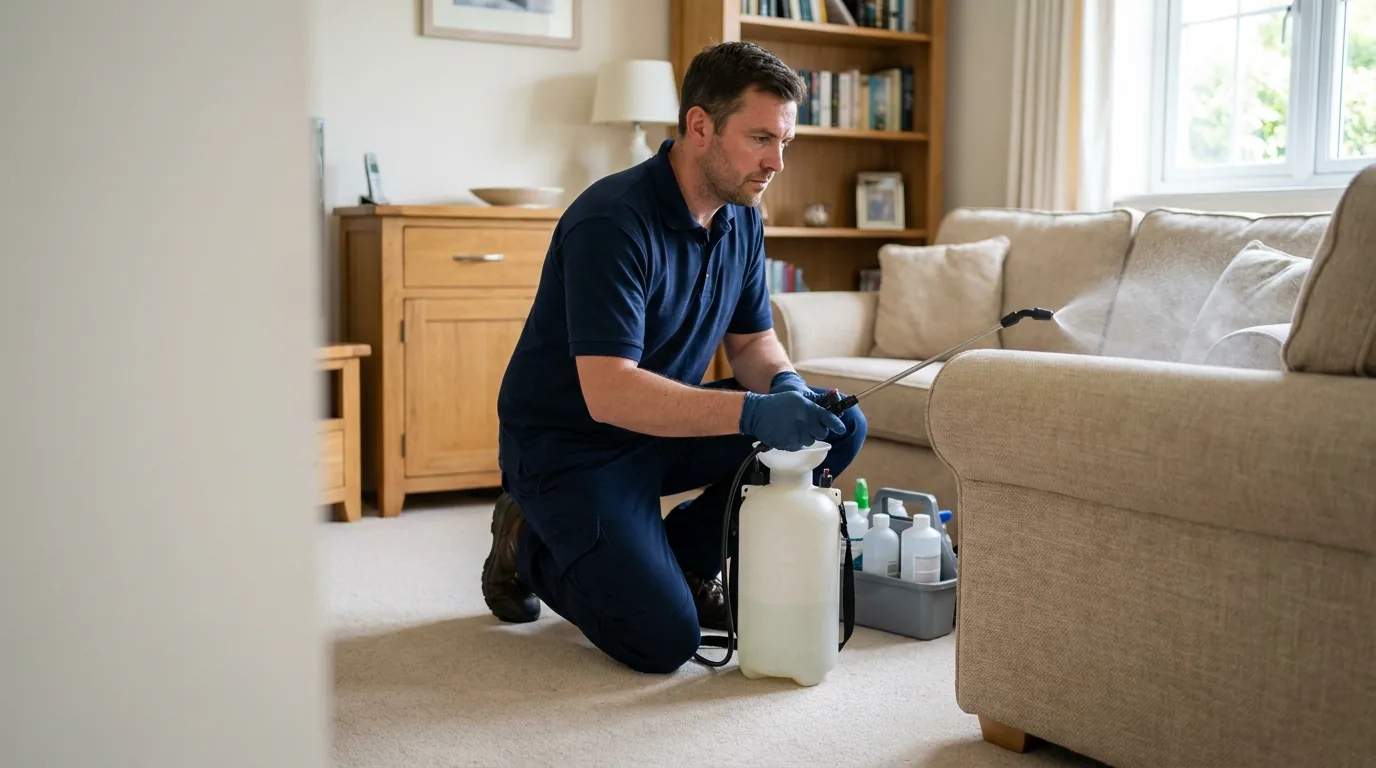
Once the correct product is selected, the surface is pre-vacuumed and spot-treated for any existing soiling. The protectant is applied in overlapping passes with a low-pressure sprayer, then worked into the pile or weave with a grooming tool. Cure time in Provo’s dry climate is typically 2 to 4 hours, shorter than in coastal markets, after which the surface is ready for light use. We recommend keeping foot traffic off treated carpet for the first hour and avoiding liquid contact for the full cure window.
For upholstered pieces, sofas, sectionals, dining chairs, ottomans, the process is the same in principle but requires more attention to seams and tufting, where product can pool and leave tide marks if over-applied. We treat cushion faces, backs, and sides separately to avoid saturation at the seam lines.
Response Time and Service Area Around Provo
Home Pride Restoration and Cleaning operates out of Saratoga Springs, roughly 20 miles northwest of Provo via US-89 south through American Fork and Orem. Under normal traffic conditions, a technician can reach most Provo addresses in 30 to 45 minutes. The stretch of I-15 through Orem can slow in afternoon commute windows, so for same-day appointments in the southern end of the city we typically route through University Parkway or Center Street depending on time of day.
For scheduling purposes, we serve all of Provo’s residential and commercial addresses, including properties near the BYU campus, the neighborhoods along North University Avenue, and homes in the foothills east of the city.
Local Note: Provo’s Rental Stock and Protectant Reapplication Cycles
Property managers and landlords in Provo’s dense rental corridors, particularly in the blocks surrounding BYU in the 84604 ZIP code, have found that scheduling fabric protection reapplication at tenant turnover, rather than waiting for visible soiling, dramatically reduces carpet replacement frequency. The combination of high occupancy turnover, students cooking and hosting in carpeted living rooms, and Provo’s dust-heavy air means that a carpet treated at move-in and again at the 18-month mark can realistically last through two or three additional tenancy cycles before requiring replacement. For a landlord managing multiple units, that math adds up quickly. We work with several property management companies in the area and can schedule multi-unit treatment days to minimize downtime between tenancies.
If you’re a Provo homeowner or property manager looking to extend the life of your carpets, rugs, and upholstered furniture before the next season of high-UV summers and dusty fall winds, call Home Pride Restoration and Cleaning at (801) 995-2437. We’ve been doing this work since 1997, we’re IICRC Certified, and we’ll give you a straight answer about what your surfaces need, and what they don’t.
Serving Provo from our Saratoga Springs headquarters — ★ 5.0 · 36 Google reviews
“He did an amazing job! My stairs were so bad and they looked brand new when he got done!” — B, August 2026Read our reviews on Google →
Fabric Protection in Provo: Service Coverage
Frequently Asked Questions
How fast can you arrive for fabric protection in Provo?
How long does fabric protectant last on carpets in Provo's climate?
Is fabric protection worth it for rental units near BYU in the 84604 ZIP code?
Does Provo's hard water or soil chemistry affect which protectant product you use?
Can you treat upholstered furniture and area rugs in the same visit as carpet?
How soon can we use the room after fabric protection is applied in Provo?
Will my homeowners insurance cover fabric protection in Provo?
Fabric Protection response in Provo
Most Provo calls see a technician on-site within 60 minutes from our Saratoga Springs headquarters.