
Fabric Protection in Eagle Mountain
24/7 fabric protection in Eagle Mountain, UT. IICRC-certified, insurance billing accepted. Call (801) 995-2437.
Our IICRC-certified technicians are dispatched from our Saratoga Springs, UT headquarters and are typically on-site in Eagle Mountain within 60 minutes of your call.
Eagle Mountain sits at roughly 4,900 feet on the west bench of Utah County, where high-desert dust, alkaline soil, and temperature swings of 40-plus degrees between a summer afternoon and the same night conspire against fabric in ways that flatland homes rarely see. The fine red-orange particulate that blows off the undeveloped hillsides west of Ranches Parkway works its way into carpet fibers and upholstery weaves, acting like microscopic sandpaper every time someone sits down. A professional-grade fabric protection treatment, applied correctly and allowed to cure fully, creates a barrier that keeps that grit on the surface where it can be vacuumed away instead of grinding into the fiber itself.
Why Eagle Mountain Fabrics Take a Harder Hit Than Most
The city’s rapid growth over the past decade means a large share of homes were built between 2005 and 2020, open floor plans, light-colored Berber and cut-pile carpets, and microfiber sectionals that look sharp on move-in day but are magnets for the region’s chalky caliche dust. That same soil chemistry leaves a whitish residue on untreated upholstery after a single dry season. Combine that with households that skew large, Eagle Mountain consistently ranks among Utah County’s youngest, fastest-growing cities, and you get heavy foot traffic, pets, and the kind of everyday spills that overwhelm factory-applied treatments within 12 to 18 months of a home purchase.
The elevation also matters. UV index at 4,900 feet is measurably higher than in the Salt Lake Valley, and prolonged sun exposure degrades the polymer chains in cheaper spray-on protectants faster than manufacturers’ lab conditions predict. The fluoropolymer-based products used by Home Pride Restoration and Cleaning are selected specifically for high-altitude, high-UV environments, a detail that rarely comes up on a product spec sheet but makes a real difference in how long a treatment holds.
Our Fabric Protection Process in Eagle Mountain
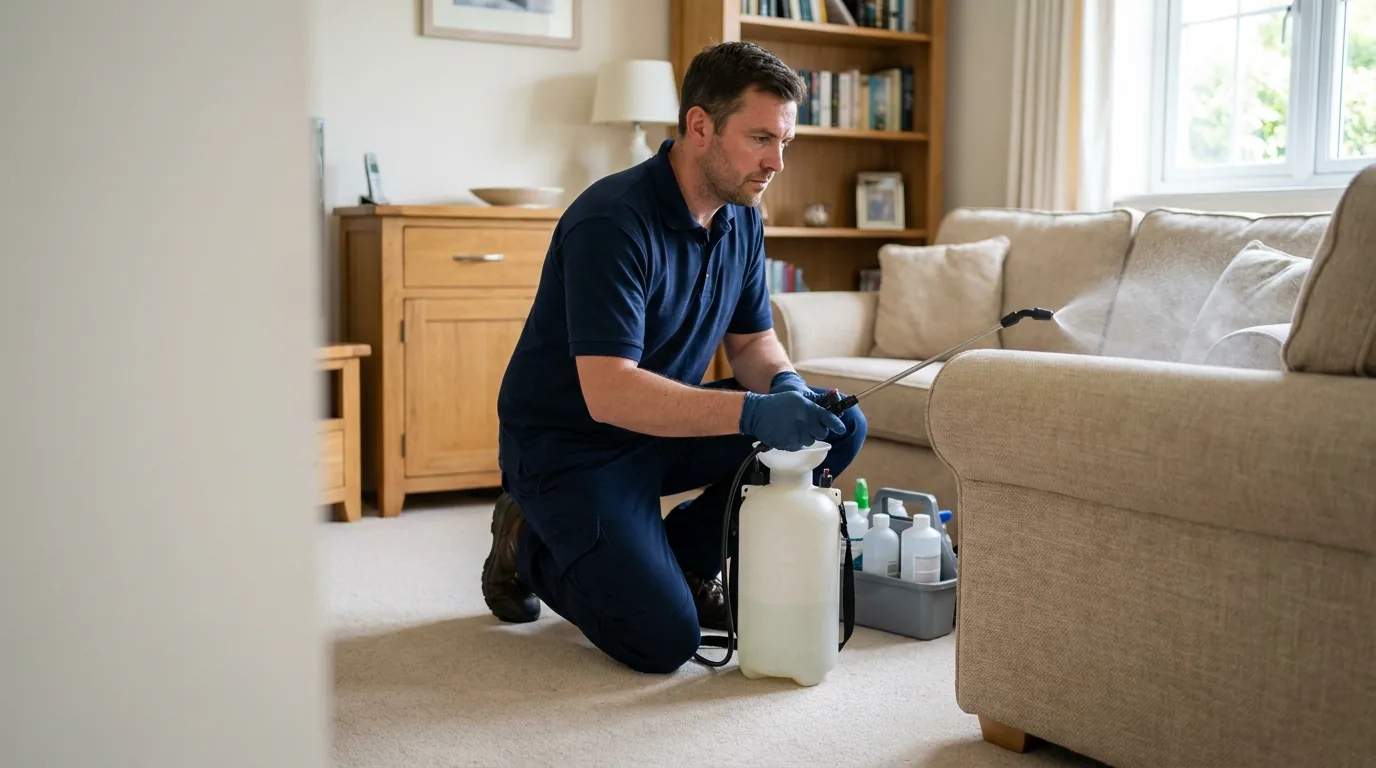
Every job starts with a fiber identification step, wool, nylon, polyester, and olefin each respond differently to protectant chemistry, and mismatching the product to the fiber is the most common reason a stain guard fails early. After vacuuming to remove surface particulate (especially important given the dust load in this area), technicians apply an even, controlled coat using low-pressure sprayers calibrated to avoid over-saturation, which can leave a stiff hand feel or accelerate re-soiling.
Cure time in Eagle Mountain’s dry climate is actually faster than in coastal markets, typically two to three hours before the treated surface can be walked on lightly, and four to six hours for full cure. That low ambient humidity is one genuine advantage of the high desert. Technicians will walk you through care instructions specific to your fiber type, including which spot-cleaning products are compatible with the treatment and which common household sprays will strip it.
Home Pride has been doing this work since 1997 and holds IICRC certification, which means technicians are trained on fiber chemistry, not just application technique.
Response Time and Coverage Across Eagle Mountain
Home Pride’s headquarters is in Saratoga Springs, which puts the team roughly 10 to 15 minutes from most Eagle Mountain addresses via Redwood Road or Pioneer Crossing. Scheduled fabric protection appointments, unlike emergency water or fire calls, are booked in advance, so travel time is rarely a factor. Jobs in the newer subdivisions on the south end of the city, near the Eagle Mountain Boulevard corridor, are just as accessible as those closer to the original Ranches developments to the north.
Local Note: What the Dust Season Means for Timing
Anyone who has lived in Eagle Mountain through a dry April or May knows what a sustained west wind does to interior surfaces, a single weekend with the windows cracked can leave a visible film on countertops and furniture. The practical implication for fabric protection scheduling is that late winter, just before dust season peaks, is the best window to treat carpets and upholstery. The protectant gets to cure before the heaviest particulate load arrives, and it’s in peak condition when you need it most. Conversely, treating fabrics in the middle of summer construction season, when grading on nearby lots is active, means the treatment is working hardest right from day one. If your home is near active development in the 84005 ZIP code area, Home Pride technicians will often recommend a light re-treatment the following spring once surrounding lots are stabilized.
Protecting Your Investment Before the Next Spill Happens
Fabric protection is one of the few home services where the value is entirely front-loaded, it works best when applied before damage occurs, not after. Eagle Mountain’s combination of high-desert dust, heavy household use, and intense UV exposure makes untreated carpet and upholstery age faster than the same products would in a milder climate. If you’ve recently moved into a new build, replaced flooring, or had upholstery professionally cleaned, this is the right moment to call (801) 995-2437 and schedule a treatment that will keep those surfaces looking and performing the way they should.
Serving Eagle Mountain from our Saratoga Springs headquarters — ★ 5.0 · 36 Google reviews
“I was nervous at first, but the staff made me feel comfortable. They arrived quickly for emergency water removal and had the water out of my home in no time. I really appreciated their fast response and professional service.” — Amy, July 2026Read our reviews on Google →
Fabric Protection in Eagle Mountain: Service Coverage
Frequently Asked Questions
How fast can you arrive for fabric protection in Eagle Mountain?
How long does fabric protection typically last in Eagle Mountain's climate?
Is fabric protection worth it for the newer builds going up near Eagle Mountain Boulevard?
Do Eagle Mountain HOAs have any rules that affect interior fabric protection services?
Can you treat both carpet and upholstery in the same visit for a home in the Ranches area?
What's the difference between the stain guard applied at the carpet store and what Home Pride applies?
Will my homeowners insurance cover fabric protection in Eagle Mountain?
Fabric Protection response in Eagle Mountain
Most Eagle Mountain calls see a technician on-site within 60 minutes from our Saratoga Springs headquarters.