Fabric Protection in Orem
24/7 fabric protection in Orem, UT. IICRC-certified, insurance billing accepted. Call (801) 995-2437.
Our IICRC-certified technicians are dispatched from our Saratoga Springs, UT headquarters and are typically on-site in Orem within 60 minutes of your call.
Orem’s high desert climate delivers a brutal one-two punch to interior fabrics: months of dry, UV-intense summers that fade and brittle fibers, followed by a muddy shoulder season when Utah Lake sediment tracks in on every pair of shoes. If you’ve ever watched a new sectional in a home near the Scera Park neighborhood turn dingy within a single school year, you already know how quickly unprotected upholstery surrenders to daily life here. Professional fabric protection applied by an IICRC-certified technician creates an invisible barrier that buys your carpets and furniture real, measurable time before stains set.
Why Orem Fabrics Take a Harder Hit Than You’d Expect
The Wasatch Front’s elevation, Orem sits above 4,700 feet, means UV radiation is meaningfully stronger than at sea level, accelerating dye breakdown in both carpet fibers and upholstery fabric. Combine that with the region’s notorious inversions, which trap fine particulate matter and cooking smoke close to the ground for weeks at a time, and fabrics in Orem homes absorb airborne grime at a rate that surprises most homeowners who moved here from lower-elevation states.
Then there’s the soil. The clay-heavy, iron-rich dirt common across Utah Valley stains differently than sandy coastal soils, it binds to synthetic fibers quickly and, once dry, is nearly impossible to lift without a protective coating already in place. Families with kids involved in sports at Peaks Ice Arena or the soccer complexes along Geneva Road know this firsthand: cleats carry that reddish-brown clay straight onto living room carpet.
Our Fabric Protection Process in Orem
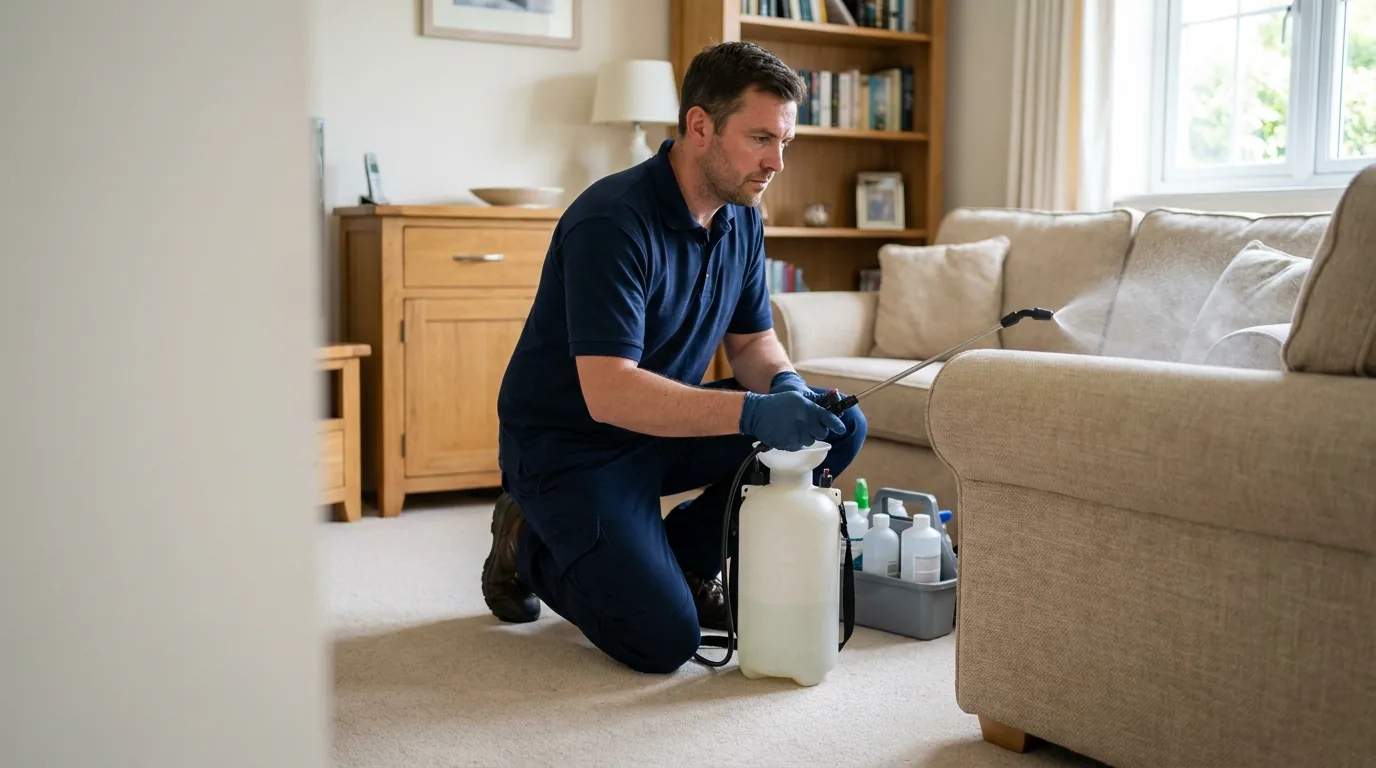
Every application starts with a thorough pre-clean. Applying stain guard over embedded grit or existing spills locks the problem in rather than out, so we vacuum and spot-treat before a single drop of protectant touches the fiber. For carpets, we use a low-moisture method that respects Orem’s already-dry indoor air, over-wetting in a high-altitude, low-humidity environment can cause rapid wicking of sub-pad soils back to the surface as the carpet dries.
For upholstery, fiber type dictates the product. Wool and natural blends common in older homes near the tree-lined streets of east Orem get a solvent-based fluoropolymer treatment; synthetic microfibers get a water-based formula that won’t alter the hand feel. We test a hidden section first, every time. Once applied, we use air movers calibrated to the room’s ambient humidity, Orem’s low relative humidity actually speeds cure time compared to coastal markets, so most furniture is ready for light use within two to three hours.
What’s Different About Fabric Protection in Orem vs. Other Markets
Contractors who work primarily in humid climates sometimes over-apply protectant to compensate for slow dry times. In Orem’s dry air, that same over-application can leave a stiff, whitish residue on darker fabrics, a problem we’ve dialed out of our process specifically because of local conditions. We also factor in seasonal timing: applications done during Orem’s winter inversion season, when indoor humidity can drop below 20%, cure faster but require a light misting step to prevent the protectant from atomizing before it bonds to the fiber.
HOA communities in newer developments along the south end of the city sometimes have carpet and upholstery care requirements written into their CC&Rs, particularly for common-area furnishings in townhome and condo complexes. We carry documentation of the products used and their certifications, which satisfies most HOA management companies when they ask for proof of professional treatment.
Local Note
Homes built in the 1960s and 1970s in the neighborhoods east of State Street, many of them original owner-builder construction, frequently have wall-to-wall carpet installed over concrete slab rather than wood subfloor. Slab-on-grade floors in Utah Valley stay cooler and hold more residual moisture than most homeowners realize, especially in spring when snowmelt raises the water table. That moisture migrates upward through the slab and can interfere with how a protectant cures from the backing side. When we work in those older east-Orem homes, we take a quick moisture reading at the slab before application and adjust dwell time accordingly, a step that takes five minutes but prevents a re-treatment call two months later.
When you’re ready to stop re-cleaning the same spill for the third time and actually protect what you’ve invested in, call Home Pride Restoration and Cleaning at (801) 995-2437. We’ve been working in Utah Valley homes since 1997, and we carry license #RC-25-0737, so whether you’re in a newer townhome near the Scera Park area or a mid-century ranch in east Orem, we’ll treat your fabrics with a process built for this specific climate, not a generic one-size-fits-all approach.
Serving Orem from our Saratoga Springs headquarters — ★ 5.0 · 36 Google reviews
“Curt was soooo amazing! Fast and efficient! Very sweet and kind! Would use again if we weren’t moving out of state!!!!!” — Kristina, August 2026Read our reviews on Google →
Fabric Protection in Orem: Service Coverage
Frequently Asked Questions
How fast can you arrive for fabric protection in Orem?
How long does fabric protection typically last in Orem's climate, given the UV exposure and dry air?
Does the clay-heavy Utah Valley soil affect how fabric protection performs on carpet near entryways?
I live in a condo complex near the Scera Park area — will my HOA have any say in what products you use?
How soon can you reach an Orem address from your Saratoga Springs headquarters?
What's the difference between a store-bought spray and a professional scotchgard application for an Orem home?
Will my homeowners insurance cover fabric protection in Orem?
Fabric Protection response in Orem
Most Orem calls see a technician on-site within 60 minutes from our Saratoga Springs headquarters.