TL;DR: Mold remediation is the professional process of safely containing, removing, and treating mold growth in a building so it cannot spread or return. A certified crew follows six steps: inspection, containment, HEPA air filtration, physical removal, drying, and restoration. The EPA recommends professional remediation for any mold patch larger than 10 square feet. Small patches may qualify for careful DIY cleanup; anything larger, or any growth involving HVAC systems, warrants a certified team.
If you found dark staining behind a cabinet, noticed a musty smell that won’t go away, or your home inspector flagged elevated moisture readings, you’re probably trying to figure out what actually happens next. Mold remediation is not just spraying bleach and wiping a surface. It is a controlled, multi-phase process designed to remove active growth, prevent cross-contamination to clean areas, and fix the moisture source that allowed mold to start in the first place.
What is the difference between mold remediation and mold removal?
Mold remediation and mold removal are often used interchangeably, but they describe different scopes of work. Mold removal refers to physically taking mold off a surface. Mold remediation is the complete process: finding the mold, containing it, filtering the air, removing it, drying the area, and restoring any damaged materials. Remediation also addresses the moisture source. Without fixing the underlying moisture problem, mold will return within days regardless of how thoroughly the surface was cleaned.
The term “mold removal” can also be misleading because mold spores exist naturally in every indoor environment. The goal of remediation is not to achieve zero spores (impossible) but to bring indoor spore counts back to levels comparable to the outdoor air and eliminate the active colony. Certified remediators follow the IICRC S520 Standard for Professional Mold Remediation, which defines acceptable clearance levels and proper work practices.
How does the mold remediation process work, step by step?
Professional mold remediation follows six phases. Each one builds on the last, and skipping any phase is how jobs fail clearance testing.
Step 1: Inspection and Assessment A certified inspector identifies the extent of the mold, the species involved (where relevant), and the moisture source feeding it. This typically includes visual inspection, moisture mapping with a pin or pinless meter, and sometimes air or surface sampling. If you are not sure whether you have a mold problem, a professional mold inspection and testing appointment is the right starting point. Our post on 7 Signs You Have Hidden Mold covers the most common indicators before you call.
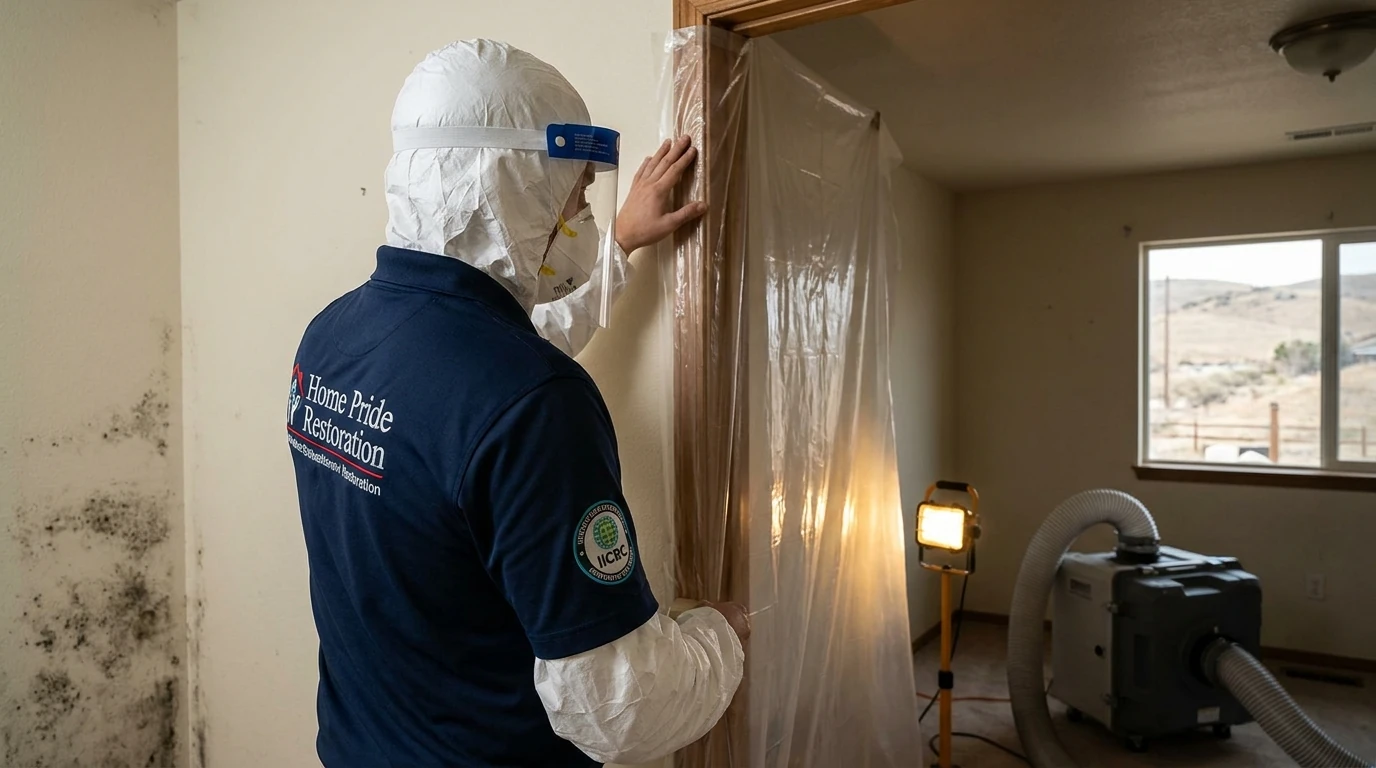
Step 2: Containment Before any mold is disturbed, the affected area is isolated using poly sheeting and tape. This prevents spores from traveling to unaffected rooms during the work. For larger jobs, crews set up negative air pressure inside the containment zone using a HEPA-filtered negative air machine. Negative pressure means air flows INTO the containment area rather than out of it, so disturbed spores cannot escape into the rest of the house.
Step 3: HEPA Air Filtration HEPA air scrubbers run continuously throughout the job. HEPA filters capture particles as small as 0.3 microns, which includes mold spores (typically 2-100 microns in diameter). The scrubbers cycle the air inside the containment zone multiple times per hour, pulling spores out of the air before they can settle on clean surfaces.
Step 4: Mold Removal This is the physical removal phase. Non-porous materials (concrete, tile, metal) can often be HEPA-vacuumed and wiped with an EPA-registered antimicrobial solution. Porous materials that are heavily contaminated, especially drywall, insulation, and wood framing with deep penetration, are typically removed and bagged for disposal. Attempting to clean heavily contaminated porous material rarely works; the mold root structure (hyphae) penetrates below the surface you can see.
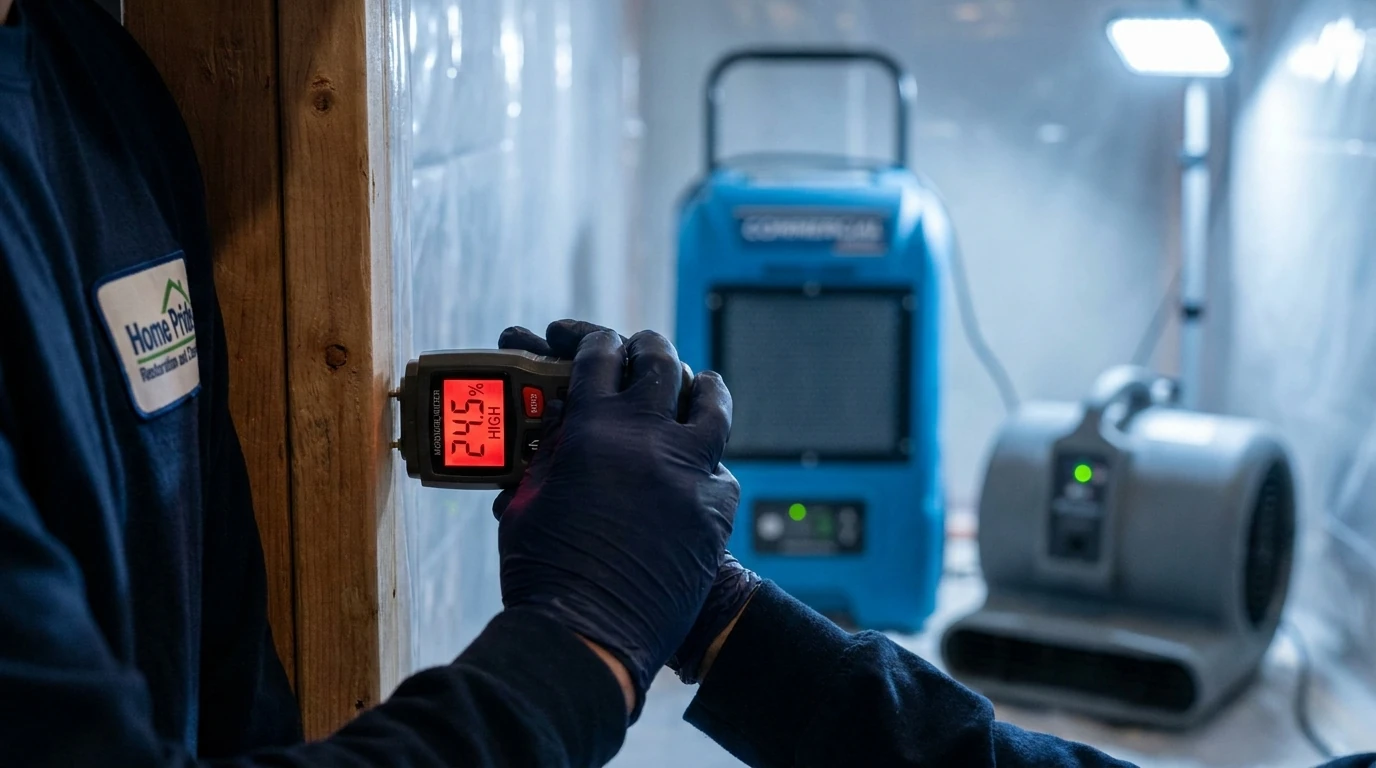
Step 5: Drying After removal, the area must be dried to a normal moisture content before any reconstruction begins. Mold cannot grow without moisture. If drywall is replaced before the framing behind it reaches an acceptable moisture level, the new drywall will develop mold within weeks. Commercial-grade dehumidifiers and air movers are used to achieve target moisture readings, verified by meter.
Step 6: Restoration Once the area passes a clearance inspection (air or surface sampling confirming spore counts are back to normal), reconstruction begins. This may mean replacing drywall, repainting, reinstalling flooring, or rebuilding cabinetry. The scope depends entirely on how much material was removed during Step 4.
Can you stay in your house during mold remediation?
Whether you can remain in your home depends on the size of the affected area and where it is located. For small, contained jobs (a single bathroom, a closet, a crawl space access point), most families can stay in unaffected parts of the home as long as the containment barriers are intact and the HVAC system is not involved. For larger jobs, especially those involving HVAC contamination, multiple rooms, or Category 3 water sources (sewage-contaminated water), temporary relocation is strongly recommended. Disturbed mold spores in high concentrations can aggravate asthma, allergies, and respiratory conditions, particularly in children, the elderly, and anyone immunocompromised.
Your remediation contractor should give you a clear recommendation before work begins. If they do not, ask directly: “Is it safe for my family to be in the home during this project?”
When does mold require a professional instead of DIY cleanup?
The EPA guidelines on mold cleanup set the threshold at 10 square feet. Patches smaller than that (roughly a 3x3 foot area) may be handled by a careful homeowner using proper PPE (N95 respirator, gloves, eye protection) and an EPA-registered cleaner. Beyond 10 square feet, the EPA recommends professional remediation.
Size is not the only factor. Call a certified remediation company regardless of patch size when:
- The mold is inside your HVAC system or ductwork
- The growth is behind walls, under flooring, or in a crawl space
- The source of moisture has not been identified or fixed
- Anyone in the home has asthma, allergies, or a compromised immune system
- You had a sewage backup or Category 3 water event (black water contains pathogens that compound the mold risk)
- A previous DIY attempt did not resolve the problem
Our post When Is Mold Remediation Required? goes deeper on the specific triggers that move a situation from DIY territory into professional scope.
How long does mold remediation take?
Most residential mold remediation projects take between one and five days, depending on the size of the affected area and the extent of material removal required. A single bathroom with surface mold and no structural involvement may be completed in one day. A basement with mold on framing across multiple walls, or a crawl space with widespread growth, typically takes three to five days, with additional time for drying before reconstruction begins.
The clearance inspection adds time to the overall timeline. After removal and drying, a third-party inspector (or the remediation company’s own certified inspector) collects air or surface samples. Lab results typically return within 24-48 hours. If the area passes, reconstruction can begin. If it does not pass, the crew returns to address whatever the sampling found.
What should you do after mold remediation is complete?
After a successful clearance inspection, the priority is keeping the conditions that allowed mold to grow from returning. That means:
- Fix the moisture source permanently. Whether it was a slow pipe leak, condensation on a cold surface, or inadequate bathroom ventilation, the fix must be structural, not cosmetic.
- Monitor indoor humidity. The EPA recommends keeping indoor relative humidity between 30% and 50%. A basic digital hygrometer costs under $20 and gives you real-time readings.
- Check your insurance documentation. If the mold was caused by a covered water event, your remediation contractor should provide a written scope of work, before-and-after photos, and clearance results for your claim file. Our post on Does Homeowners Insurance Cover Mold? explains what most Utah policies actually pay.
- Schedule a follow-up inspection if you notice any musty odor returning, visible staining, or moisture readings creeping back up.
For a full cost breakdown of what professional remediation typically runs in Utah, see our Mold Remediation Cost guide.
If you are at the point where you need a professional assessment, Home Pride Restoration and Cleaning handles mold remediation and mold inspection and testing across the Wasatch Front and surrounding communities. Call (801) 995-2437 to schedule a moisture assessment.
About Home Pride Restoration and Cleaning
Home Pride Restoration and Cleaning LLC is an IICRC-certified restoration company serving Saratoga Springs, Lehi, Eagle Mountain, Provo, Orem, and surrounding Utah communities since 1997 (license RC-25-0737). Their crews handle mold remediation, mold inspection and testing, water damage restoration, fire and smoke damage restoration, sewage cleanup, and a full range of cleaning services including carpet cleaning, tile and grout cleaning, and crawl space encapsulation. Available 24/7 at (801) 995-2437.