
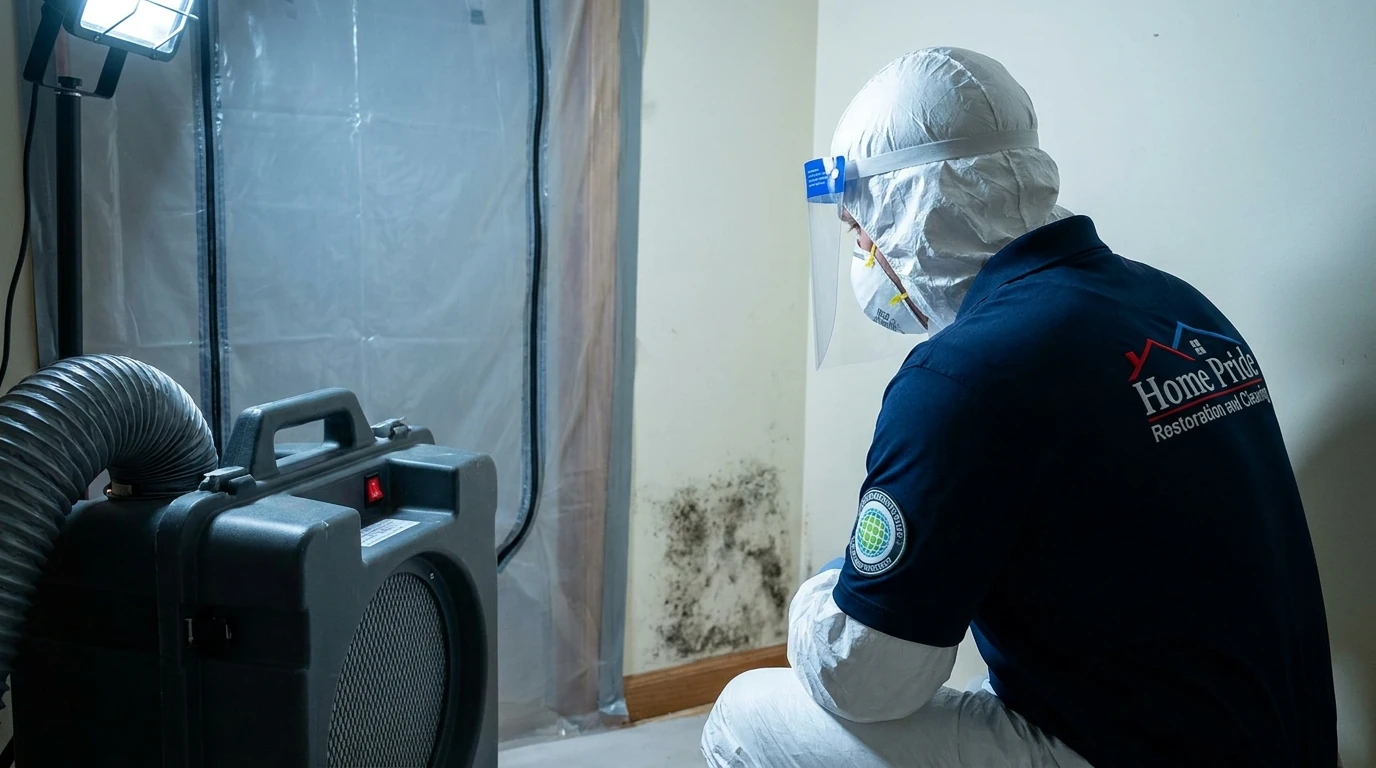
TL;DR: Professional mold remediation is required when visible mold covers more than 10 square feet, when mold is inside HVAC systems or ductwork, when the source was sewage or Category 3 water, when mold is hidden inside walls or under flooring, or when anyone in the home has respiratory conditions or a compromised immune system. Below those thresholds, careful DIY cleanup may be appropriate, but the line is sharper than most homeowners expect.
You noticed a dark patch behind the bathroom vanity, or your basement has that musty smell that won’t quit no matter how many candles you burn. Now you’re trying to figure out whether this is a weekend project or a phone call to a remediation company. The answer depends on four things: how much mold is present, where it is, what caused it, and who lives in the home. Get any one of those wrong and you can make the problem significantly worse.
How Much Mold Is Too Much? The EPA’s 10 Square Foot Guideline
The EPA’s mold remediation guidance draws the line at 10 square feet, roughly a 3-foot by 3-foot patch. Below that threshold, a healthy adult can typically handle cleanup with proper PPE and containment. At or above that threshold, the EPA recommends professional remediation.
That 10-square-foot rule is a starting point, not a guarantee. A single 8-square-foot patch of mold on a bathroom tile is very different from an 8-square-foot patch on the back of drywall, which is almost always the visible tip of a larger colony growing inside the wall cavity. Surface area you can see often understates the actual extent by a factor of two or three once a professional opens the wall.
If you’re measuring and it’s close to that threshold, err toward calling a pro. The cost of a mold inspection is far lower than the cost of a remediation job that expanded because containment failed during a DIY attempt.
What Are the Automatic Triggers for Professional Remediation?
Some situations require professional remediation regardless of square footage. These are the automatic triggers:
HVAC and ductwork involvement. Mold inside a forced-air system is a distribution problem. Every time the system runs, spores travel to every room in the house. This is not a DIY scenario under any interpretation of the EPA guidelines. It requires HEPA-filtered equipment, duct cleaning, and clearance testing after the work is done.
Sewage or Category 3 water as the source. Category 3 water, also called black water, includes sewage backups, floodwater from outside, and any water that has contacted human waste. Mold growing from a Category 3 source is contaminated with pathogens beyond just mold spores. The EPA and the IICRC S520 standard both treat this as a professional-only situation.
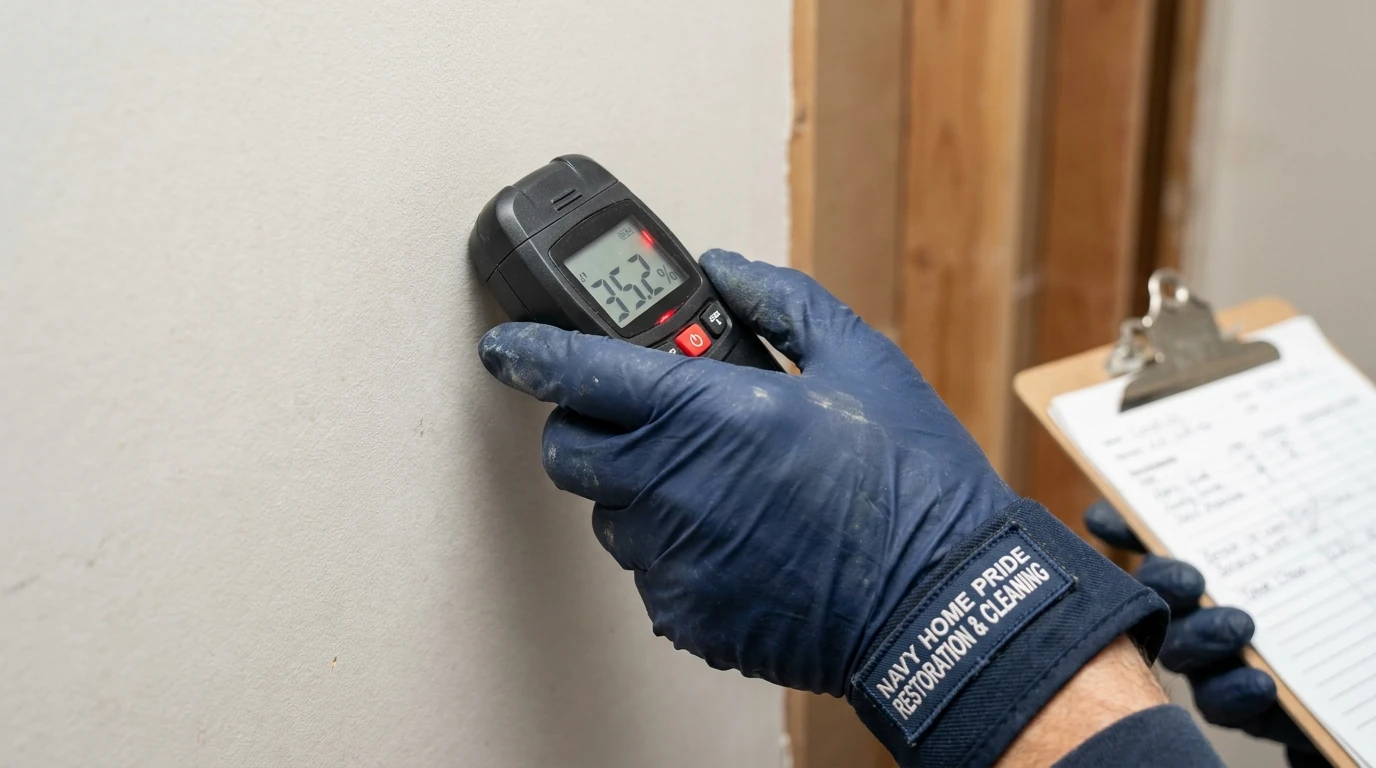
Hidden mold inside walls, under flooring, or in the crawl space. If you smell mold but can’t see it, or if a moisture meter shows elevated readings in a wall cavity, the mold is likely growing on the paper facing of drywall or on structural wood inside the assembly. Accessing it without proper containment releases a concentrated burst of spores into the living space. If you suspect hidden growth, a mold inspection with air sampling is the right first step, not a hammer. Our post on 7 Signs You Have Hidden Mold walks through the warning signs in detail.
Health conditions in the household. If anyone in the home has asthma, COPD, a mold allergy, is undergoing chemotherapy, or is immunocompromised for any reason, the threshold for professional involvement drops to near zero. The EPA guidance is explicit: people with these conditions should not be in the work area and should not perform the cleanup themselves.
Mold returns after DIY cleanup. Recurring mold in the same spot after cleaning is a sign the moisture source was never fixed. A professional can identify whether the issue is a plumbing leak, condensation, inadequate vapor barrier, or something structural, and remediate properly once the source is controlled.
What Is the Difference Between Mold Remediation and Mold Removal?
Mold remediation and mold removal are not the same thing, and the distinction matters when you’re evaluating contractors.
Mold removal implies physically taking mold out, wiping it off, spraying it down, throwing away contaminated material. It describes a physical action. Mold remediation is a broader process that includes containment (preventing spore spread during the work), removal of contaminated materials, HEPA vacuuming, antimicrobial treatment of affected surfaces, air scrubbing, and post-remediation verification testing to confirm the work succeeded.
Any contractor who quotes you “mold removal” and doesn’t mention containment, air scrubbing, or clearance testing is describing an incomplete process. The IICRC S520 Standard for Professional Mold Remediation defines what a complete job looks like. Ask any contractor you’re considering whether they follow S520, that’s the industry benchmark.
The word “removal” also feeds a common misconception: that mold can be permanently eliminated from a home. Mold spores are everywhere in the environment. What remediation does is bring indoor spore counts back to normal background levels and eliminate the active colony. The conditions that allowed it to grow, moisture, a food source like drywall paper or wood, and warmth, have to be corrected or the mold comes back. Our post on what kills mold permanently covers this in more detail.
What Does Professional Mold Remediation Actually Involve?
A professional mold remediation job follows a defined sequence. Knowing the steps helps you evaluate whether a contractor is doing the work correctly.
- Inspection and moisture mapping. Before any physical work, a technician uses a moisture meter and sometimes thermal imaging to identify all affected areas and confirm the moisture source has been addressed.
- Containment setup. Poly sheeting and negative air pressure (using an air scrubber exhausting to the outside) isolate the work area so spores don’t migrate to clean parts of the home during demolition.
- Removal of contaminated materials. Porous materials, drywall, insulation, carpet, wood framing in severe cases, that are saturated with mold growth are bagged and removed. Non-porous surfaces are HEPA-vacuumed and treated with an EPA-registered antimicrobial.
- Air scrubbing. HEPA air scrubbers run throughout the job and for a period after physical work is complete to capture airborne spores.
- Post-remediation verification. A clearance test, typically air sampling by a third party, confirms that spore counts in the remediated area are back to or below normal background levels. This is the step that proves the job worked.
If a contractor skips the clearance test, you have no independent confirmation the remediation succeeded.
What Should You Do Right Now If You Suspect Mold?
Stop running the HVAC system if you suspect mold in or near the ductwork, every cycle spreads spores further. Don’t disturb visible mold growth by scrubbing or spraying it before a professional has assessed the extent. Document what you can see with photos, note when you first noticed the smell or growth, and think back to any water events in the past year: a slow roof leak, a washing machine overflow, a period of high indoor humidity.
For anything above the 10-square-foot threshold, involving HVAC, tied to sewage, or in a home with vulnerable occupants, schedule a professional mold inspection before doing anything else. The inspection identifies the full scope, confirms the moisture source, and gives you a written remediation plan, which your insurance company may also require before approving a claim. Our guide on whether homeowners insurance covers mold explains what policies typically pay for and what documentation protects your claim.
Utah County homes, particularly those in newer developments in Lehi, Eagle Mountain, and Saratoga Springs, often see mold issues tied to rapid construction schedules, tight building envelopes that trap humidity, and irrigation-heavy landscaping that keeps soil moisture elevated near foundations. If your home is less than 15 years old and you’re seeing mold, a crawl space vapor barrier or encapsulation issue is worth investigating alongside the obvious sources.
Home Pride Restoration and Cleaning handles mold remediation and mold inspection and testing across Utah County and the greater Salt Lake area. If you’re not sure whether your situation crosses the threshold, call (801) 995-2437 and describe what you’re seeing, a quick conversation can save you from either over-reacting or under-reacting to a situation that has a clear right answer.
About Home Pride Restoration and Cleaning
Home Pride Restoration and Cleaning LLC is an IICRC-certified restoration company serving Saratoga Springs, Lehi, Eagle Mountain, Provo, Orem, and surrounding Utah County communities since 1997 (license RC-25-0737). Their crews handle mold remediation, mold inspection and testing, water damage restoration, fire and smoke damage restoration, sewage cleanup, and a full range of cleaning services. They are available 24/7 at (801) 995-2437.