Mold Inspection and Testing in Saratoga Springs
24/7 mold inspection and testing in Saratoga Springs and surrounding areas. IICRC-certified, insurance billing accepted. Call (801) 995-2437.
You notice a musty smell in the basement every time it rains, or a patch of discoloration behind the washing machine that keeps coming back no matter how many times you wipe it down. Maybe someone in the house has had a persistent cough for weeks and your doctor mentioned air quality. Mold inspection and testing answers the question that bleach and paint can’t: where is the mold, how far has it spread, and what species are you actually dealing with, before any remediation work begins or money gets spent.
What mold inspection and testing actually involves
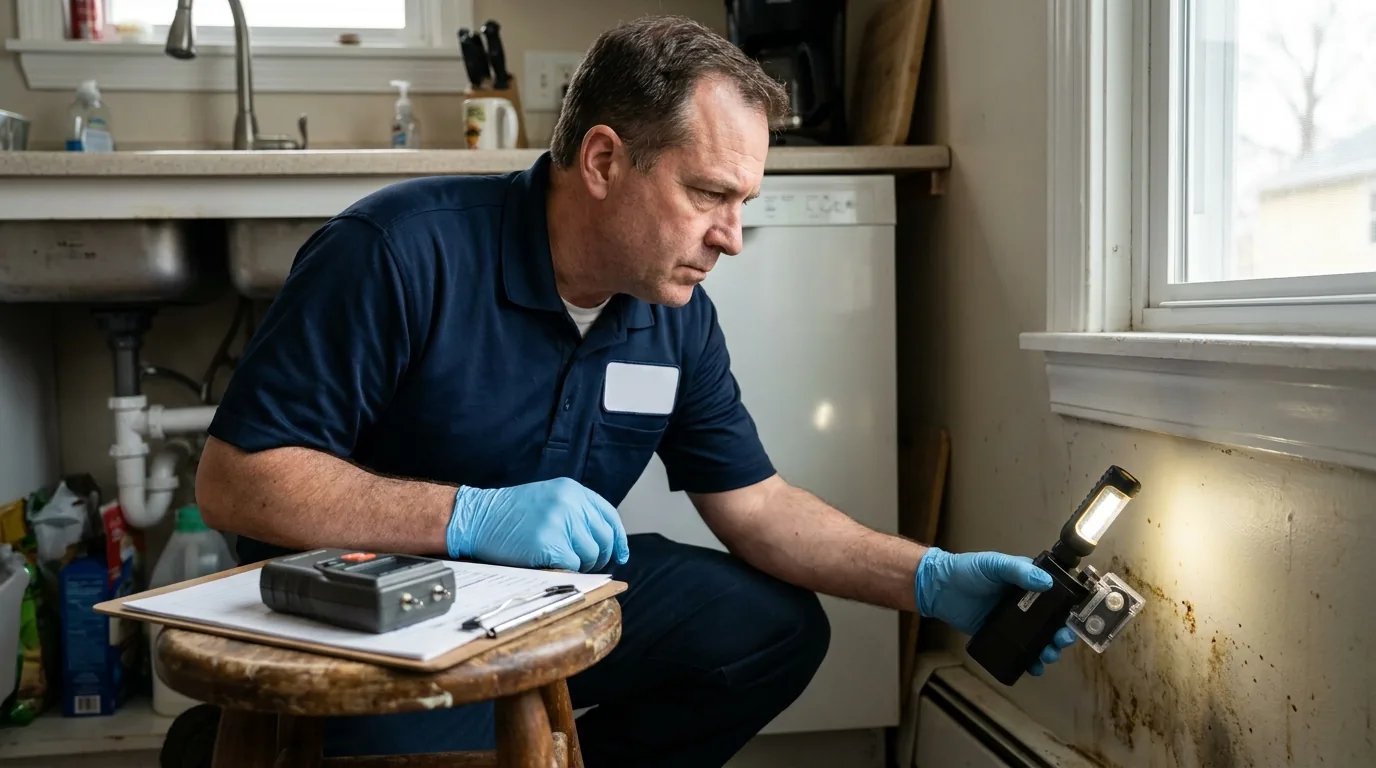
A mold inspection is a structured, evidence-gathering process, not a quick visual sweep. A certified inspector works through the property systematically, using moisture meters and thermal imaging to find elevated readings inside wall cavities, under flooring, and above ceiling tiles where mold colonizes long before it’s visible. Mold can begin growing on wet building materials within 24 to 48 hours of a moisture event; by the time you see staining or smell that earthy, cellar-like odor, the colony is often well-established behind the surface.
Mold testing pairs that physical inspection with laboratory analysis. Air samples, collected with a calibrated pump and spore trap cassette, capture what’s actually circulating in your breathing space. Surface samples (tape lifts or swabs) identify the genus and species on a specific area. Both types go to an accredited third-party lab, and results typically return within 24 to 72 hours. The combination tells you whether indoor spore counts are elevated compared to outdoor baseline levels, which species are present, and whether the problem is localized or has spread through the HVAC system.
A full assessment for a typical single-family home in the Saratoga Springs area takes two to four hours on-site. You receive a written report with photos, moisture readings, sample locations, lab results, and, critically, a scope of findings that can be handed directly to a remediation contractor or submitted to your insurance carrier.
Our process
-
Pre-inspection interview and history review. Before touching a wall, we ask about the property’s water history: past leaks, flooding, roof repairs, plumbing work, and any previous mold complaints. In Utah County, homes built on the west bench near Utah Lake often see chronic crawl space humidity; newer construction in Saratoga Springs sometimes has vapor barrier gaps that go unaddressed for years. That context shapes where we look first.
-
Moisture mapping and thermal imaging. We use a combination of pin-type and pinless moisture meters to probe suspect materials, and an infrared camera to identify temperature anomalies that indicate trapped moisture inside assemblies. A wet wall cavity reads differently than a dry one even when both look identical from the surface.
-
Air and surface sampling. We collect outdoor control samples first, essential for interpreting indoor counts accurately. Indoor air samples are taken in areas of concern and in the HVAC return if the system has been running. Surface samples target visible growth or staining for species identification. All samples are chain-of-custody documented and shipped to an accredited lab.
-
Lab analysis and report delivery. Results come back from the lab as spore counts per cubic meter of air and species breakdowns. We translate that data into plain language: what the numbers mean, whether they exceed EPA-referenced thresholds, and which areas require remediation versus monitoring. The written report includes annotated photos and moisture readings, formatted to support an insurance claim if one is being filed.
-
Post-remediation clearance testing (if applicable). If remediation work follows, we return after the contractor has completed work and removed containment to collect clearance air samples. This independent verification confirms that spore counts have returned to normal levels before the space is reoccupied, a step that protects both the homeowner and the contractor.
What separates a thorough mold assessment from a superficial one
The most common failure in mold inspection is stopping at what’s visible. A technician who looks at a stained drywall corner, calls it mold, and quotes remediation without sampling has given you a guess, not a diagnosis. Without baseline outdoor samples, indoor air counts are meaningless, you have no reference point. Without moisture mapping, the source of the problem goes unidentified, and remediation will fail because the moisture feeding the colony is still present.
Insurance adjusters reviewing mold claims look for documentation that connects the mold growth to a covered cause of loss, typically a sudden and accidental water event rather than long-term neglect. A properly written inspection report includes moisture readings with dates, photographic evidence of affected materials, and lab results that support the scope of proposed remediation. A one-page summary with a phone photo doesn’t meet that bar.
Species identification also matters more than most homeowners realize. Stachybotrys chartarum (often called black mold) requires different handling protocols than elevated Cladosporium or Penicillium/Aspergillus counts. Knowing what you’re dealing with determines whether standard remediation or IICRC S520-compliant containment is warranted.
Seasonal and regional considerations
Utah’s high-desert climate creates a specific mold window that surprises many homeowners. The dry summers mask moisture problems that become active in spring snowmelt and again in fall when temperature differentials drive condensation inside exterior walls and rim joists. Crawl spaces in Saratoga Springs and Eagle Mountain, many of which are vented to outside air, are particularly vulnerable during the March-through-May thaw period. If you had any water intrusion last winter, late spring is the right time to test before the problem compounds through summer.
Service area
Home Pride Restoration and Cleaning is based in Saratoga Springs and provides mold inspection and testing throughout Utah County and the surrounding region, including Eagle Mountain, Lehi, American Fork, Pleasant Grove, Orem, Provo, and Herriman. City-specific service pages are linked from the main navigation for each area we serve.
If you’re smelling something you can’t find, seeing growth you can’t explain, or dealing with a moisture event that happened weeks ago and was never properly dried, call (801) 995-2437 to schedule an indoor air quality test. You’ll have lab-backed answers, a written report, and a clear picture of what needs to happen next.
Frequently Asked Questions
What's the difference between a mold inspection and mold testing, and do I need both?
What do the air sample numbers actually mean — how do I know if my results are concerning?
Can I run a store-bought mold test kit instead of hiring a professional inspector?
At what point does mold growth require the full IICRC S520 containment protocol versus a simpler cleanup?
How long after a water leak should I wait before testing for mold?
Looking for the best mold inspection and testing company in Saratoga Springs?
Home Pride Restoration and Cleaning provides licensed and insured mold inspection and testing in Saratoga Springs, UT and the surrounding area, and has served local property owners since 1997. Customers rate us 5.0 out of 5 stars across 36 Google reviews. We answer calls 24/7 — call (801) 995-2437 for immediate help.
Need Mold Inspection and Testing now?
We respond 24/7 across Saratoga Springs and surrounding UT cities.
Related Coverage
- Our Restoration Services
- Contact Home Pride Restoration and Cleaning
- Mold Inspection and Testing in American Fork
- Mold Inspection and Testing in Eagle Mountain
- Mold Inspection and Testing in Herriman
- Mold Inspection and Testing in Lehi
- Mold Inspection and Testing in Orem
- Mold Inspection and Testing in Pleasant Grove
- Mold Inspection and Testing in Provo
- Mold Inspection and Testing in Riverton
- Mold Inspection and Testing in South Jordan