TL;DR: Homeowners insurance does not automatically cover mold. Most standard policies exclude mold as a standalone peril. However, if mold results directly from a covered sudden-and-accidental water event, a burst pipe, an appliance failure, a roof leak from a storm, your insurer may cover remediation up to a sublimit, often $5,000 to $10,000. Gradual leaks, flooding, and neglected moisture problems are almost always denied. Documentation is everything.
You noticed dark spots spreading across your bathroom ceiling or a musty smell coming from behind drywall. Now you’re staring at a mold remediation estimate that starts at $3,000 and wondering whether your homeowners policy will pay any of it. The answer depends almost entirely on why the mold grew, not how bad it is. Here’s how to read your policy and build a claim that actually holds up.
Does homeowners insurance cover mold damage?
Most standard homeowners policies exclude mold as a named peril, meaning they won’t pay for mold damage on its own. The critical exception is when mold is a direct result of a covered water event. If a pipe bursts suddenly and mold begins growing in the wet drywall before you can dry it out, your insurer may treat the mold remediation as part of the original water damage claim, subject to any mold sublimit in your policy.
The Insurance Information Institute describes mold coverage as one of the most policy-specific areas in residential insurance. What one carrier covers, another excludes entirely. That’s why reading your declarations page and the exclusions section matters more here than with almost any other peril.
The three most common outcomes when a homeowner files a mold claim:
- Covered (with a sublimit): Mold resulted from a sudden, accidental, covered water event. Insurer pays up to the mold sublimit, commonly $5,000 to $10,000, though some policies cap it as low as $1,000 or as high as $25,000.
- Denied, gradual damage: Mold resulted from a slow leak, ongoing condensation, or a plumbing problem the homeowner knew about. Insurers call this “maintenance neglect” and it is almost universally excluded.
- Denied, excluded peril at the source: The water that caused the mold came from flooding (a rising creek, surface water) or a sewer backup. Standard HO-3 policies exclude both. You’d need a separate flood policy through the National Flood Insurance Program or a sewer backup rider.
What determines whether a mold claim is covered or denied?
The source of the water matters more than anything else. Insurers evaluate mold claims by tracing moisture back to its origin and asking two questions: Was the original water event covered? Was the damage sudden and accidental, or did it develop over time?
Covered water sources that can support a mold claim:
- A pipe that burst suddenly (not one that corroded slowly over months)
- An appliance supply line that failed unexpectedly, washing machine hose, refrigerator ice maker line, dishwasher connection
- A roof leak caused by a covered storm event (hail, wind, fallen tree)
- An accidental overflow from a bathtub or sink
Water sources that typically result in a denied mold claim:
- A slow drip under a sink that went unnoticed for weeks or months
- Foundation seepage or groundwater intrusion
- Flooding from surface water or rising rivers
- A roof that leaked because it was old and not maintained
- Condensation from inadequate ventilation in a crawl space or attic
Timing is also a factor. If mold appears months after a water event that you didn’t report or address promptly, the insurer may argue you failed to mitigate, which voids coverage even on an otherwise-covered source. The EPA’s guidance on mold notes that mold can begin colonizing within 24 to 48 hours of a moisture event. That window matters to your claim.
For more on how quickly mold develops after water damage, see How Quickly Does Mold Grow After Water Damage?
What is a mold sublimit and do you have one?
A mold sublimit is a separate, lower cap on mold-related payouts that sits inside your broader dwelling coverage. Even if your home is insured for $400,000, your mold sublimit might be $5,000, meaning that’s the most your insurer will pay for mold remediation, testing, and related repairs, regardless of the actual cost.
Sublimits became standard after a wave of large mold claims in the early 2000s led most carriers to restrict coverage. Here’s what to look for in your policy:
- Section I, Property Coverages, Exclusions: This is where mold is typically excluded as a standalone peril.
- Endorsements or riders: Some policies add limited mold coverage back in via a paid endorsement. Look for language like “Limited Fungi, Wet or Dry Rot, or Bacteria Coverage.”
- The sublimit dollar amount: It may appear in the declarations page or in the endorsement itself. If you don’t see a number, call your agent and ask directly: “What is my mold sublimit?”
If your current sublimit is low ($1,000 to $2,000) and you live in a home with a crawl space, basement, or older plumbing, it may be worth asking your carrier about a higher-limit mold rider before you ever need it. Remediation for a single affected room typically runs $1,500 to $5,000; whole-house scenarios can reach $15,000 to $30,000 or more. You can see current Utah-specific cost ranges in the Mold Remediation Cost: 2026 Price Guide for Utah Homeowners.
How do you document a mold insurance claim?
Documentation is the single biggest factor in whether a mold claim gets paid. Adjusters are looking for a clear chain of evidence connecting a covered water event to the mold growth. Here’s how to build that chain.
Step 1: Photograph everything before any cleanup. Date-stamped photos of the water source, the affected materials, and the mold growth itself. If the pipe that burst is still visible, photograph it. If the roof damage is accessible, photograph it.
Step 2: Report promptly. File the claim as soon as you discover the damage. Late reporting gives adjusters grounds to argue you failed to mitigate.
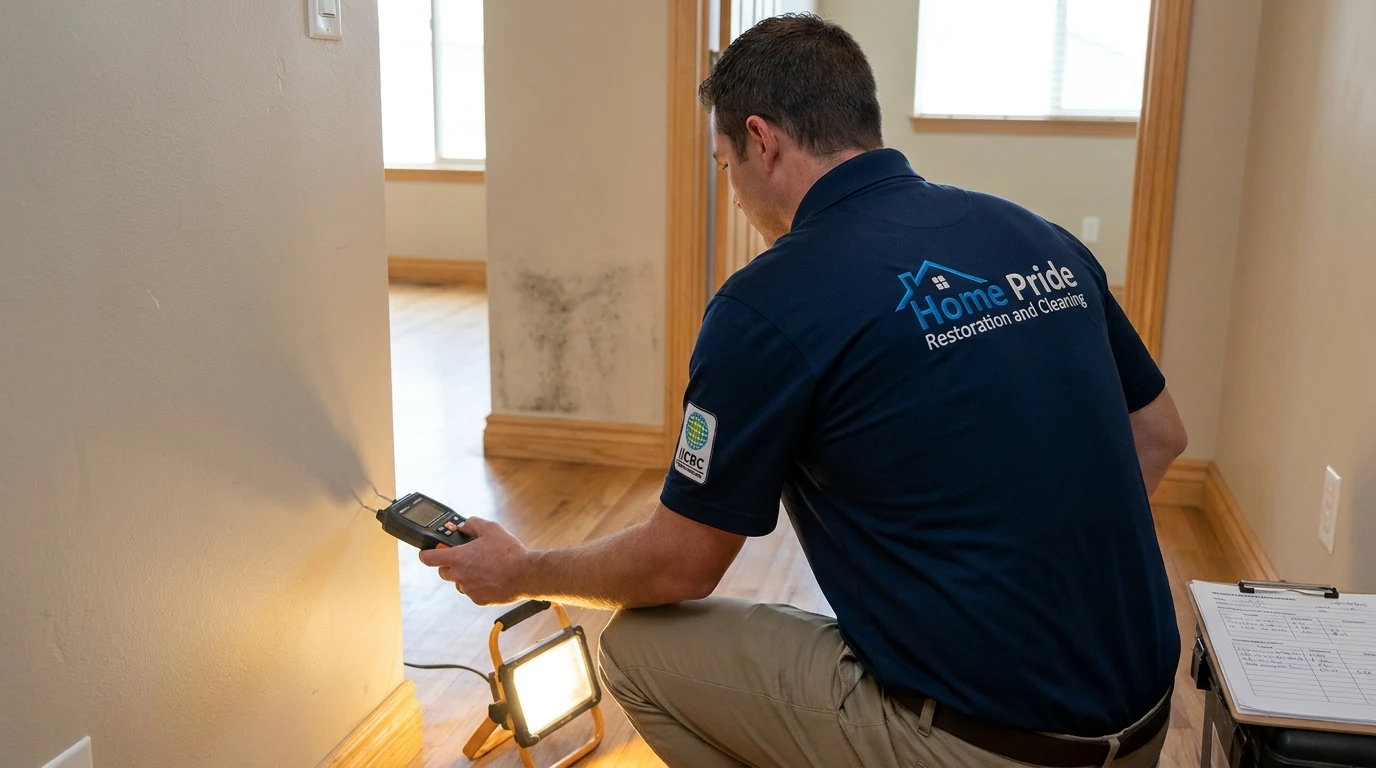
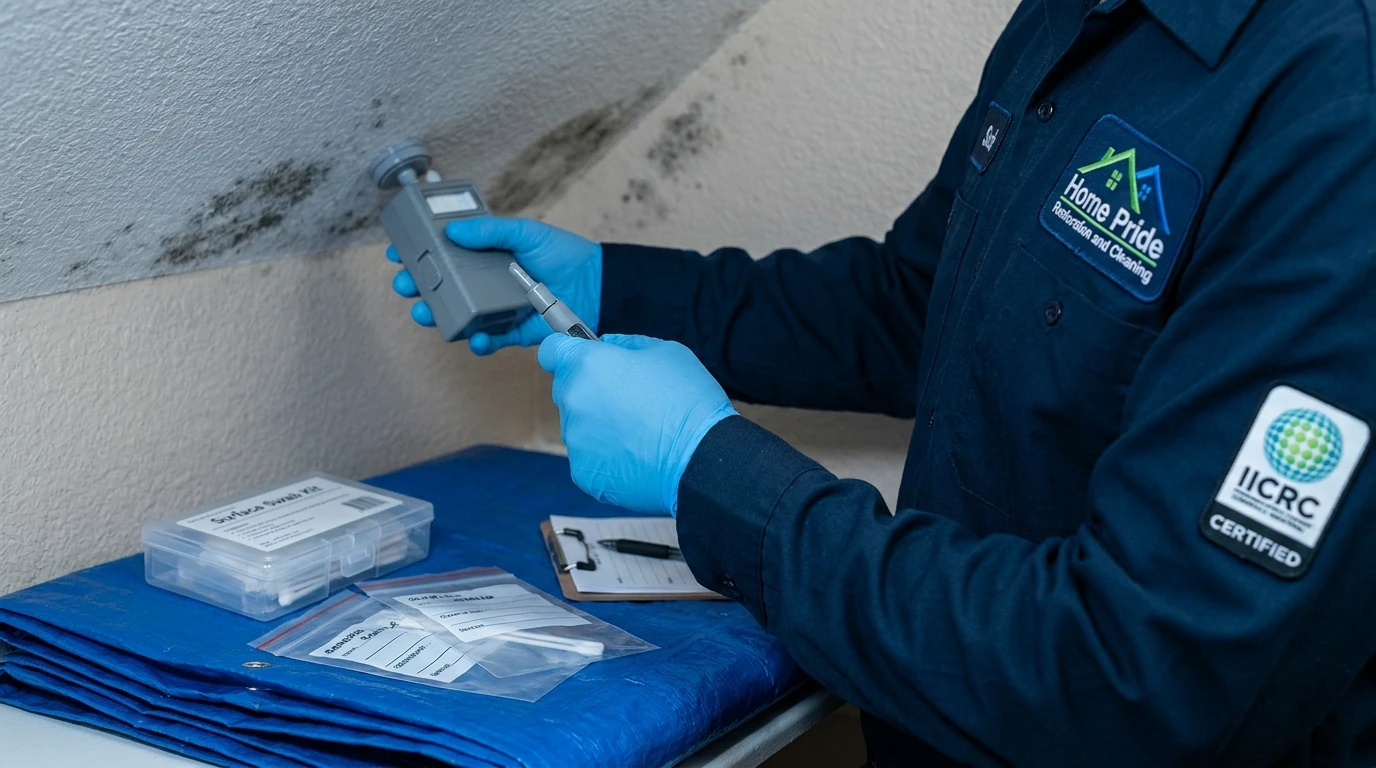
Step 3: Get a professional mold inspection. A certified mold inspection with air sampling and surface swab results gives you an independent, documented baseline. It also establishes the extent of contamination before remediation begins, critical if the insurer disputes scope later. Home Pride Restoration and Cleaning offers mold inspection and testing as a standalone service; the written report becomes part of your claim file.
Step 4: Get a written remediation scope before work starts. Your insurer will want an itemized scope of work. A reputable remediation contractor provides this in writing before touching anything. Never let a contractor start work without a documented scope, it protects both your claim and your ability to dispute underpayment.
Step 5: Keep all receipts and communications. Every invoice, every adjuster email, every phone call (log the date, time, and name). If your claim is underpaid or denied, this paper trail is what an attorney or public adjuster works from.
For the broader water damage claim process that often precedes a mold claim, see Does Homeowners Insurance Cover Water Damage? A Plain-English Guide.
Is black mold covered by homeowners insurance?
Black mold, typically Stachybotrys chartarum, is not treated differently by most insurers than other mold species. Coverage still depends on the source of moisture, not the species of mold. The term “black mold” is not a policy category. An insurer who denies a Stachybotrys claim would deny the same claim for Cladosporium or Aspergillus if the water source was excluded.
That said, black mold claims often involve more extensive remediation, which makes the sublimit problem more acute. If your policy caps mold coverage at $5,000 and the remediation scope comes in at $18,000, you’re covering the gap out of pocket regardless of species. This is the scenario where a higher-limit mold endorsement pays for itself.
For more on identifying mold types and understanding what you’re dealing with before you call an adjuster, see Black Mold vs Regular Mold: How To Tell the Difference.
What should you do right now if you’ve found mold?
If you’ve found mold and believe it resulted from a covered water event, act in this order: stop the water source if it’s still active, document the damage with photos before touching anything, call your insurance company to open a claim, and then schedule a professional mold inspection to establish scope. Do not start remediation before the adjuster has seen the damage, or at minimum, before you have documented everything thoroughly.
If the water source is still flowing or you have standing water, that’s a water damage emergency first. Address the source, extract the water, and begin drying, then layer in the mold assessment. Waiting on mold remediation while water is still present only makes the contamination worse.
Home Pride Restoration and Cleaning handles both mold inspection and testing and mold remediation for Utah homeowners. If you’re working through a claim and need a written scope for your adjuster, call (801) 995-2437 to schedule an assessment.
About Home Pride Restoration and Cleaning
Home Pride Restoration and Cleaning is an IICRC-certified restoration company serving Saratoga Springs, Lehi, Eagle Mountain, American Fork, Provo, and surrounding Utah communities since 1997 (license RC-25-0737). Their services include mold inspection and testing, mold remediation, water damage restoration, fire and smoke damage restoration, sewage cleanup, and a full range of cleaning services. They are available 24/7 for emergency response.