TL;DR: Mold remediation in Utah typically costs $1,500 to $6,500 for most residential jobs. Small, contained areas (under 10 square feet) can run $500 to $1,500. Large infestations covering crawl spaces, attics, or HVAC systems push costs to $8,000 or more. The biggest price drivers are how far the mold has spread, where it is in the house, and whether structural materials need to come out. Most standard homeowners policies don’t cover mold unless it resulted directly from a covered water event.
If you’ve just spotted mold behind a wall, under a bathroom vanity, or in a crawl space during a home inspection, you’re probably wondering what this is going to cost you. The range you’ll find online is wide enough to be almost useless. This guide breaks down real price ranges for the Utah County and Wasatch Front market, explains what actually moves the number, and tells you exactly what your insurance is likely to pay.
How Much Does Mold Remediation Cost in Utah?
In Utah, mold remediation typically costs between $1,500 and $6,500 for a standard residential job, with a statewide average near $3,200. That range reflects the most common scenarios: a bathroom with mold behind tile, a basement wall with moisture intrusion, or a section of drywall following a slow leak. Jobs that are caught early and stay contained land at the low end. Jobs that spread into structural framing, insulation, or mechanical systems land at the high end or beyond.
The Utah County and Wasatch Front market runs close to national averages, though labor costs in Park City and the Heber Valley tend to run 10 to 20 percent higher than in Provo or Orem due to access and drive time.
Mold Remediation Cost by Affected Area Size
| Scenario | Typical Cost Range |
|---|---|
| Small area under 10 sq ft (bathroom grout, small wall section) | $500 – $1,500 |
| Medium area 10–50 sq ft (single room, partial wall) | $1,500 – $3,500 |
| Large area 50–150 sq ft (full basement wall, large bathroom) | $3,500 – $6,500 |
| Whole-room or structural involvement (framing, subfloor) | $6,500 – $12,000+ |
| Crawl space remediation | $3,000 – $8,000 |
| Attic remediation | $2,500 – $7,500 |
| HVAC / ductwork decontamination | $3,000 – $10,000 |
These are remediation costs only. If the mold caused structural damage that requires reconstruction, new drywall, replacement framing, new insulation, that work is priced separately.
What Factors Move the Price the Most?
Five factors consistently drive mold remediation costs up or down more than anything else.
1. How far the mold has spread. Mold that’s stayed on the surface of drywall is far cheaper to address than mold that has colonized the paper backing, penetrated the framing behind it, or spread into adjacent wall cavities. The EPA recommends professional remediation for any mold area larger than 10 square feet, and that threshold is a floor, not a ceiling. Once mold is in the framing, the drywall comes out, the wood gets treated, and reconstruction follows.
2. Where in the house it is. Crawl spaces and attics are the most expensive locations, not because mold grows differently there, but because access is difficult, containment is harder to establish, and the affected surface area tends to be large. HVAC systems are expensive because contaminated ductwork can distribute spores throughout the entire house, requiring full duct cleaning and sometimes coil replacement.
3. The mold type. Most residential mold is Cladosporium, Penicillium, or Aspergillus, common species that respond to standard HEPA vacuuming, antimicrobial treatment, and controlled drying. Stachybotrys chartarum, commonly called black mold, requires the same physical removal process but often triggers more thorough containment protocols and post-remediation testing. The remediation process itself doesn’t change dramatically by species, but the scope of containment and verification testing does. For more on identifying what you’re dealing with, see our post on black mold vs regular mold.
4. Whether containment and air scrubbing are required. Professional remediation always involves negative-air containment, poly sheeting barriers, HEPA air scrubbers running continuously, and a decontamination chamber for workers entering and exiting the work zone. Larger jobs require more containment materials and longer equipment run times, which adds to the cost.
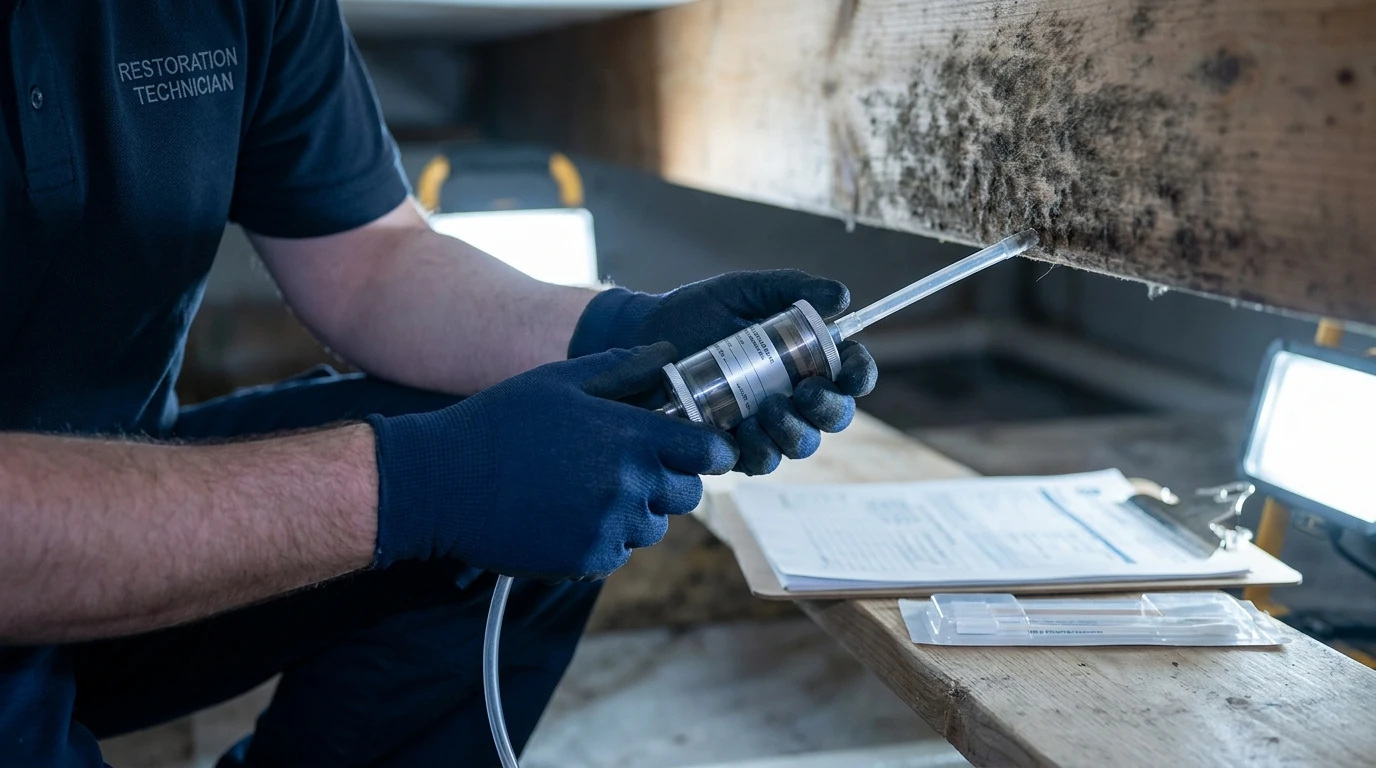
5. Post-remediation testing. A reputable contractor will recommend clearance testing after the job is complete, air sampling or surface swabs sent to an independent lab to confirm the mold count is back to normal background levels. This typically costs $300 to $600 and is worth it, especially if you’re selling the home or filing an insurance claim. See our guide to mold inspection and testing for what that process involves.
Does Homeowners Insurance Pay for Mold Remediation?
Homeowners insurance sometimes covers mold remediation, but only under specific conditions. The standard rule: if the mold resulted directly from a sudden, accidental covered water event (a burst pipe, an appliance failure, a roof leak from a storm), your policy will likely cover the remediation as part of that claim. If the mold grew from a slow, gradual leak that went unaddressed, most policies will deny the mold claim on the grounds of lack of maintenance.
Here’s what that looks like in practice:
- Covered: Pipe bursts behind a wall, you discover mold two weeks later during drying. The mold remediation is part of the water damage claim.
- Covered: Storm damages your roof, water intrudes, mold follows within weeks. Covered under the storm claim.
- Not covered: Slow drip under a sink goes unnoticed for six months. Mold is found during a renovation. Insurers treat this as a maintenance issue.
- Gray area: HVAC condensation mold, crawl space mold from ground moisture, attic mold from inadequate ventilation. Coverage varies by policy and adjuster.
If you’re navigating a water damage claim that may involve mold, our post on does homeowners insurance cover water damage walks through how those claims are evaluated. The documentation you create during the water damage phase directly affects whether the mold remediation gets covered.
One practical note: adjusters respond to written scopes, not verbal estimates. A professional remediation company should provide a line-item written scope before work begins, this is what your adjuster needs to approve the claim.
What Does the Mold Remediation Process Actually Involve?
Understanding the process helps you evaluate bids and set realistic expectations for timeline and cost.
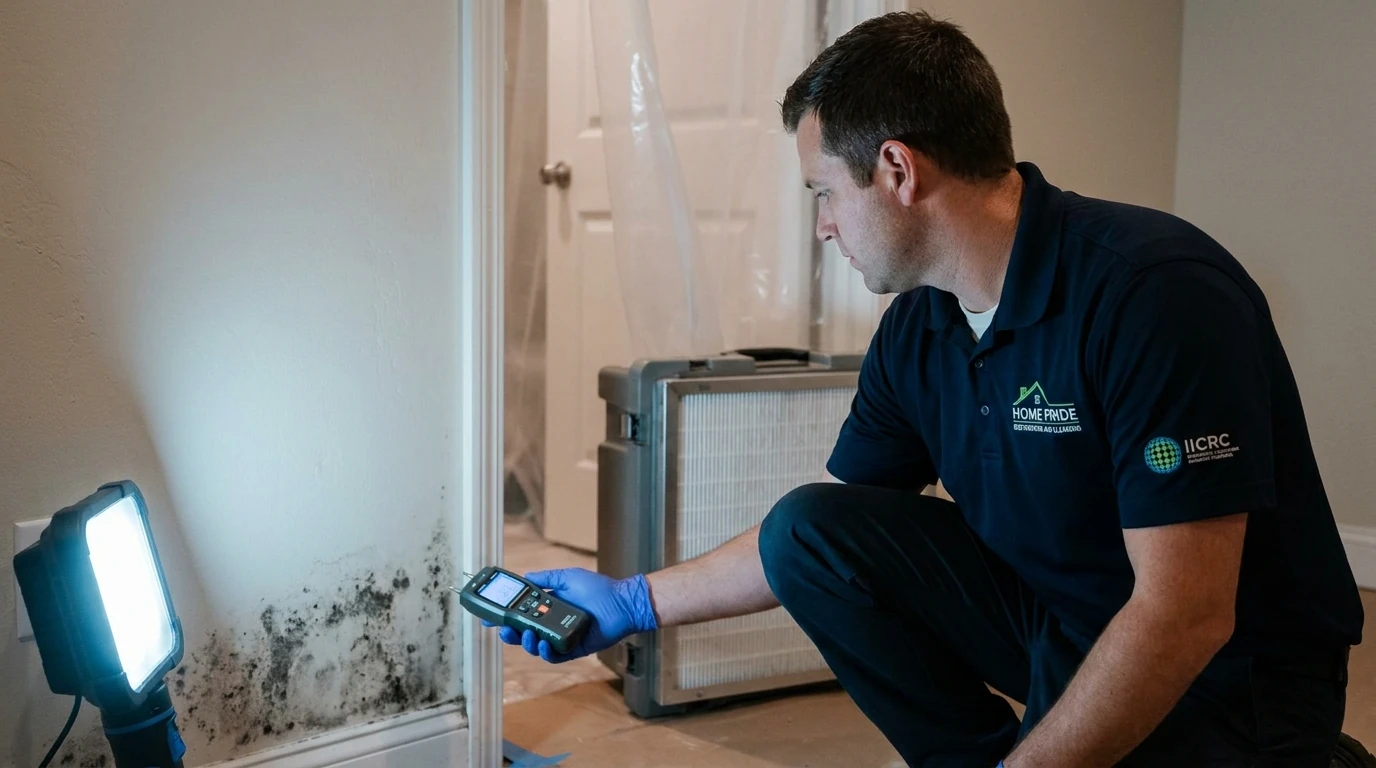
Step 1: Inspection and moisture mapping. Before any remediation starts, a technician identifies all affected areas using moisture meters and sometimes thermal imaging. This step prevents the common mistake of remediating visible mold while leaving hidden moisture sources untouched, which just means the mold comes back. A mold inspection may also include air sampling to establish a baseline.
Step 2: Containment setup. The work area is sealed with poly sheeting and negative air pressure is established using HEPA air scrubbers exhausting to the exterior. This keeps spores from migrating to unaffected areas of the home during the disturbance of remediation.
Step 3: Removal of affected materials. Non-salvageable materials, drywall with mold penetration, insulation, carpet padding, are removed in sealed bags and disposed of per local regulations. Structural wood that can be saved is HEPA-vacuumed and treated with an EPA-registered antimicrobial.
Step 4: Cleaning and treatment. All surfaces in the contained area are HEPA-vacuumed, wiped down, and treated. Air scrubbers continue running throughout.
Step 5: Drying and source correction. The moisture source that allowed mold to grow must be corrected before the area is rebuilt. If it’s a plumbing issue, that’s repaired first. If it’s a crawl space moisture problem, crawl space encapsulation is often the right long-term fix.
Step 6: Clearance testing. An independent lab tests air or surface samples to confirm mold levels are back to normal. This is the documentation that protects your insurance claim and gives you confidence the job is done.
Step 7: Reconstruction. New drywall, insulation, and finishes are installed. This is typically priced separately from remediation.
Timeline: most residential mold remediation jobs take 1 to 5 days for the remediation phase, plus drying time, plus reconstruction. A bathroom job might be done in two days. A crawl space job with encapsulation can run a week or more.
How Do You Know If You Need a Professional?
For mold areas under 10 square feet on a hard, non-porous surface (a bathroom tile, a concrete floor), the EPA says a careful DIY cleanup with proper PPE is reasonable. For anything larger, anything on drywall or wood, anything in a crawl space or attic, or any situation where someone in the home has respiratory sensitivities, professional remediation is the right call.
The risk of DIY on larger jobs isn’t just incomplete removal, it’s cross-contamination. Disturbing mold without proper containment can spread spores to unaffected areas of the house, turning a $2,000 problem into a $7,000 one.
If you’re not sure what you’re dealing with, a professional mold inspection before committing to remediation is money well spent. You’ll know the scope, the species, and the right approach before anyone starts swinging a hammer.
Home Pride Restoration and Cleaning provides written scopes before any work begins. Call (801) 995-2437 to schedule a mold assessment.
About Home Pride Restoration and Cleaning
Home Pride Restoration and Cleaning is an IICRC-certified restoration company serving Utah County and the Wasatch Front since 1997 (license RC-25-0737). Their crews handle mold remediation, mold inspection and testing, water damage restoration, fire and smoke damage restoration, and a full range of cleaning and property services across Saratoga Springs, Lehi, Eagle Mountain, Provo, Orem, and surrounding communities. Available 24/7 at (801) 995-2437.