Mold Inspection and Testing in American Fork
24/7 mold inspection and testing in American Fork, UT. IICRC-certified, insurance billing accepted. Call (801) 995-2437.
Our IICRC-certified technicians are dispatched from our Saratoga Springs, UT headquarters and are typically on-site in American Fork within 60 minutes of your call.
American Fork sits at roughly 4,600 feet elevation in the shadow of the Wasatch Range, and that geography matters when you’re dealing with mold. The valley’s cold winters trap moisture inside homes for months at a time, and the rapid spring snowmelt that feeds American Fork Canyon can push groundwater toward foundations faster than drainage systems can handle it. If you’ve noticed a musty smell in a basement, discoloration on drywall, or unexplained allergy flare-ups that ease up when you leave the house, a professional mold inspection and testing appointment is the right next step, not a can of spray paint and a wait-and-see approach.
Why American Fork Properties Are Prone to Hidden Mold
The housing stock along American Fork’s older residential streets includes a substantial number of homes built in the 1970s and 1980s, when vapor barrier standards were minimal and basement finishing was common. Those finished basements often have fiberglass batt insulation tucked between studs, insulation that holds moisture against wood framing for weeks without any visible sign on the surface. Combine that with Utah County’s wide temperature swings (summer afternoons above 95°F, winter nights below 20°F) and you get repeated condensation cycles inside wall cavities that can sustain mold colonies for years before a homeowner notices.
American Fork also borders Utah Lake’s watershed, and the clay-heavy soils in lower-elevation neighborhoods retain water longer than the sandy soils further up the bench. Homes with slab-on-grade construction in those lower areas are especially susceptible to moisture wicking through the concrete, creating the damp, dark conditions that Stachybotrys and Cladosporium species favor.
Our Mold Inspection and Testing Process
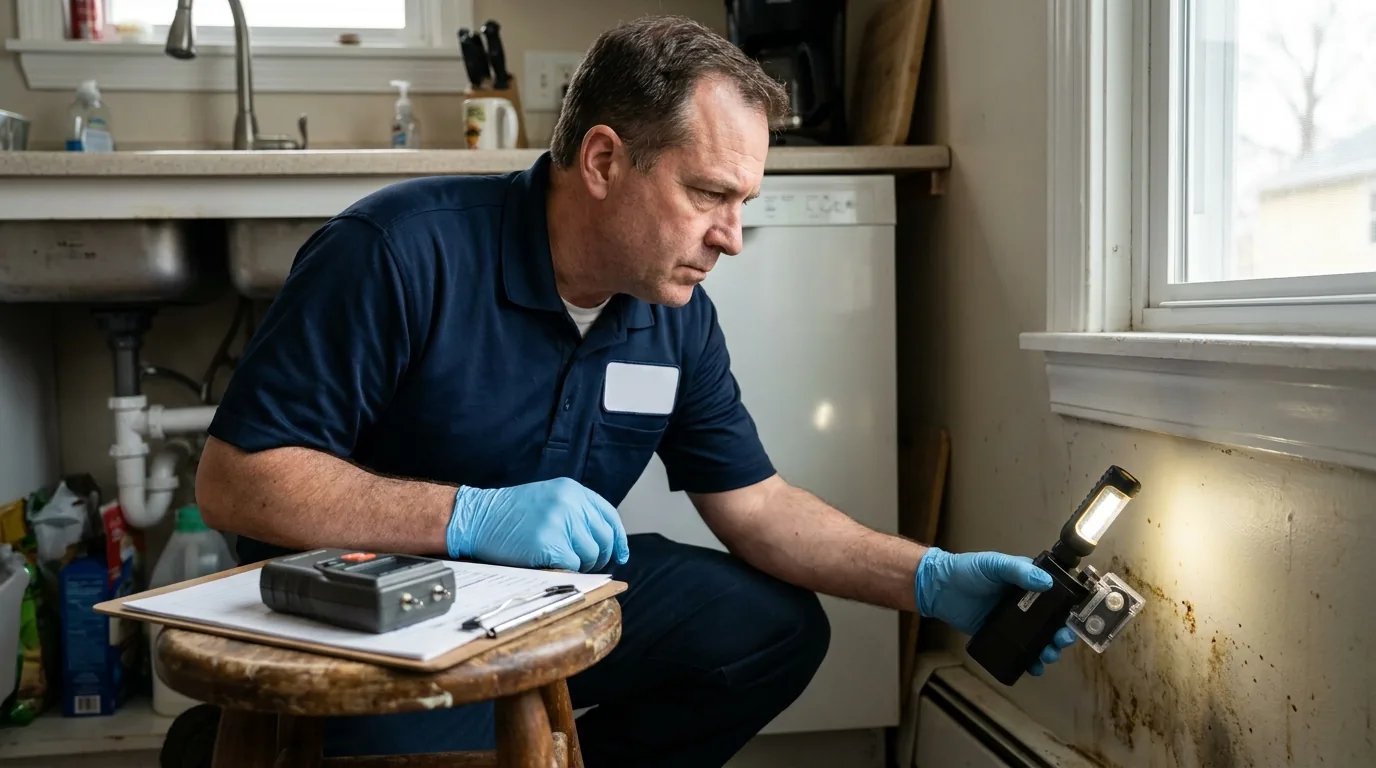
A mold assessment isn’t a flashlight walk-through. The inspection starts with a full visual survey, attic, crawl space, mechanical room, and every finished basement area, using a calibrated thermal imaging camera to identify temperature differentials that suggest hidden moisture. Moisture meter readings are taken at multiple points across suspect surfaces before any samples are collected.
When sampling is warranted, we use a combination of air cassette sampling and surface swab or tape-lift collection, depending on what the visual inspection reveals. Air samples are drawn at a measured volume and sent to an accredited third-party laboratory; results typically return within 24–48 hours. The lab report identifies spore types, concentrations, and compares indoor counts against an outdoor baseline sample taken the same day, that comparison is what separates a meaningful result from a number without context.
The written assessment you receive includes moisture source identification, a spore-type breakdown, and a prioritized remediation recommendation if levels are elevated. If remediation isn’t needed, you get documentation that says so, useful for real estate transactions, HOA disputes, or landlord-tenant conversations.
Response Time from Saratoga Springs to American Fork
Home Pride Restoration and Cleaning is headquartered in Saratoga Springs, roughly 10–12 miles from American Fork via UT-73 and I-15. Under normal traffic conditions, a technician can be on-site in American Fork within 45–60 minutes of your call. The stretch of I-15 between Lehi and American Fork can slow during morning and evening commute windows, but for most inspection appointments, which are typically scheduled rather than emergency-dispatch, same-day availability is the norm.
For properties near the north end of American Fork closer to Highland, the drive along Timpanogos Highway is often faster than the freeway during peak hours, and our team knows the route.
Local Note: What the Canyon Does to Indoor Air Quality
Here’s something specific to working in American Fork: the canyon wind pattern matters. On still summer evenings, cool air drains down American Fork Canyon and settles into the valley floor. Homes on the lower bench, particularly those with older single-pane windows or gaps around basement egress windows, pull that cooler, moisture-laden air inside overnight. Over a season, that nightly air exchange raises indoor relative humidity enough to sustain mold growth even in homes with no plumbing history. When we collect outdoor baseline air samples for comparison, we account for the time of day and wind direction, because a sample taken at 2 p.m. on a dry afternoon will read very differently from conditions at 7 a.m. after a canyon drainage event. That calibration is part of what makes the testing data actionable rather than just a number on a page.
If you’re in American Fork and something in your home doesn’t smell right, or if you’re buying or selling a property and want independent documentation of air quality, call Home Pride Restoration and Cleaning at (801) 995-2437. We’ve been doing this work since 1997, we’re IICRC Certified, and we’ll give you a straight answer about what the data shows.
Serving American Fork from our Saratoga Springs headquarters — ★ 5.0 · 36 Google reviews
“He did an amazing job! My stairs were so bad and they looked brand new when he got done!” — B, August 2026Read our reviews on Google →
Mold Inspection and Testing in American Fork: Service Coverage
Frequently Asked Questions
How fast can you arrive for mold inspection and testing in American Fork?
Are homes near the lower bench of American Fork more likely to test positive for mold?
How does American Fork's elevation and cold winters affect mold growth patterns compared to lower Utah valleys?
I'm buying a home in American Fork's 84003 ZIP code — can you do a mold inspection before closing?
What types of mold are most commonly found in American Fork homes, and does it matter which type?
Does my homeowner's insurance cover a mold inspection in American Fork, and will the test results affect my claim?
Mold Inspection and Testing response in American Fork
Most American Fork calls see a technician on-site within 60 minutes from our Saratoga Springs headquarters.