Mold Inspection and Testing in Provo
24/7 mold inspection and testing in Provo, UT. IICRC-certified, insurance billing accepted. Call (801) 995-2437.
Our IICRC-certified technicians are dispatched from our Saratoga Springs, UT headquarters and are typically on-site in Provo within 60 minutes of your call.
Provo’s position along the Wasatch Front means the city cycles through hard freezes, rapid spring snowmelt, and summer monsoon moisture in ways that keep crawl spaces and basement walls perpetually damp. That moisture cycle, combined with the valley’s relatively high humidity trapped against the mountains, creates conditions where mold can begin colonizing a damp surface in as little as 24 to 48 hours. If you’ve noticed a musty smell in your home or received an elevated reading on a home air quality monitor, a professional mold inspection and testing assessment is the right next step before any remediation work begins.
Why Provo Properties Are Prone to Mold Growth
Provo’s housing stock spans nearly a century of construction styles, and that range matters when it comes to mold risk. Older homes, particularly those built before 1970 in established neighborhoods near the university corridor, often have minimal vapor barriers in their crawl spaces and original single-pane windows that generate condensation on interior surfaces throughout the winter. Newer developments on the west side of the city, built quickly during growth booms, sometimes have HVAC ductwork routed through unconditioned spaces where temperature swings promote condensation inside the ducts themselves.
The Utah Lake influence is real and measurable. Properties within a few miles of the lake shore sit in a microclimate that runs 5 to 8 percent higher in relative humidity than neighborhoods further east toward the foothills. That difference is enough to push interior wall cavities past the threshold where mold spores, always present in ambient air, find the moisture they need to take hold. Irrigation-heavy landscaping common in Provo’s residential areas also keeps soil saturated against foundation walls for months at a time, and that sustained ground moisture wicks upward into concrete block and older brick foundations.
Our Mold Inspection and Testing Process in Provo
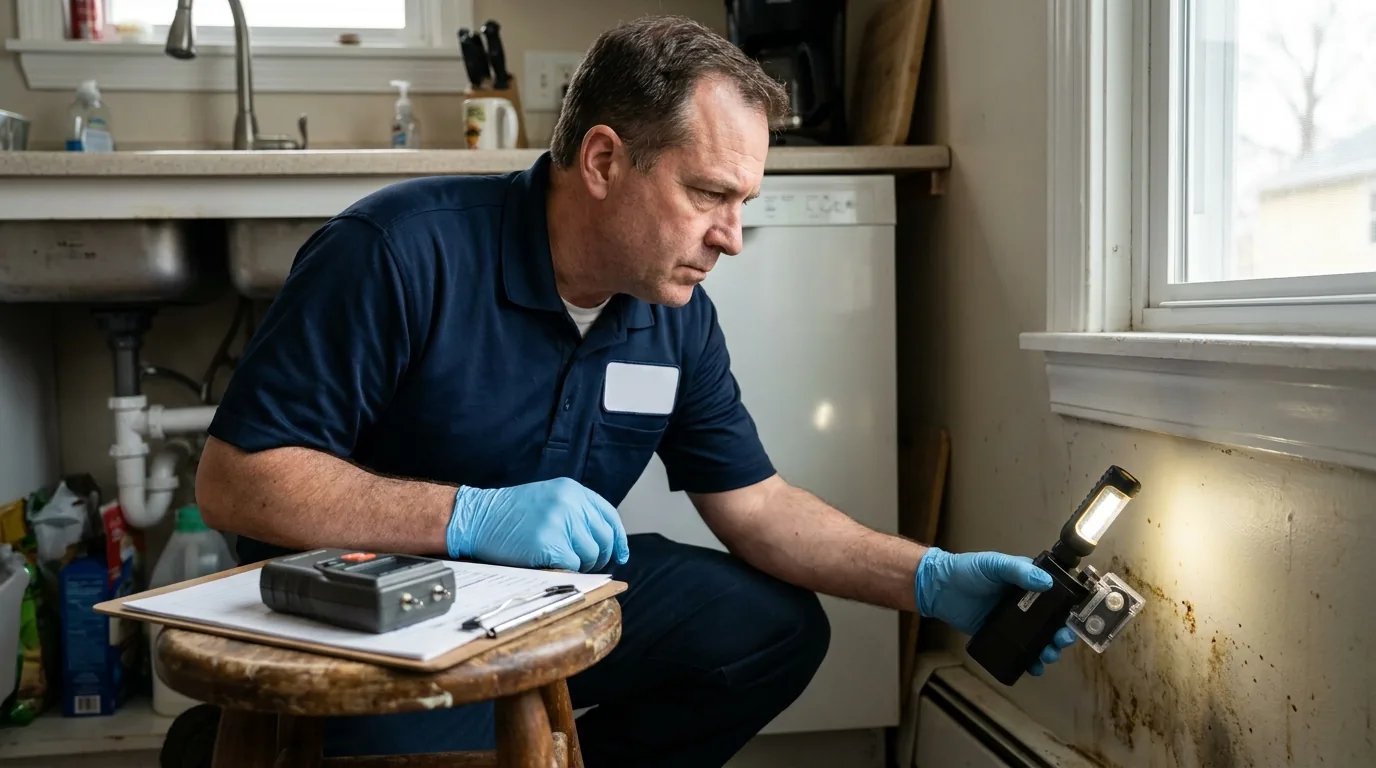
A mold assessment is not a visual scan with a flashlight. The inspection begins with a structured walkthrough using calibrated moisture meters and thermal imaging to map wet zones behind drywall, under flooring, and inside wall cavities, areas where visible mold is often the last sign to appear, not the first. Moisture readings are logged by room so you have a documented baseline, which matters both for remediation planning and for any insurance claim you may file.
Where moisture readings or visual indicators suggest active growth, air sampling and surface sampling follow. Air samples are drawn with a calibrated pump and cassette, capturing spore counts in affected rooms and in an outdoor control sample. The comparison between indoor and outdoor spore levels, and the species breakdown, tells a more complete story than a single number. Surface swab or tape-lift samples from suspected colonies identify the specific mold genera present, which affects remediation protocol. All samples are sent to an accredited third-party laboratory; results typically return within 24 to 48 hours.
Home Pride Restoration and Cleaning carries IICRC certification, which means the inspection follows S520 Standard Reference Guide protocols, the same framework that insurance adjusters and industrial hygienists recognize when reviewing documentation.
Response Time and Coverage Across Provo
The company’s headquarters sits in Saratoga Springs, roughly 20 to 25 minutes from most Provo addresses via US-89 South or I-15. For properties in the central and north Provo areas, near the BYU campus corridor or along University Avenue, expect a technician on-site within 30 to 40 minutes of your call during normal business hours. South Provo and the areas approaching the Springville border typically run 35 to 45 minutes depending on traffic on State Street.
Mold inspection is not always an emergency in the same way a burst pipe is, but timing still matters. If you’ve had a recent water intrusion event, every day without an assessment is another day mold has to establish deeper root structures in porous materials. Calling (801) 995-2437 early in the process keeps your remediation options, and your costs, more manageable.
Local Note: What Provo’s Inversion Season Does to Indoor Air Quality
Provo sits in a valley bowl that traps cold air, and everything in it, during winter temperature inversions. From roughly November through February, the Utah Valley inversion can push outdoor particulate counts high enough that residents keep windows shut for weeks at a time. That extended period of reduced ventilation concentrates indoor air pollutants, including mold spores from any active colony in the home. Technicians who work this area regularly know to weight indoor air sampling results differently during inversion season: an indoor-to-outdoor spore ratio that looks alarming in July may need context in January when outdoor reference counts are artificially suppressed by the same stagnant air mass. Interpreting results accurately, not just generating numbers, is where local experience shows up in the report.
If your home has shown any signs of moisture intrusion this past season, or if a musty odor has intensified since the heating system came on, reach out to Home Pride Restoration and Cleaning for a mold inspection and testing appointment. Serving Provo since our founding in 1997, we can document what’s in your air, identify the source, and give you a clear picture of what remediation, if any, your home actually needs. Call (801) 995-2437 to schedule.
Serving Provo from our Saratoga Springs headquarters — ★ 5.0 · 36 Google reviews
“He did an amazing job! My stairs were so bad and they looked brand new when he got done!” — B, August 2026Read our reviews on Google →
Mold Inspection and Testing in Provo: Service Coverage
Frequently Asked Questions
How fast can you arrive for mold inspection and testing in Provo?
How long has Home Pride been doing mold inspections in the Provo area, and are you familiar with older homes near the BYU campus corridor?
Does Provo's proximity to Utah Lake actually affect mold risk in homes near the west side of the city?
What ZIP codes in Provo do you serve, and how quickly can you reach south Provo near the Springville border?
What's the difference between air sampling and surface sampling, and which one do you use in Provo homes?
Will my homeowner's insurance cover a mold inspection in Provo, and does the report you provide satisfy adjuster requirements?
Mold Inspection and Testing response in Provo
Most Provo calls see a technician on-site within 60 minutes from our Saratoga Springs headquarters.