
Mold Inspection and Testing in Herriman
24/7 mold inspection and testing in Herriman, UT. IICRC-certified, insurance billing accepted. Call (801) 995-2437.
Our IICRC-certified technicians are dispatched from our Saratoga Springs, UT headquarters and are typically on-site in Herriman within 60 minutes of your call.
Herriman’s rapid growth along the Wasatch Front has brought thousands of new homes to the area in a compressed window, and with fast construction timelines come shortcuts in moisture barriers, vapor control, and HVAC installation that don’t show up until years later. Add Utah County’s dramatic swing between dry summers and wet, freeze-thaw winters, and you have conditions where mold can establish itself inside wall cavities or beneath slab-on-grade flooring long before a homeowner notices a smell or a stain. A professional mold inspection and testing assessment gives you documented evidence of what’s actually in your air and your building materials, not just a guess.
Why Herriman Homes Are Particularly Vulnerable to Hidden Mold
Most of Herriman’s housing stock was built after 2000, with a large wave going up between 2005 and 2015. That era of construction in the Salt Lake Valley leaned heavily on engineered wood products, OSB sheathing, LVL beams, composite subflooring, that absorb and retain moisture far more aggressively than dimensional lumber. When a supply line drips inside a cabinet for three weeks or a window flashing is installed slightly off-plane, that OSB can reach mold-colonizing moisture levels (above 19% wood moisture content) within 48 to 72 hours.
The geography compounds the risk. Herriman sits at the base of the Oquirrh Mountains, and the terrain funnels snowmelt and stormwater toward the valley floor in ways that catch homeowners off guard. Crawl spaces and below-grade finished basements in newer subdivisions can accumulate ground moisture even when there’s been no visible flooding. Utah’s arid reputation leads many residents to assume mold isn’t a local concern, which is exactly why infestations often go undetected until they’re well established.
Our Mold Inspection and Testing Process in Herriman
A thorough mold assessment here isn’t the same as one in an older, single-story ranch home in a wetter climate. Our process is calibrated to the construction patterns and climate conditions specific to the Herriman area.
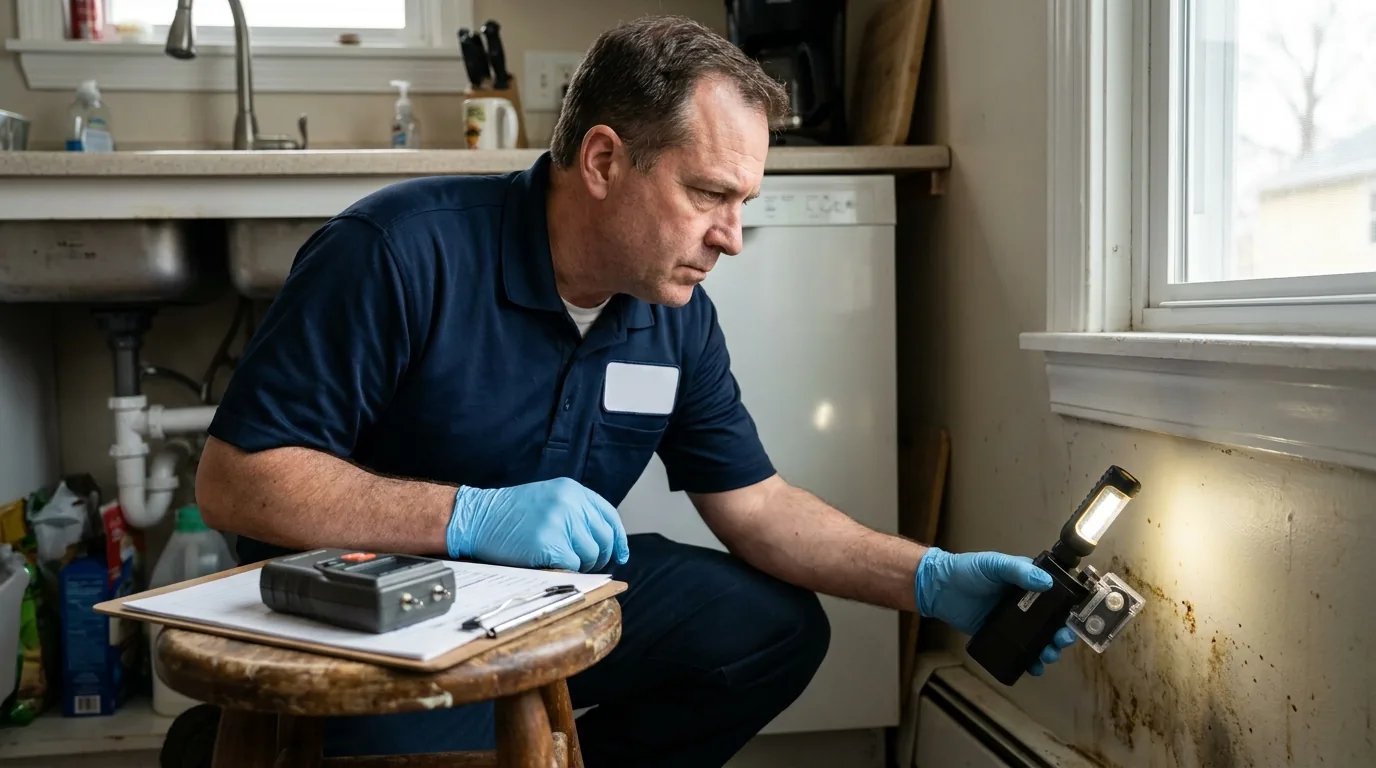
Visual and moisture mapping: We start with a full walk-through using calibrated moisture meters and thermal imaging to identify anomalies behind drywall, under flooring, and inside mechanical chases. In Herriman’s newer two-story homes, we pay particular attention to the transition zones between the garage and living space and around second-floor laundry hookups, two of the most common hidden moisture sources in this housing stock.
Air sampling: We collect spore trap samples from the interior and a control sample from outside. Lab analysis (typically returned within 24–48 hours through an accredited third-party lab) tells us not just whether mold is present, but which genera and at what concentration relative to outdoor baseline levels. Elevated Stachybotrys or Chaetomium counts, for example, point toward a chronic moisture source rather than incidental outdoor infiltration.
Surface and bulk sampling: When visual evidence or moisture readings suggest active growth, we collect tape-lift or swab samples from suspect surfaces. If a wall cavity needs to be opened, we document everything photographically before and after.
Written report: You receive a clear, lab-backed report that insurance carriers, HOA management companies, and real estate transaction parties can all act on. If remediation is warranted, the report maps the affected zones so the scope of work is defined before a single square foot of drywall is touched.
Response Time and Coverage Across Herriman
Home Pride Restoration and Cleaning operates out of Saratoga Springs, which puts us roughly 10–15 minutes from most of Herriman via Bangerter Highway or the Mountain View Corridor. For mold inspection appointments, which are scheduled rather than emergency dispatches, we typically offer next-day availability for Herriman addresses in the 84096 ZIP code. When a mold concern is tied to an active water loss that needs same-day attention, our response window to Herriman is generally under an hour from the time you call.
We’ve worked in subdivisions throughout the area, from the newer developments near Herriman’s commercial corridor along 13400 South to the hillside communities closer to the Oquirrh foothills. Knowing the street layouts and typical home configurations in this part of the valley means we’re not orienting ourselves on arrival, we’re working.
Local Note: What Herriman’s Elevation Does to Indoor Humidity Readings
Here’s something that matters in the field: Herriman sits between roughly 4,900 and 5,400 feet in elevation, and at that altitude, relative humidity readings behave differently than they do at sea level. A 45% RH reading in a Herriman basement isn’t the same moisture load as 45% RH in a lower-elevation home along the Wasatch Front. Experienced inspectors account for this when interpreting moisture meter readings and air sample results, a technician calibrated only to coastal or lower-elevation conditions may underread the actual drying risk in a Herriman structure. Our IICRC-certified team adjusts reference baselines accordingly, which affects both the inspection findings and any remediation scope that follows.
If you’ve noticed a musty odor after a wet winter, found discoloration near a window frame, or are preparing to buy or sell a home in Herriman, call (801) 995-2437 to schedule a mold inspection and testing assessment. We’ll give you a clear picture of what’s in your home, and what, if anything, needs to happen next.
Serving Herriman from our Saratoga Springs headquarters — ★ 5.0 · 36 Google reviews
“I’ve hired Curt multiple times for carpet cleaning and once for a couch cleaning and he does a great job every time! Affordable, friendly, reliable. 10/10 recommend!” — Shannon, June 2026Read our reviews on Google →
Mold Inspection and Testing in Herriman: Service Coverage
Frequently Asked Questions
How fast can you arrive for mold inspection and testing in Herriman?
How long does a mold inspection take for a typical Herriman home?
Are homes in Herriman's newer subdivisions more likely to have mold issues than older Utah homes?
Will my homeowner's insurance cover mold testing for a Herriman property?
Does Herriman's elevation or dry climate affect how mold grows in homes here?
Do Herriman HOAs or the city require a clearance test after mold remediation?
Mold Inspection and Testing response in Herriman
Most Herriman calls see a technician on-site within 60 minutes from our Saratoga Springs headquarters.