Fire Damage Restoration in American Fork
24/7 fire damage restoration in American Fork, UT. IICRC-certified, insurance billing accepted. Call (801) 995-2437.
Our IICRC-certified technicians are dispatched from our Saratoga Springs, UT headquarters and are typically on-site in American Fork within 60 minutes of your call.
When a kitchen fire tears through a home near American Fork’s older neighborhoods along 100 North or a garage blaze scorches a newer build in the Shadow Ridge area, the damage compounds fast, smoke infiltrates HVAC systems within hours, soot begins etching surfaces within days, and the dry Utah County air can lock odor molecules into porous materials before most homeowners even know where to start. Home Pride Restoration and Cleaning has been working fire damage scenes across the Wasatch Front since 1997, and the specific combination of American Fork’s housing stock, elevation, and climate creates a fire restoration picture that looks different here than it does almost anywhere else in the valley.
Why American Fork Properties See Distinct Fire Damage Patterns
American Fork sits at roughly 4,600 feet elevation, and that altitude matters more than most people realize after a fire. Lower ambient humidity, especially during the valley’s long dry stretches from late spring through early fall, means smoke residue desiccates and bonds to drywall, wood framing, and insulation faster than it does in lower-elevation communities. Soot that might stay loosely attached for 48 hours in a coastal climate can be chemically bonded to a surface in 24 hours here.
The city’s housing stock adds another layer. American Fork has a significant number of homes built between the late 1960s and early 1990s, many of them in the established grid streets east of State Street. These homes frequently feature original wood-panel siding, older attic insulation (sometimes cellulose or early fiberglass batts), and forced-air furnace systems with ductwork that acts like a smoke highway through every room. A contained kitchen fire in one of these homes can deposit fine soot particles in bedrooms on the opposite end of the house within a single heating cycle.
Our Fire Damage Restoration Process in American Fork
Every job starts with a systematic scope, not a walk-through with a clipboard, but a room-by-room documentation of char depth, smoke migration, odor penetration, and structural integrity. In American Fork’s older split-level and ranch-style homes, we pay particular attention to subfloor cavities and crawl spaces, where heat and smoke travel upward and collect.
From there, the process moves through five stages:
- Emergency board-up and tarping, securing the structure against Utah County’s weather, which can swing from afternoon heat to overnight cold in a single day, especially in spring and fall.
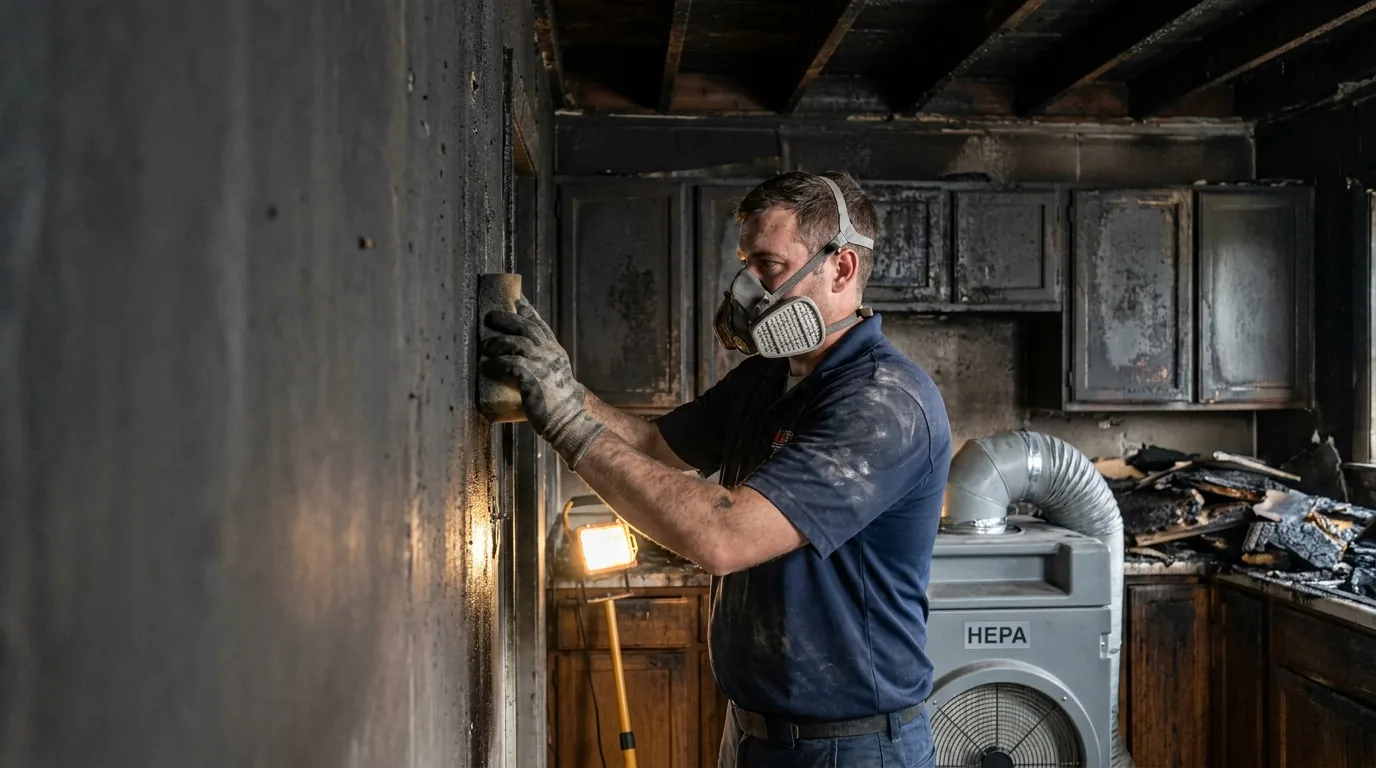
- Controlled demolition, removing unsalvageable materials (char-damaged drywall, melted insulation, compromised framing) while preserving everything that can be cleaned and restored.
- Dry ice blasting and HEPA vacuuming, for soot removal on structural surfaces, particularly effective on the exposed wood framing common in American Fork’s older construction.
- Thermal fogging and hydroxyl treatment, neutralizing smoke odor molecules embedded in wall cavities and HVAC systems, not just masking surface smells.
- Structural drying and moisture management, fires generate enormous amounts of water from suppression efforts; we deploy industrial dehumidifiers calibrated for Utah’s low-humidity baseline so we’re not over-drying materials that need controlled moisture retention.
Home Pride carries IICRC certification, and our technicians document every phase with photos and written logs, the kind of paper trail that Utah County insurance adjusters and American Fork building inspectors both expect before reconstruction permits are issued.
Response Time from Saratoga Springs to American Fork
Our headquarters in Saratoga Springs sits roughly 8–10 miles from central American Fork via Redwood Road or Pioneer Crossing. Under normal traffic conditions, that’s a 15–20 minute drive. For evening and overnight calls, which is when most residential fires are reported, we can typically have a lead technician on-site within 30 minutes of your call to (801) 995-2437.
If the fire is in the Shadow Ridge or Canyon Road corridor near the mouth of American Fork Canyon, add a few minutes for the canyon-adjacent routing, but response is still well inside the hour. We do not subcontract emergency response to a third party, so the person who answers your call is connected directly to the crew heading to your door.
American Fork Insurance Coordination
Most homeowners in the 84003 ZIP code carry standard HO-3 policies that cover sudden and accidental fire damage, including smoke and water damage from suppression. What trips up claims in American Fork, and across Utah County generally, is incomplete documentation in the first 72 hours. Adjusters want to see pre-remediation photos, air quality readings, and a written scope before any demolition begins.
We handle that documentation from the moment we arrive. We communicate directly with your adjuster, provide line-item estimates in the format most Utah carriers accept, and flag any code-upgrade requirements that American Fork’s building department may require before reconstruction, items like updated egress windows or smoke detector placement that weren’t required when the home was originally built.
Local Note
Homes built in American Fork’s established neighborhoods east of State Street in the 1970s and early 1980s frequently used a blown-in cellulose insulation in attic spaces that was treated with fire retardant at the time of installation. After a fire, that same insulation absorbs water from suppression efforts and becomes a dense, slow-drying mass that can harbor secondary mold growth within 48–72 hours if not addressed. We always probe attic insulation depth and moisture content in these homes before closing out the fire scope, it’s a step that gets skipped on jobs handled by crews less familiar with this era of American Fork construction, and it’s the most common source of post-remediation callbacks we see when we take over a job someone else started.
If you’re dealing with fire or smoke damage in American Fork right now, call (801) 995-2437. We’ll give you an honest assessment of what’s salvageable, what isn’t, and what the path forward looks like, in plain language, not contractor jargon.
Serving American Fork from our Saratoga Springs headquarters — ★ 5.0 · 36 Google reviews
“He did an amazing job! My stairs were so bad and they looked brand new when he got done!” — B, August 2026Read our reviews on Google →
Fire Damage Restoration in American Fork: Service Coverage
Frequently Asked Questions
How fast can you arrive for fire damage restoration in American Fork?
How quickly can Home Pride reach a fire damage scene in American Fork's Shadow Ridge neighborhood?
Does American Fork's dry climate affect how smoke odor is treated after a fire?
What building permit or inspection requirements does American Fork have for post-fire reconstruction?
Are the older homes along 100 North and the established grid streets in American Fork harder to restore after a fire?
Will my homeowner's insurance cover fire and smoke restoration in American Fork, and how does Home Pride help with the claim?
Fire Damage Restoration response in American Fork
Most American Fork calls see a technician on-site within 60 minutes from our Saratoga Springs headquarters.