
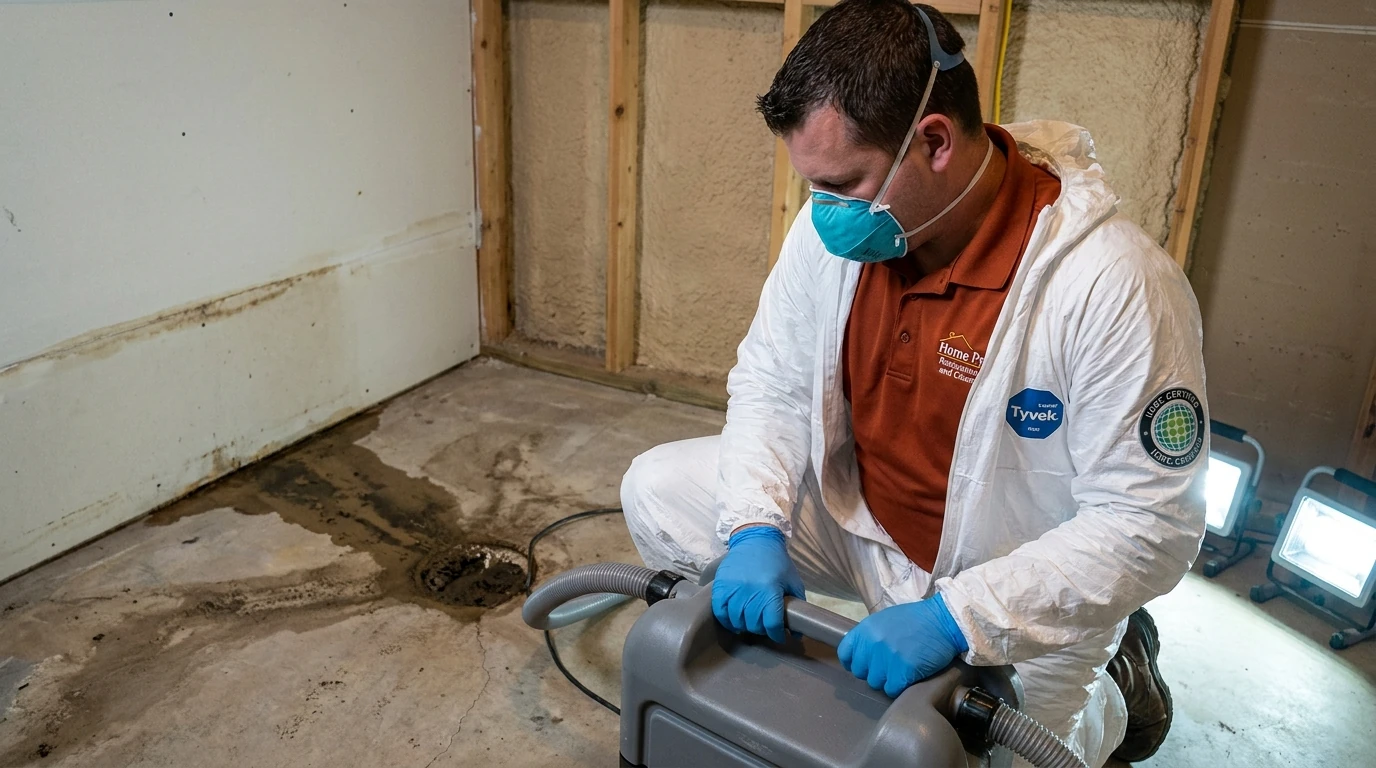
TL;DR: For a sewage backup in Saratoga Springs, stop using water in the house first, then figure out if the problem is your private lateral or the city main. A plumber or restoration company handles a private-side backup; the city handles a main-line issue. Either way, sewage is Category 3 black water and needs a licensed restoration company for cleanup, not a mop and bucket. Call Home Pride Restoration at (801) 995-2437, available 24/7, for the cleanup and sanitization once the source is controlled.
If you just watched a floor drain or basement toilet start pushing dark water back into your house, you’re probably standing in the hallway right now trying to figure out who to even call. Saratoga Springs homes built on the benches below Lake Mountain often have finished basements, and a sewer backup there means carpet, drywall, and sometimes HVAC ductwork are all sitting in contaminated water. The order of calls matters, and calling the wrong one first wastes time you don’t have.
Who do you call first when sewage backs up?
Call a licensed plumber or your restoration company first if the backup is isolated to your house; call Saratoga Springs City Public Works only if you suspect the municipal sewer main itself is blocked. A single fixture backing up (one toilet, one floor drain) usually points to a problem on your side of the property line. Multiple fixtures backing up at once, especially the lowest drain in the house, often means the blockage is downstream, possibly in the city main.
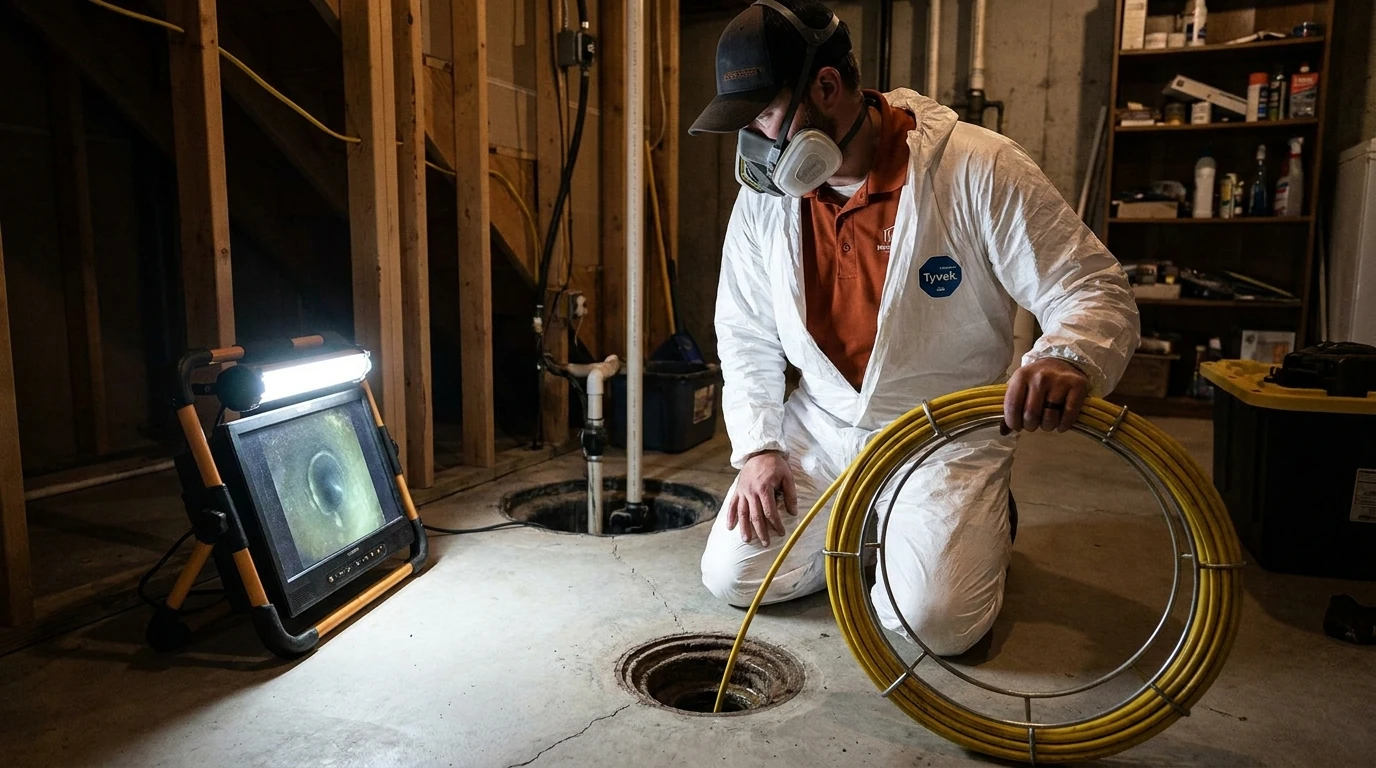
If you’re not sure which it is, that’s fine. A plumber can run a camera down the line in under an hour and tell you definitively whether the clog sits in your lateral or beyond it. Do not run water, flush toilets, or run the dishwasher or washing machine until you know, because adding more water pushes the backup higher and spreads contamination further into the house.
If there’s any chance of electrical hazard (water near outlets or panels) or a gas smell, that call comes before any of this: get everyone out and call 911 or your utility company first. Sewage backup alone is a health hazard, not usually an electrical or fire one, but don’t guess if wiring is involved.
Is it safe to stay in the house during a sewage backup?
No, not in the affected rooms. Sewage is Category 3 water under the IICRC S500 standard, meaning it’s grossly contaminated and can carry bacteria, viruses, and parasites. Keep kids, pets, and anyone with a compromised immune system out of the affected area entirely, and don’t let anyone wade through it in regular shoes.
You don’t need to evacuate the whole house in most cases, just seal off and avoid the contaminated rooms until a restoration crew has extracted the water, removed anything porous that absorbed it (carpet pad, baseboards, sometimes drywall), and treated the area with an EPA-registered antimicrobial. We cover the specific health risks, what gets thrown away, and what can be saved in more detail in why you can’t DIY a sewage backup, which is worth reading before you start moving anything yourself.
City sewer main or private lateral, who’s responsible?
The private lateral, the pipe running from your house to the city’s main line, is the homeowner’s responsibility; the main line itself belongs to the city. That split is standard across most Utah municipalities, including Saratoga Springs. If a plumber’s camera inspection shows the blockage is on your side of the property line, the cleanup and repair cost falls to you (and potentially your homeowners insurance, more on that below). If it’s confirmed in the city main, Saratoga Springs Public Works handles the repair, though you’ll still likely need a restoration company for the sewage that already came into your home. Check the current City of Saratoga Springs website or call their general line to report a suspected main-line issue; we’re not going to guess a number here because utility contact lines change.
Will homeowners insurance cover the cleanup?
Most standard homeowners policies do not cover sewer or drain backup unless you added a water backup endorsement. This is one of the most commonly misunderstood gaps in a standard policy. Without that endorsement, a sump pump failure or sewer backup is typically excluded, even though a burst pipe inside the house usually is covered. Check your declarations page for “water backup” or “sewer and drain backup” coverage before you assume anything is paid for, and see the Insurance Information Institute’s overview of standard homeowners coverage for how these exclusions typically work. A restoration company can still document the loss with photos and moisture readings in case you do have the endorsement, or in case the cause turns out to be a covered plumbing failure instead.
What happens when you call a restoration company?
A restoration crew extracts the standing water, removes anything that can’t be sanitized, and dries and treats the structure to the IICRC S500 standard for black water loss. On arrival, expect the crew to confirm the water category, shut off the source if it hasn’t been already, and start extraction with truck-mounted or portable pumps. Porous materials like carpet, carpet pad, and sometimes baseboards or lower drywall usually get removed rather than dried in place, since Category 3 water can’t be fully sanitized once it’s soaked into those materials.
After extraction and removal, the crew applies an EPA-registered antimicrobial, sets air movers and a dehumidifier, and monitors moisture levels daily until the space reads dry. If odor lingers after drying, that’s a separate step; see odor removal and deodorization for how that’s handled once the structural drying is done. Have your plumber’s findings (private lateral vs. main line) ready when you call, since it affects how the crew documents the loss for your insurer.
If the water also reached a finished basement living space, not just a utility area, the extraction and drying scope is usually broader; our basement flooding cleanup page covers what that typically involves. For cost ranges specific to this area, see sewage backup cleanup cost in Saratoga Springs.
A sewage backup in a finished Saratoga Springs basement isn’t something to handle with a shop vac and a prayer. Confirm whether the problem is your lateral or the city main, keep everyone out of the affected rooms, and get a restoration crew on-site for the actual cleanup. Request a sewage cleanup assessment once the source is controlled.
About Home Pride Restoration
Home Pride Restoration is an IICRC Certified company that has served Saratoga Springs, UT and the surrounding Utah County area since 1997. The company’s crews handle sewage cleanup, basement flooding, water damage restoration, and related structural drying and odor removal across the region, and are available 24/7 for emergency calls.