Sewage backup is one of the few home emergencies where the instinct to grab a mop and handle it yourself can genuinely make you sick. Raw sewage, whether it’s backing up through a floor drain, a toilet, or a basement utility sink, contains Category 3 water, the most contaminated classification in the restoration industry. That means fecal bacteria, viruses, parasites, and chemical waste all mixed together. Before you pull on rubber gloves and start bailing, here’s what you need to know about why this cleanup is different from every other mess in your house.
What’s Actually in Sewage Water (It’s Worse Than You Think)
The term “sewage” sounds unpleasant but manageable. The reality is more specific, and more dangerous. A single milliliter of untreated sewage can contain millions of bacterial cells. The pathogens most commonly present include E. coli, Salmonella, Shigella, Campylobacter, and Clostridioides difficile (C. diff), a bacterium that produces spores capable of surviving on dry surfaces for months. Hepatitis A and norovirus are also common in sewage and can be transmitted through skin contact or accidental ingestion, which is easier than it sounds when you’re wiping down surfaces and then touching your face.
Beyond bacteria and viruses, sewage often carries parasites like Giardia and Cryptosporidium, both of which are resistant to standard household disinfectants. If you have young children, elderly family members, or anyone immunocompromised in your home, the exposure risk is significantly elevated. Even healthy adults can develop gastrointestinal illness, respiratory irritation from aerosolized droplets, or skin infections from open cuts.
In Utah homes, particularly in Saratoga Springs and the broader Utah County area, sewer backups frequently occur after heavy spring runoff overwhelms municipal lines, or when aging clay-tile lateral lines crack under shifting soils. The source matters for cleanup, but it doesn’t change the contamination category: once sewage enters your home, everything it touched is considered contaminated.
The Immediate Steps, What to Do in the First 30 Minutes
Before anything else, stop the source if you can.
- Don’t run water anywhere in the house. Every flush, every faucet, every dishwasher cycle pushes more water toward the backup point. Alert everyone in the household immediately.
- Avoid the affected area. Don’t walk through standing sewage water if you can help it. If you must enter, wear rubber boots, waterproof gloves, and eye protection at minimum.
- Turn off electricity to the affected zone at the breaker panel if there’s any standing water near outlets, appliances, or your electrical panel. Water and electricity are a separate emergency on top of the sewage one.
- Ventilate the space by opening windows if weather allows. Sewage releases hydrogen sulfide gas, the rotten-egg smell, which is an irritant at low concentrations and toxic at high ones in enclosed spaces.
- Document everything with photos and video before touching anything. Your homeowner’s insurance claim will depend on this documentation. Photograph the source point, the extent of water spread, and any damaged materials.
- Call your insurance company to report the loss. Many policies cover sewage backup as a rider; some exclude it. Knowing your coverage before cleanup starts affects what records you need to keep.
What you should not do in this window: do not use a standard wet/dry shop vac to extract the water. Consumer vacuums aren’t sealed, which means they aerosolize contaminated particles into the air you’re breathing. Do not run fans or an HVAC system, the same problem applies, and you risk spreading contamination to clean areas of the house.
Why DIY Cleanup Fails Even When It Looks Like It Worked
This is the part nobody warns you about clearly enough: sewage cleanup that looks finished often isn’t.
Sewage water wicks into porous materials, drywall, insulation, wood subfloor, carpet pad, concrete block, faster than surface drying happens. You can wipe down a tile floor until it looks spotless and still have contaminated water sitting inside the wall cavity behind it, or soaked into the OSB subfloor beneath it. Within 24 to 48 hours in Utah’s relatively dry climate, that hidden moisture won’t look wet anymore. But the bacteria and organic material are still there, and mold colonization can begin in as little as 24–48 hours in the right conditions.
Household disinfectants, bleach, Pine-Sol, commercial antibacterial sprays, are not sufficient for Category 3 contamination. The EPA and IICRC (the Institute of Inspection, Cleaning and Restoration Certification, the industry’s primary standards body) specify that porous materials contaminated by sewage generally need to be removed and discarded, not cleaned in place. That means drywall, carpet, insulation, and in some cases subflooring. Disinfecting the surface of a material that has absorbed sewage is like painting over rust: it looks addressed and isn’t.
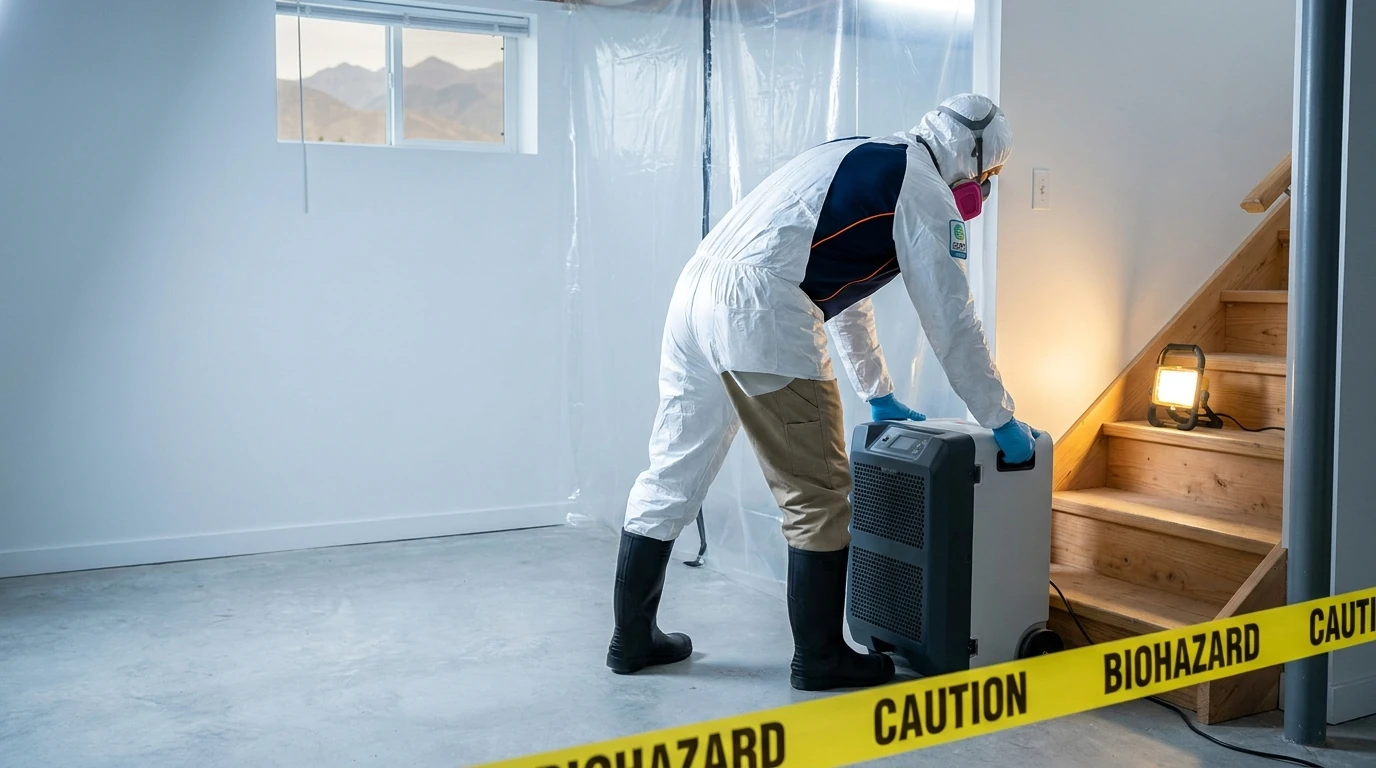
There’s also the issue of personal protective equipment. Professional technicians handling sewage cleanup wear full Tyvek suits, N95 or P100 respirators, face shields, and chemical-resistant gloves, not because they’re being dramatic, but because the exposure risk over a multi-hour cleanup is real. Most homeowners don’t own this equipment and aren’t going to buy it for a one-time event.
When the Situation Requires a Professional
If the backup involved more than a small, contained overflow, say, a toilet that briefly overflowed onto tile with no spread to adjacent rooms, professional remediation is the appropriate response. Specifically, call a licensed restoration company if:
- Standing water covered more than a few square feet of floor
- Water contacted drywall, carpet, insulation, or wood framing
- The backup came from a main sewer line rather than a single fixture
- You notice the smell persisting after initial cleanup
- Anyone in the household is immunocompromised, pregnant, elderly, or under five years old
- You’re unsure where the water traveled
Professional sewage cleanup involves extraction with truck-mounted or commercial-grade equipment, controlled demolition of contaminated materials, EPA-registered antimicrobial treatment, and moisture mapping with thermal imaging cameras to find water that migrated behind walls or under flooring. The process typically takes one to three days for the remediation phase, followed by structural drying before any reconstruction begins.
Home Pride Restoration and Cleaning handles sewage cleanup in Saratoga Springs and throughout Utah County, including the documentation and direct billing coordination that makes the insurance process less painful when you’re already dealing with a stressful situation. If you’re not sure whether your situation crosses the line into professional territory, a call to (801) 995-2437 costs nothing and can help you make that judgment with more information.
The Recovery Timeline: What Comes After Cleanup
Once contaminated materials are removed and the space has been treated and dried, the recovery process shifts to reconstruction, replacing drywall, flooring, insulation, and any fixtures that were removed. In most cases, a sewage backup that’s handled promptly (within 24–48 hours) and professionally doesn’t result in long-term structural damage. Delays are where the real cost accumulates: mold remediation on top of sewage cleanup, structural wood replacement, and HVAC cleaning if contamination spread through ductwork.
If your home has had a sewage backup, it’s also worth having a plumber camera-inspect the lateral sewer line before calling the job done. The backup is a symptom. Root intrusion, pipe collapse, or a blockage in the municipal connection are common causes in Utah County neighborhoods, and if the underlying problem isn’t addressed, you’ll be back in the same situation within months.
Sewage backup is recoverable. Homes are cleaned and rebuilt after much worse. But it’s one of the situations where the gap between “looks handled” and “actually handled” is wide enough to cause real harm, to your health and to the structure of your home. If you’re on the fence about whether to call someone, that uncertainty is usually the answer.