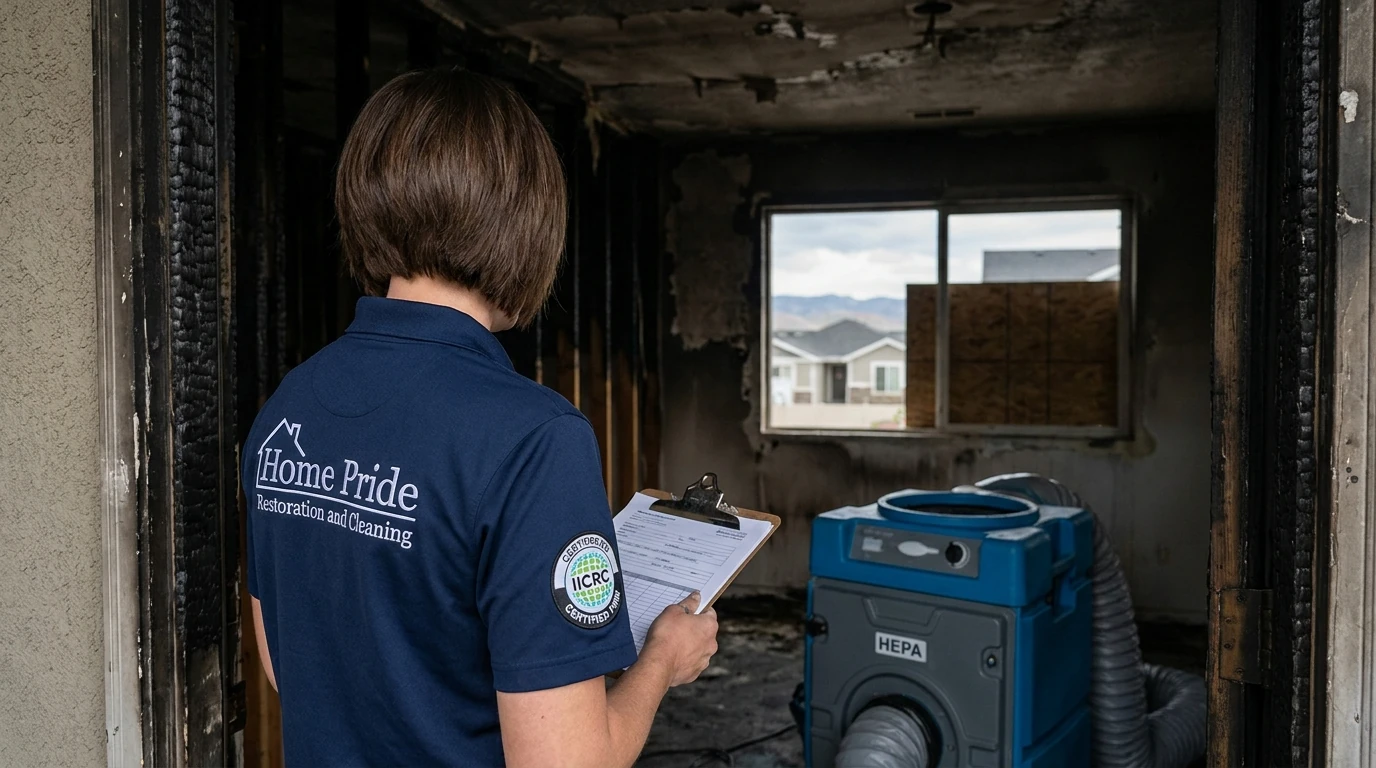
TL;DR: After a house fire, your first priority is getting everyone safely out and staying out until the fire marshal clears re-entry. Then call your insurance company, secure the property with emergency board-up, and contact an IICRC-certified fire restoration company to document the damage before anything is cleaned or moved. Do not re-enter, clean walls, or throw away damaged items until you’ve been cleared to do so.
If you’re reading this right now, you may have just been through one of the most frightening experiences a homeowner can face. Before anything else: if everyone is safe and accounted for, that’s what matters most. The house can be repaired. The steps below will help you move through the next 24-48 hours without making the recovery harder than it needs to be.
Is It Safe to Go Back Inside After a House Fire?
Do not re-enter your home until the fire marshal or a building official gives you written clearance. Even a fire that looked contained can leave behind structural damage that isn’t visible from the outside. Floors weaken. Ceilings sag. Smoke and combustion gases linger in wall cavities long after the flames are out.
Once you have clearance, watch for these hazards before stepping further inside:
- Structural instability: Charred floor joists and roof decking can fail without warning. If you see visible charring on structural members, stay near the perimeter.
- Electrical hazards: Do not flip any switches or use any outlets. Water from fire suppression can saturate electrical panels and wiring. Have a licensed electrician inspect before power is restored.
- Smoke and soot toxicity: Combustion residue contains carbon monoxide, hydrogen cyanide, and heavy metals depending on what burned. Wear an N95 respirator at minimum if you enter a smoke-damaged space.
- Gas leaks: If you smell gas, leave immediately and call your utility company from outside.
The American Red Cross fire recovery guide has a useful checklist for the first hours after a fire, including how to find emergency shelter and replacement documents.
Who Should You Call First After a House Fire?
Call these contacts in this order, starting within the first few hours:
1. Your insurance company (within 24 hours) Most homeowners policies require you to report a loss promptly. Call the claims line on your policy card, not your local agent’s office number. Ask for a claim number immediately. Write it down. The insurer will assign an adjuster and may arrange temporary housing if your home is uninhabitable.
2. An emergency board-up and fire restoration company Your insurer will likely ask you to take reasonable steps to prevent further damage. That means securing broken windows, covering roof openings, and keeping unauthorized people out. An IICRC-certified restoration company can respond 24/7 to board up and tarp the property, then begin documenting the full scope of damage before any cleaning starts. This documentation protects your claim.
3. Your mortgage lender (within 48 hours) If you have a mortgage, your lender has a financial interest in the property and needs to know about a major loss. They’ll likely be listed as a co-payee on your insurance settlement check, so you’ll need their involvement anyway.
4. Local utilities If the fire department hasn’t already done so, contact your gas, electric, and water utilities to have service suspended at the meter until the property is inspected.
For a broader look at how fire damage claims work and what the restoration process involves, see our post on the fire damage restoration process.
What Should You Not Do After a House Fire?
Several instinctive actions can actually hurt your health, damage your claim, or make restoration more expensive.
Don’t clean anything before documentation. Soot and smoke residue are evidence. Your adjuster and the restoration crew need to see the original damage pattern to scope the work accurately. Wiping walls, vacuuming carpets, or throwing away damaged contents before the adjuster visits can reduce your settlement.
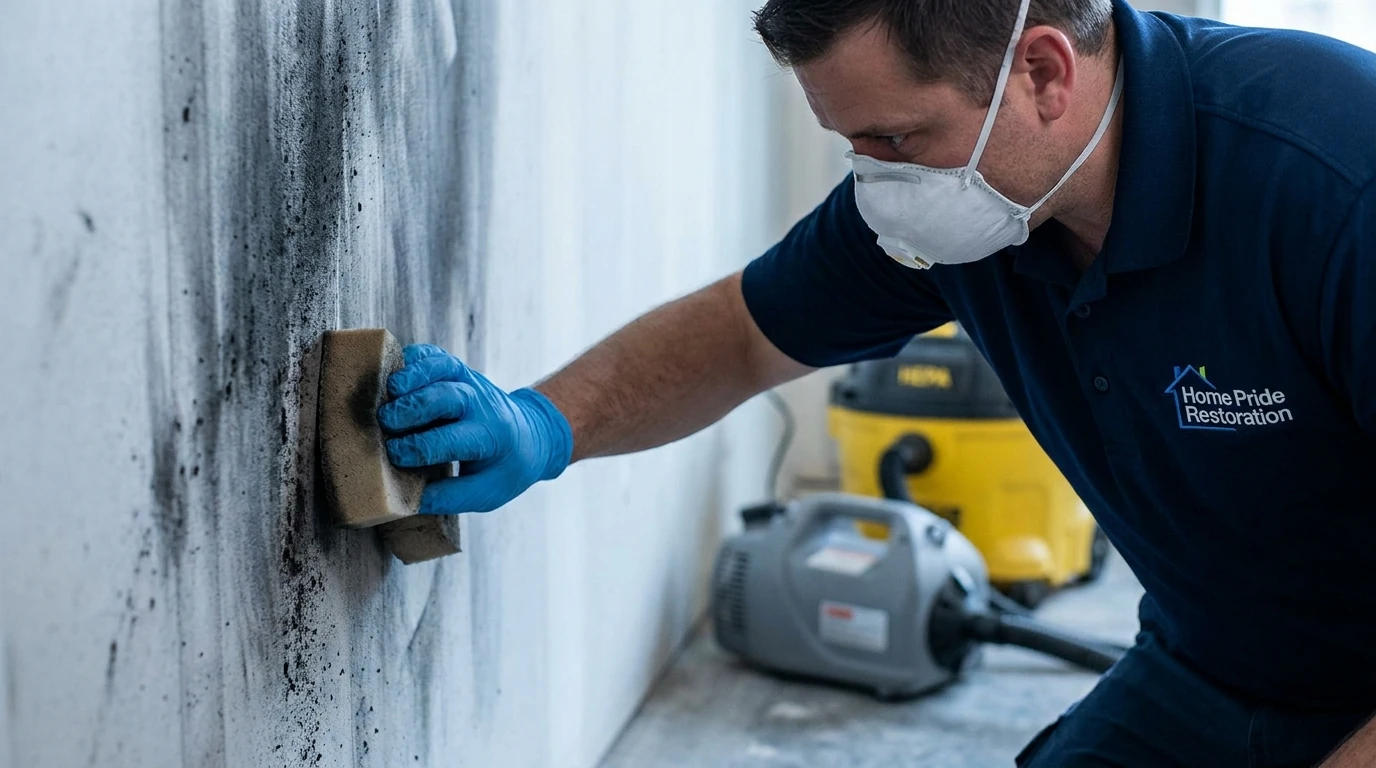
Don’t use household vacuums on soot. Standard vacuums spread fine soot particles into the air rather than capturing them. Soot cleanup requires HEPA-filtered equipment and specific dry-cleaning sponges. Improper cleaning can permanently embed soot into porous surfaces like drywall, wood, and upholstery. Our post on how to clean soot off walls explains exactly why DIY soot removal usually backfires.
Don’t turn on HVAC systems. Smoke particles circulate through ductwork. Running your furnace or air conditioner after a fire can distribute soot and odor compounds to rooms that were otherwise undamaged, expanding the scope of the loss.
Don’t discard damaged items. Even items that look destroyed may be restorable, or at minimum need to be inventoried for your contents claim. Photograph everything before anything leaves the property.
Don’t let contractors in without insurer approval. Some contractors solicit fire victims aggressively and ask homeowners to sign assignment-of-benefits agreements on the spot. Read anything carefully before signing. Your insurer has the right to review and approve the scope of work.
How Do You Secure a Fire-Damaged Home?
Emergency securing of a fire-damaged property serves two purposes: it prevents further weather damage and it deters theft and vandalism. Most insurers cover reasonable emergency securing costs as part of the claim.
A qualified restoration company will typically handle:
- Board-up: Plywood over broken windows and doors, sized and secured to prevent entry
- Roof tarping: Heavy-duty poly tarps over any areas where roofing was compromised, weighted and fastened to prevent wind uplift
- Fencing or barricading: For properties with significant structural damage, temporary fencing keeps people out and limits liability
- Content pack-out: If smoke or water damage threatens salvageable contents, a restoration company can inventory, pack, and store items in a climate-controlled facility while the structure is repaired
Get written documentation of everything done during emergency securing. Photographs before and after, a detailed scope of work, and itemized pricing all support your claim.
How Do You Start a Fire Insurance Claim?
Filing a fire claim is more involved than a typical water damage claim because the damage categories are broader: structural damage, smoke and soot damage, water damage from fire suppression, and personal property loss often all appear in the same claim.
Here’s how to set yourself up for the best outcome:
Document everything yourself, independently. Walk through the property with your phone and record video of every room, every damaged item, every affected surface. Do this before the adjuster visits. Your own documentation is a backup if there are disputes about scope later.
Request a written copy of your policy. Specifically look for your dwelling coverage limit (Coverage A), personal property limit (Coverage C), and loss-of-use or additional living expenses coverage (Coverage D). Loss-of-use coverage pays for hotel stays, meals, and temporary housing while your home is being repaired.
Create a contents inventory. List every damaged or destroyed item with approximate age, original cost, and replacement cost. Receipts help but aren’t required. Many insurers provide a contents inventory worksheet.
Ask your adjuster about advance payments. If you need immediate funds for housing, clothing, or food, most insurers can issue an advance against your settlement. You don’t have to wait for the full claim to be processed.
Consider hiring a public adjuster for large losses. A public adjuster works for you, not the insurance company, and takes a percentage of the settlement (typically 10-15%). For complex, high-value losses, they often recover more than enough to cover their fee. Ask your restoration company if they work regularly with public adjusters in your area.
For more on how to approach property insurance documentation, the FEMA National Flood Insurance Program’s guidance on documenting losses offers a useful framework that applies to fire claims as well.
What Happens During Fire Damage Restoration?
Once your property is secured and your claim is open, professional fire damage restoration follows a structured process:
- Damage assessment and moisture mapping: Fire suppression water creates secondary water damage. Restoration crews use thermal imaging and moisture meters to find wet materials that need to be dried before reconstruction begins.
- Content removal and pack-out: Salvageable items are inventoried and removed for off-site cleaning and storage.
- Structural drying: LGR dehumidifiers and air movers run for 3-5 days on average, depending on the extent of water intrusion.
- Soot and smoke cleaning: HEPA vacuuming, dry-chemical sponging, and wet cleaning of hard surfaces. Porous materials like drywall and insulation that can’t be cleaned are removed.
- Odor neutralization: Thermal fogging and hydroxyl generators break down smoke odor compounds at the molecular level. Ozone treatment is used in unoccupied spaces. Smoke damage restoration often takes longer than the structural repairs because odor is the hardest thing to fully eliminate.
- Reconstruction: Once the structure is clean, dry, and odor-free, rebuilding begins.
The full timeline from fire to move-in varies widely: a contained kitchen fire might take 4-6 weeks; a whole-house fire can take 6-12 months. Your restoration company should give you a written timeline and update it as the scope evolves.
If you’re trying to understand what this process will cost, our fire damage restoration cost guide breaks down typical price ranges for Utah homeowners.
When you’re ready to talk through next steps, Home Pride Restoration and Cleaning is available around the clock. Call (801) 995-2437 to schedule an emergency assessment or get a written scope of damage for your insurance claim.
About Home Pride Restoration and Cleaning
Home Pride Restoration and Cleaning is an IICRC-certified restoration company serving Saratoga Springs, Lehi, Eagle Mountain, Provo, and communities across Utah County since 1997 (license RC-25-0737). Their crews handle fire, smoke, water, and mold losses for residential and commercial properties, and work directly with homeowners and their insurance adjusters to document damage and manage the full restoration process.