TL;DR: Clean soot off walls by first vacuuming loose particles with a HEPA vacuum, then wiping with a chemical dry sponge (never a wet cloth first). For heavier deposits, follow with a TSP or TSP-substitute solution. Always ventilate the space and wear an N95 respirator and nitrile gloves. If soot covers large areas, has a strong persistent odor, or came from a structural fire, skip DIY and call an IICRC-certified smoke damage restoration company, soot is acidic and can permanently etch surfaces within days.
You put out the fire, the smoke cleared, and now you’re standing in a room looking at gray-black residue coating your walls and ceiling. Maybe it was a kitchen grease fire, a fireplace backdraft, or a candle that caught a curtain. Whatever the source, the instinct is to grab a damp cloth and start wiping. That’s the one move that makes soot worse. Here’s what actually works, and where the line is between a manageable DIY cleanup and a job that needs professional smoke damage restoration.
Does Soot Just Wipe Off Walls?
Soot does not simply wipe off walls, wiping it with a wet cloth or dry rag smears the particles deeper into the paint and drywall texture, spreading the stain and making it much harder to remove. Soot is a fine, oily, carbon-based residue. It behaves more like a dry powder than a surface stain, which is why the correct first step is always dry removal, not wet.
Soot also becomes chemically active quickly. The residue left by burning synthetic materials, plastics, foam, treated wood, contains acidic compounds that begin etching painted surfaces, metal fixtures, and glass within 24 to 72 hours. The EPA’s guidance on cleaning after a fire notes that prompt action limits secondary damage and reduces exposure to harmful particulates. Waiting a week to start cleanup is not neutral, it makes the job harder and the damage worse.
Smoke type matters too. A wood fire produces dry, powdery soot that responds well to dry sponge removal. A protein fire (grease, meat) leaves a thin, nearly invisible film with an intense odor that is extremely difficult to clean without professional-grade deodorization. Wet smoke from smoldering fires leaves thick, sticky residue that smears badly. Knowing what burned tells you how hard the cleanup will be.
How to Clean Soot Off Walls: The Step-by-Step Process
For small to medium soot deposits from a contained fire, a kitchen incident, a single room, or a fireplace accident, this sequence works on most painted drywall surfaces.
What you need:
- N95 respirator (minimum; P100 half-mask is better for heavy soot)
- Nitrile gloves and safety glasses
- HEPA vacuum with brush attachment
- Chemical dry sponge (also called a dry cleaning sponge or soot sponge, available at hardware stores and janitorial suppliers)
- TSP (trisodium phosphate) or TSP-substitute cleaner
- Bucket, warm water, clean rags or sponges
- Drop cloths to protect floors
Step 1: Ventilate the space. Open windows and run fans to exhaust air outward. Soot particles are fine enough to stay airborne and enter your lungs. Do not skip this.
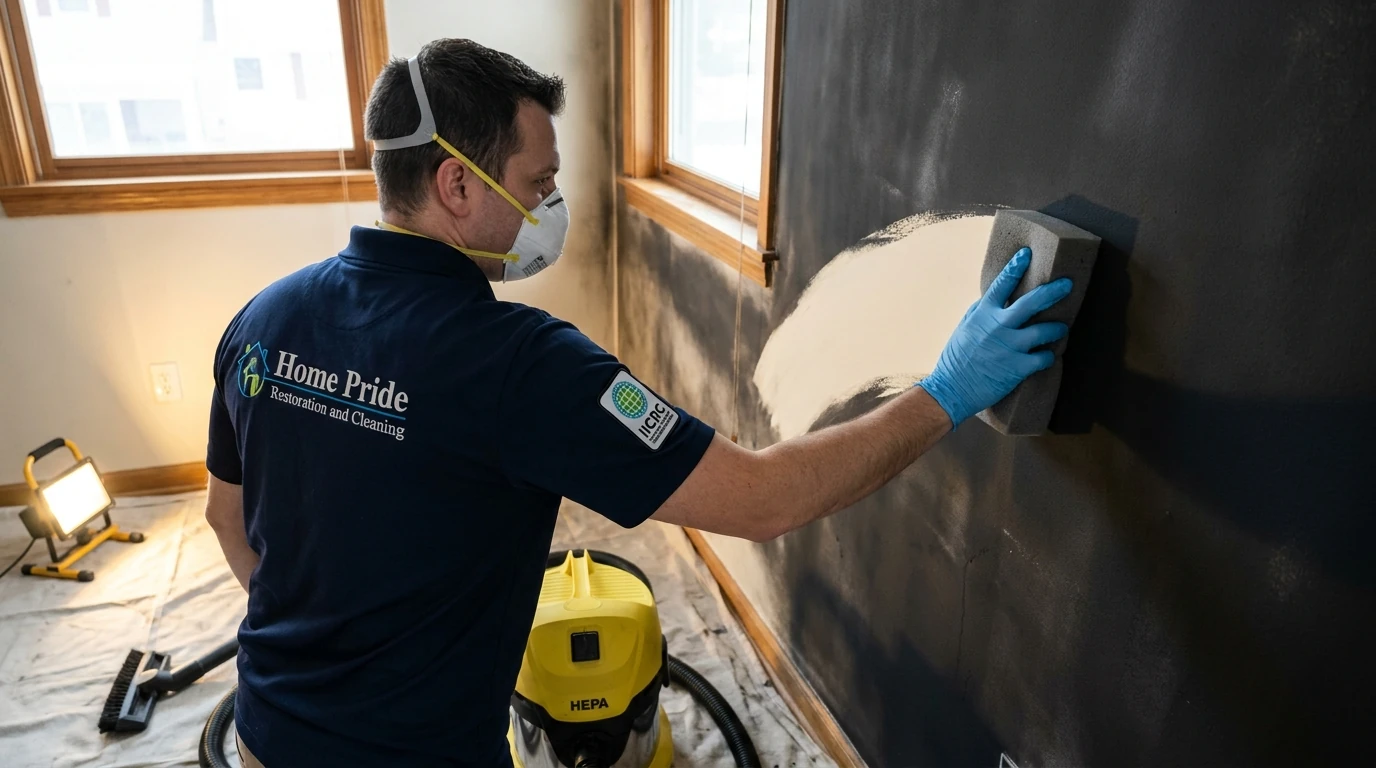
Step 2: Vacuum loose soot. Using a HEPA vacuum with a soft brush attachment, gently vacuum the wall surface from top to bottom. Do not press hard, the goal is lifting loose particles, not grinding them in. A standard shop vac without a HEPA filter will just blow fine particles back into the air.
Step 3: Use a chemical dry sponge. This is the most important tool in DIY soot removal. A chemical dry sponge is a vulcanized rubber block that lifts soot through a dry chemical action, it does not smear. Work in straight, overlapping strokes from the top of the wall down. As each face of the sponge loads with soot, cut or fold to expose a clean surface. Do not use a wet sponge at this stage.
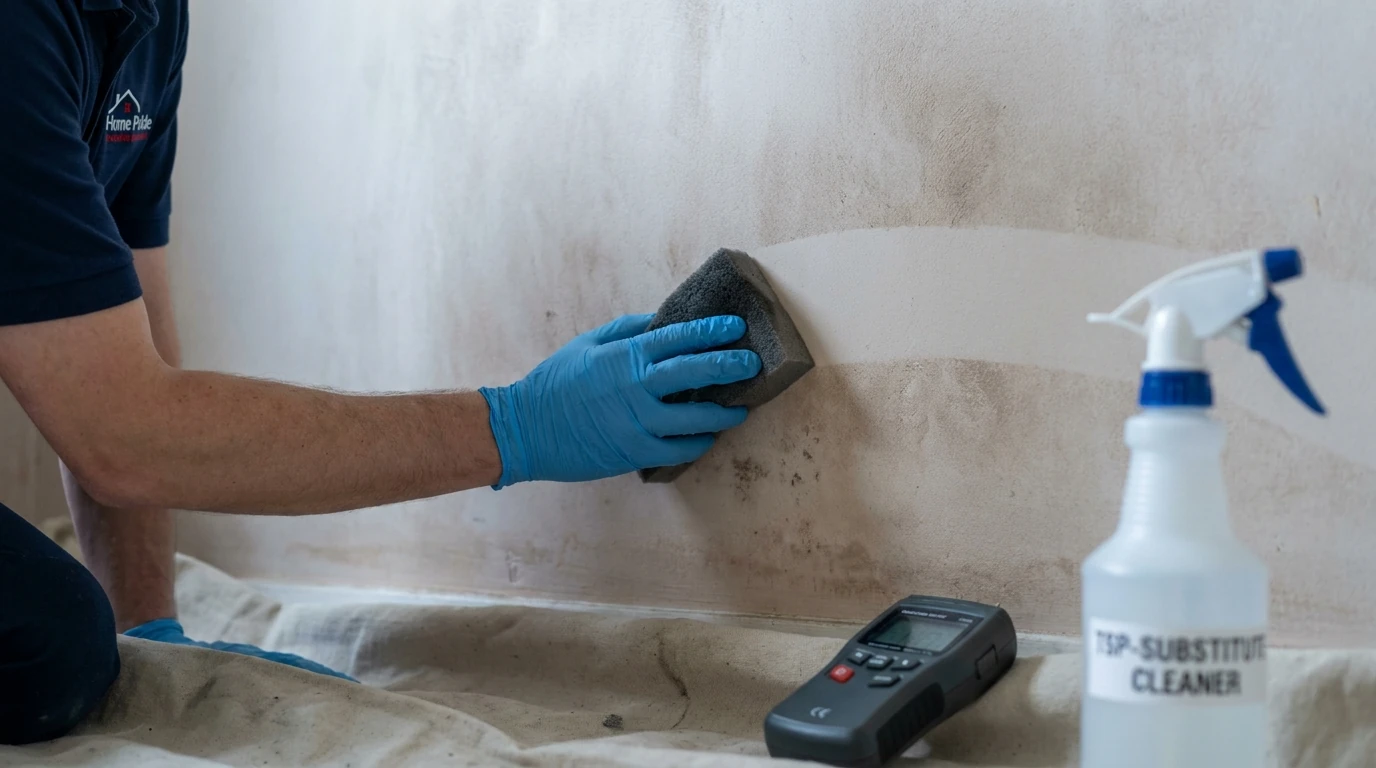
Step 4: Mix and apply TSP solution. Once dry sponging is complete, mix TSP or TSP-substitute according to the package directions (typically 1 tablespoon per gallon of warm water). Wear gloves, TSP is caustic. Wipe the wall with a wrung-out sponge or rag, working in sections. Rinse with clean water and allow the wall to dry fully before assessing whether repainting is needed.
Step 5: Prime before repainting. Standard latex primer will not seal smoke odor or staining. Use a shellac-based primer (like Zinsser BIN) or an oil-based stain-blocking primer before applying finish paint. Skipping this step almost always results in stains bleeding through the new paint within weeks.
For ceilings, the same process applies, but work carefully to avoid dripping TSP solution into your eyes. A pole attachment for the dry sponge helps significantly.
When DIY Soot Cleaning Makes Things Worse
DIY cleanup is appropriate for small, contained soot deposits from a minor incident. It is not appropriate, and can actively cause harm, in several situations.
The fire involved synthetic materials. Burning plastics, foam furniture, vinyl flooring, and treated lumber produces soot laced with polycyclic aromatic hydrocarbons (PAHs), hydrogen cyanide residue, and other toxic compounds. These are not safe to handle without full PPE and professional-grade cleaning chemistry. If you are not certain what burned, treat the soot as hazardous.
Soot covers more than one room. Smoke travels through HVAC systems, under doors, and through wall penetrations. A fire in one room often deposits soot throughout a house. Cleaning visible walls without addressing ductwork, insulation cavities, and contents means the odor and residue remain. A professional smoke damage restoration assessment will scope the full extent of the contamination.
The odor persists after cleaning. Smoke odor that remains after surface cleaning means odor molecules have penetrated porous materials, drywall, insulation, wood framing, soft contents. Surface cleaning does not address this. Professional odor removal uses thermal fogging, hydroxyl generators, or ozone treatment to neutralize odor compounds at the molecular level. For more on why surface-level DIY odor removal usually fails, see our post on how professionals remove smoke odor.
The structure was damaged. If the fire compromised drywall, framing, insulation, or the roof, soot cleanup is one part of a larger fire damage restoration scope. Cleaning walls while structural damage is unaddressed creates moisture and mold risk down the line.
You or someone in the home has respiratory sensitivities. Soot particles are typically 0.4 to 0.7 microns in diameter, small enough to bypass the upper respiratory tract and deposit in the lungs. Children, elderly residents, and anyone with asthma or COPD should not be in the space during cleanup, and the cleanup itself should be handled by someone with appropriate respiratory protection.
What to Do Right Now If You’re Unsure
If you’re reading this within 48 hours of a fire, the most important thing you can do is limit further damage before deciding on DIY versus professional restoration.
First, stop the HVAC system. Running forced air through a soot-contaminated space distributes fine particles into every room and coats ductwork. Turn off the furnace or air conditioner and leave it off until the scope of contamination is known.
Second, document everything with photos before touching a surface. If you have homeowners insurance, your adjuster will need documentation of the damage as it was found. Moving or cleaning before documenting can complicate your claim. Our fire damage restoration process post walks through what a professional scope looks like and how it interacts with an insurance claim.
Third, call for a professional assessment if you have any doubt about the source or extent of the soot. A written scope from an IICRC-certified restoration company gives you a clear picture of what needs to happen, and that documentation is useful whether you decide to DIY part of the work or hand the whole job to professionals.
Home Pride Restoration and Cleaning serves Saratoga Springs, Lehi, Eagle Mountain, American Fork, and the broader Utah County area. If you’ve had a fire and want a professional assessment of the soot damage before deciding how to proceed, request a smoke damage evaluation at (801) 995-2437.
About Home Pride Restoration and Cleaning
Home Pride Restoration and Cleaning is an IICRC-certified restoration company serving Saratoga Springs, Utah and surrounding Utah County communities since 1997 (license RC-25-0737). Their crews handle fire and smoke damage, water damage, mold remediation, and odor removal across the region, available around the clock. Home Pride brings professional-grade equipment and restoration chemistry to jobs that go well beyond what household cleaning products can address.