Fire damage rarely stops when the flames go out. The smoke keeps moving, soot keeps settling, and acidic residues keep etching surfaces for hours, sometimes days, after the fire department leaves. Understanding the restoration process from start to finish helps you ask the right questions, set realistic expectations, and avoid costly mistakes during a genuinely chaotic time. Here is how professional fire damage restoration actually works, step by step.
What Happens to a Home After a Fire
Most people picture fire damage as charred wood and ash. The harder problem is usually what you can’t see as clearly.
Within minutes of a fire, smoke particles, a mix of carbon, chemicals, and partially combusted materials, travel through every unsealed gap in the structure. They move through HVAC ducts, settle into insulation, coat the inside of wall cavities, and bond to cool surfaces like exterior windows and metal fixtures. The smell you notice in a room three doors down from where the fire started isn’t coincidental; smoke actively seeks cooler air.
Soot chemistry matters here. Protein fires (a kitchen grease fire, for example) leave a nearly invisible, varnish-like residue that smells intensely and is very difficult to clean from painted surfaces. Synthetic fires (burning carpet, furniture foam, or plastics) leave a thick, oily black soot that smears if you wipe it wrong. Wet smoke from a slow, smoldering fire produces a sticky residue that penetrates porous materials deeply. Each type requires different cleaning chemistry and technique, which is one reason a DIY wipe-down often makes things worse.
Acid in soot is the clock you’re racing. On metal surfaces, pitting and corrosion can begin within 24 to 48 hours. On natural stone countertops, etching can start even faster. The longer the residue sits, the more permanent the damage becomes.
The First 24–48 Hours: Emergency Stabilization
Before any cleaning begins, the structure has to be made safe and stable. A professional restoration crew arriving on-site will typically do the following before touching a single soot-covered surface:
- Safety assessment. A structural engineer or experienced restoration technician walks the property to identify compromised load-bearing elements, unsafe flooring, and areas where the ceiling may be at risk of collapse. No one enters a room with a questionable ceiling without confirming it first.
- Board-up and tarping. Broken windows, burned-through roof sections, and compromised doors get covered immediately. This keeps weather out, critical in Utah, where a spring storm or overnight freeze can turn a fire-damaged home into a water-damaged one simultaneously.
- Utility isolation. Gas lines, electrical panels, and water supply get confirmed off or locked out before any work begins inside.
- Content inventory. Salvageable belongings, furniture, clothing, documents, electronics, are catalogued, packed out, and transported to a climate-controlled facility for cleaning and storage. This protects items from secondary smoke damage during the structural restoration.
- Air quality containment. Negative air pressure machines and air scrubbers with HEPA filtration begin running to prevent further spread of smoke particles through the structure.
This phase is not glamorous, but skipping or rushing it is where many DIY attempts and inexperienced contractors create larger problems.
What NOT to Do After a Fire
A few well-intentioned actions commonly make fire damage significantly worse:
- Don’t run your HVAC system. Your furnace or air conditioner will pull smoke particles and soot through the ductwork and distribute them to every room in the house, including rooms that were untouched by the fire.
- Don’t wipe soot with a dry cloth. Dry soot smears and drives particles deeper into porous surfaces. Protein and wet smoke residues especially require specific chemical pre-treatment before any mechanical cleaning.
- Don’t use household cleaners on smoke-damaged walls. Many standard cleaners are alkaline, which can react with acidic soot residues and permanently stain painted surfaces.
- Don’t discard anything before an adjuster sees it. Your insurance company needs to document losses. Throwing away damaged items, even obviously ruined ones, before documentation can complicate or reduce your claim.
- Don’t assume a room smells fine because you can’t see damage. Smoke odor compounds (particularly polycyclic aromatic hydrocarbons) bind to materials at the molecular level. A room that looks clean but smells like smoke has residue you haven’t found yet.
The Cleaning and Deodorization Phase
Once the structure is stabilized and contents are protected, the actual restoration work begins. This is the longest phase and involves several overlapping processes:
Structural Cleaning
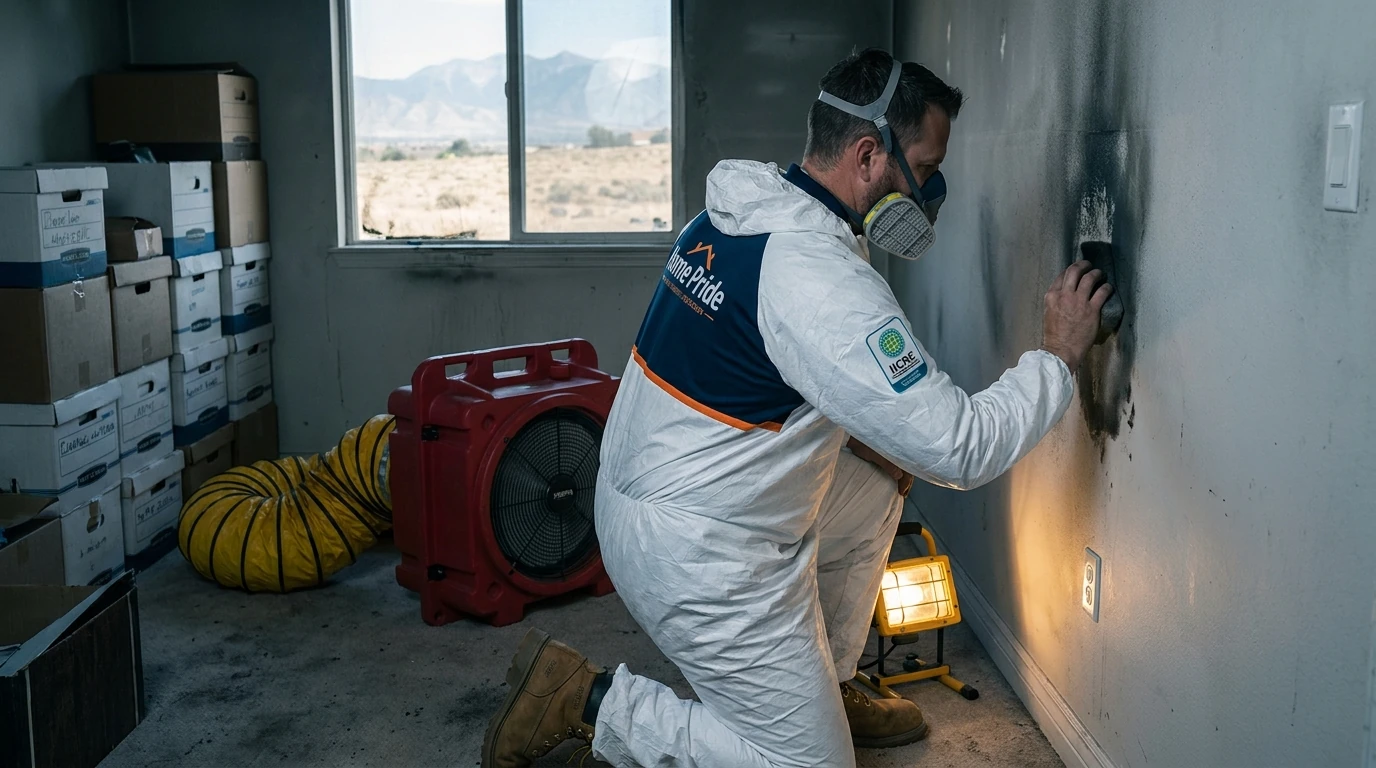
Technicians work from the top of each room downward, ceiling, walls, then floors, using dry chemical sponges for loose soot, followed by wet cleaning with pH-appropriate solutions matched to the type of smoke residue. Heavily affected areas may require multiple passes. Porous materials like drywall, insulation, and subfloor that can’t be adequately cleaned are removed and replaced rather than cleaned in place.
HVAC and Duct Cleaning
Even if the fire started nowhere near your furnace, the duct system almost certainly needs professional cleaning. Smoke travels through return air pathways and coats the interior of ducts, the blower motor, and the evaporator coil. Restoring air quality in the living space without addressing the HVAC system is like mopping a floor while someone tracks mud in behind you.
Odor Neutralization
This is where restoration diverges most sharply from simple cleaning. Masking agents, sprays and plug-ins that cover odor, don’t work for fire damage. Professional deodorization uses thermal fogging (a deodorizing chemical dispersed as a fine fog that penetrates the same pathways smoke traveled), hydroxyl generators, or ozone treatment to chemically break down odor compounds at the molecular level. The method depends on the materials present and whether occupants or pets need to remain in or near the building during treatment.
Reconstruction
After cleaning and deodorization, any structural elements that were removed, drywall, insulation, flooring, cabinetry, are rebuilt to pre-loss condition. This phase looks like a standard remodel but is driven by the scope of the damage documentation rather than a design preference. A licensed general contractor coordinating with your insurance adjuster manages this work.
Working With Your Insurance Company
Fire damage claims are among the most complex homeowner insurance claims, largely because the scope of damage is rarely obvious at first inspection. A few things worth knowing:
- You have the right to hire your own restoration contractor. Your insurance company may recommend a preferred vendor, but you are not required to use them.
- Document everything before cleanup begins. Photographs and video of every affected room, every damaged item, and every visible structural issue protect you during the claims process.
- Ask for a copy of the adjuster’s scope of loss. This is the document that drives what your insurance company will pay for. Reviewing it with your restoration contractor helps catch items that were missed or undervalued.
- In Utah, your insurer is required to respond to a claim within a defined window. If you feel the process is stalling, the Utah Insurance Department handles consumer complaints.
Getting Back to Normal
Fire restoration timelines vary widely, a contained kitchen fire with limited smoke spread might be resolved in one to two weeks, while a whole-house fire with significant structural damage can take three to six months or longer. The variables are the extent of structural damage, the type of smoke residue, the speed of the insurance process, and the availability of materials and labor.
If your home in Saratoga Springs or the surrounding Utah County area has been affected by fire or smoke damage, the team at Home Pride Restoration and Cleaning handles every phase described above, from emergency board-up through final reconstruction. Call (801) 995-2437 any time, day or night. The sooner the stabilization work begins, the more of your home and belongings can be saved.