
TL;DR: Smoke damage restoration in Saratoga Springs, UT typically costs $300 to $3,000 for a single-room kitchen fire or puff-back, and $3,000 to $8,000 or more for whole-house soot and odor from a structure fire or wildfire smoke infiltration. The price depends mainly on soot type (dry vs. wet vs. protein), square footage affected, whether the HVAC system needs cleaning, and how much furniture and fabric need odor treatment versus replacement.
Maybe your furnace puffed back and left a gray film on every surface in the basement. Maybe a grease fire in the kitchen filled the main floor with smoke before you got it out. Or maybe nothing in your house burned at all: wildfire smoke from a Utah County fire season drifted in through the HVAC system and left that sharp, lingering smell in every closet. Each scenario costs differently to fix, and none of them are the same job as full fire damage restoration, where structural rebuild dominates the bill. This guide breaks down what smoke-only cleanup actually costs.
How much does smoke damage restoration cost in Saratoga Springs, UT?
Most Saratoga Springs homeowners pay between $300 and $8,000 for smoke damage restoration, with the number driven almost entirely by soot type and square footage rather than location. A contained kitchen or furnace-related event on one floor sits at the low end; a structure fire next door that pushed smoke through the whole house, or heavy wildfire smoke intrusion, sits at the high end.
These are typical industry ranges, not a quote. A written scope after an in-person assessment is the only way to know the real number for a specific house.
| Scenario | Typical Cost Range |
|---|---|
| Small kitchen fire, single room, light dry soot | $300 - $1,200 |
| Furnace puff-back, basement or whole-HVAC soot film | $800 - $3,000 |
| Neighboring structure fire, smoke odor without flame damage | $1,000 - $4,000 |
| Wildfire smoke infiltration, no fire on the property | $500 - $2,500 |
| Moderate house fire, multiple rooms, wet/protein soot | $3,000 - $8,000 |
| Whole-house smoke and soot with full contents cleaning | $6,000 - $15,000+ |
What drives the price of smoke damage cleanup?
Four factors move the price more than anything else: soot type, square footage, HVAC contamination, and how much of the home’s contents need cleaning instead of replacement. Soot type matters most because it determines labor time per surface.
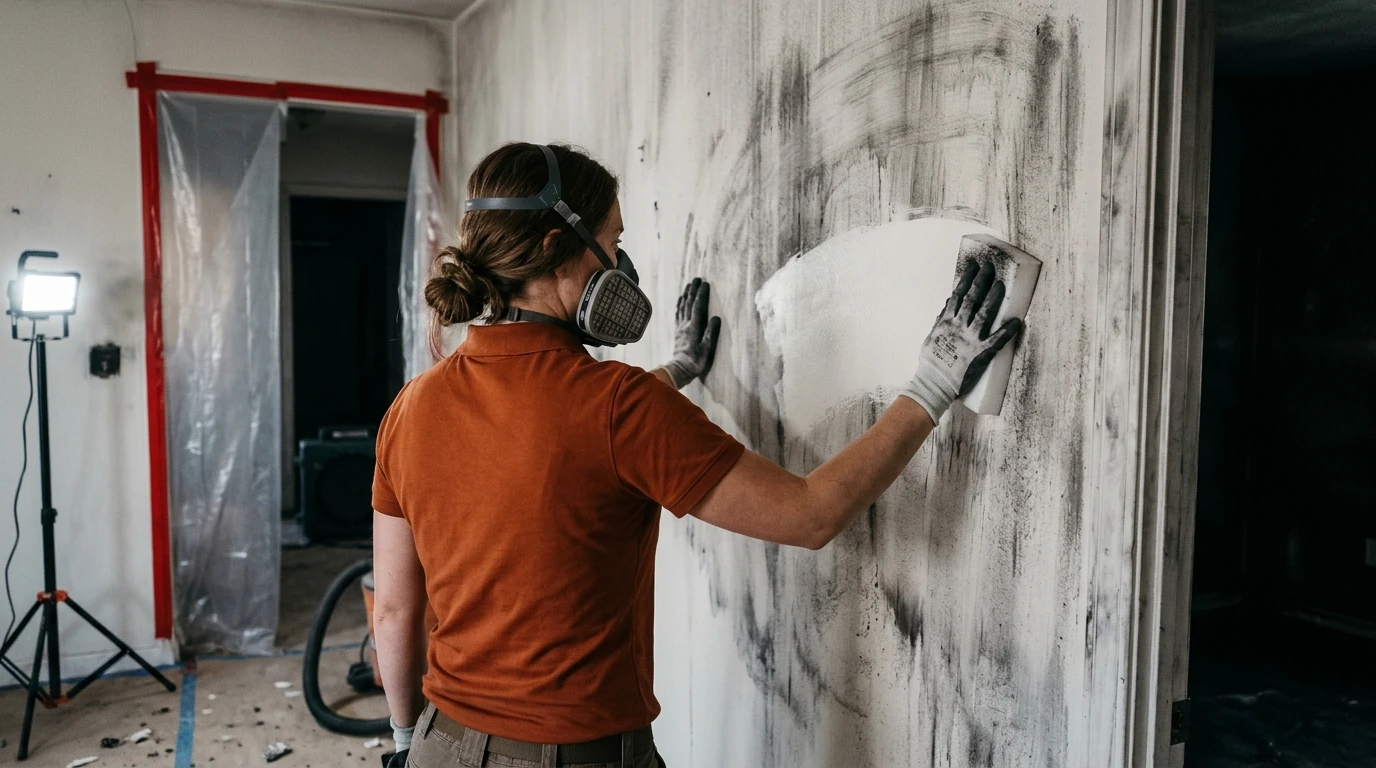
Dry soot comes from fast, high-temperature fires (wood, paper) and wipes off relatively easily with dry chemical sponges. Wet soot comes from smoldering, low-oxygen fires (upholstery, rubber, plastics) and smears into a sticky residue that needs solvent-based cleaning. Protein soot comes from kitchen fires involving meat or fat; it is nearly invisible but leaves a strong, hard-to-remove odor on walls, cabinets, and especially anything with a porous or lacquered finish.
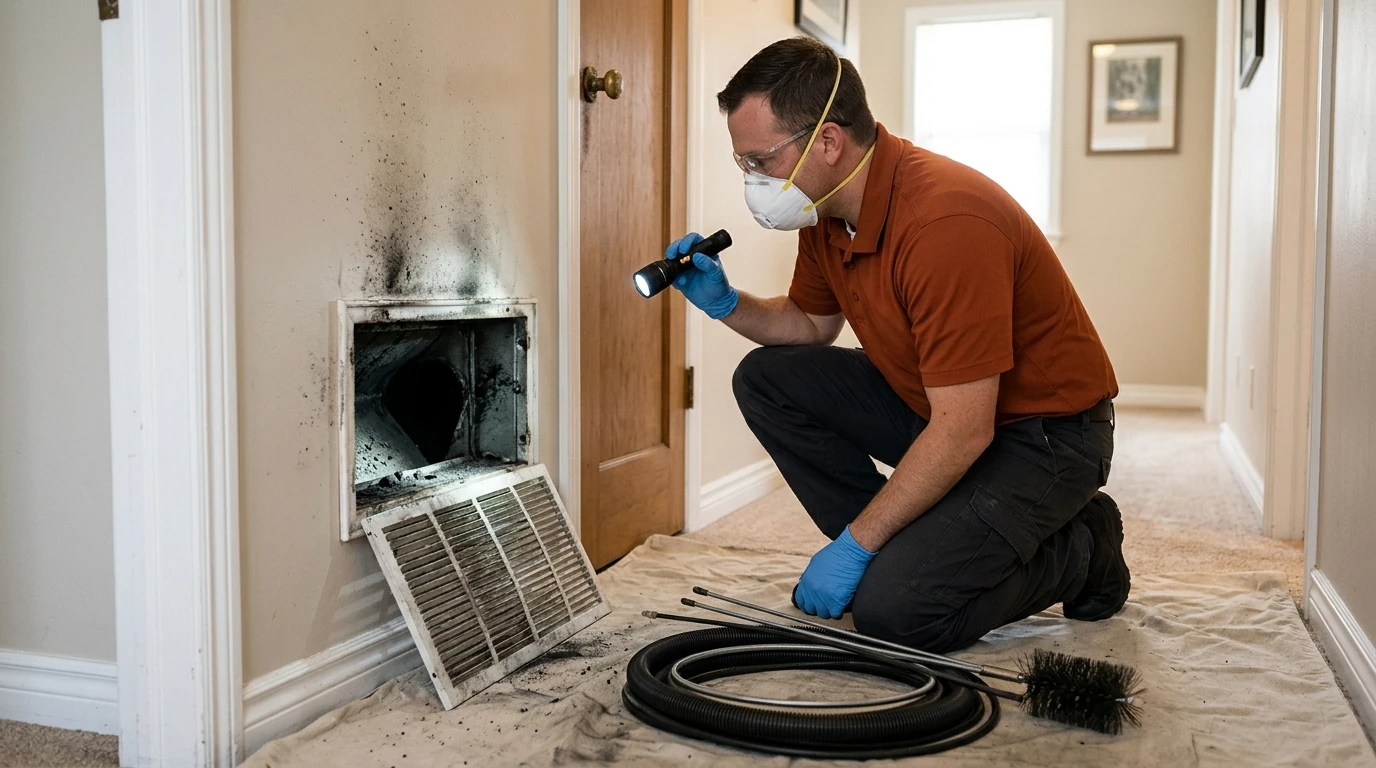
Square footage is the second lever: cleaning one room costs a fraction of cleaning an entire floor. HVAC contamination is the factor people most often underestimate. If the furnace was running when the fire or smoke event happened, soot particles pull through the ductwork and settle in every room the system serves, which is why a basement furnace puff-back can leave soot film upstairs in bedrooms nobody thought were affected. Finally, contents cleaning (ultrasonic cleaning for hard items, ozone or thermal fogging for fabrics, specialty cleaning for electronics) adds cost per item but is almost always cheaper than replacement.
How much does soot removal cost on its own?
Soot removal alone, without odor treatment or contents work, typically runs $0.50 to $3.00 per square foot depending on soot type and surface. Dry soot on painted drywall is at the low end; wet or protein soot on textured ceilings, cabinetry, or upholstered furniture runs higher because it takes more passes and sometimes specialty solvents.
For a single affected room (roughly 150-250 square feet of wall and ceiling surface), that puts soot-only removal in the $150-$750 range before odor neutralization or HVAC work is added. How to Clean Soot Off Walls After a Fire covers which surfaces a homeowner can reasonably tackle with dry sponges and which ones need professional equipment, particularly anything with protein soot or a lacquered finish.
Does insurance cover smoke damage?
Most standard homeowners policies cover smoke damage when it comes from a sudden, accidental fire, including smoke that drifted from a neighboring structure fire. The claim is usually filed and adjusted the same way a direct fire claim is, since smoke damage is typically listed under the fire peril rather than treated separately.
What is less consistently covered: smoke or haze from regional wildfires when there was no fire event on the insured property itself. Some policies treat this as a covered sudden loss; others may push back, especially on cosmetic odor claims without visible residue. Coverage details vary by carrier and policy, and the Utah Insurance Department is the best source for how a specific policy should be read. For the fire-side version of this question in more depth, see Does Homeowners Insurance Cover Fire Damage?
Document everything before cleaning starts: photos of soot on every affected surface, HVAC filters if they were running, and a list of any items you suspect need replacement rather than cleaning. That documentation protects the claim regardless of which way the adjuster leans.
What should you throw away after smoke damage?
Throw away anything porous that absorbed protein or heavy smoke odor and that cleaning has not resolved after one attempt: soft plastics, foam cushions, unsealed wood, and most food or medicine that was in open cabinets near the fire. Hard, non-porous items (glass, metal, sealed wood, most electronics) can almost always be professionally cleaned instead.
A few specific calls: mattresses and heavily soiled upholstery are usually not worth saving once protein soot has set in. Clothing and linens generally respond well to professional ozone or thermal fogging treatment and don’t need to be discarded. Any food, cosmetics, or medication stored uncovered in a kitchen or bathroom near the smoke source should be thrown out regardless of visible residue, since smoke particles carry chemical byproducts that aren’t safe to ingest.
What happens during professional smoke damage restoration?
Professional smoke damage restoration follows roughly five steps: assessment and soot-type identification, containment, dry and wet cleaning of affected surfaces, HVAC inspection and duct cleaning if needed, and final odor neutralization.
- Assessment identifies soot type (dry, wet, protein) and maps which rooms and HVAC zones were affected, since smoke travels further than visible damage suggests.
- Containment seals off unaffected areas with plastic sheeting to stop soot from migrating during cleaning.
- Surface cleaning uses dry chemical sponges for light dry soot and solvent-based or enzymatic cleaners for wet and protein soot, working from ceiling down to avoid redepositing residue on cleaned surfaces.
- HVAC service cleans ductwork and replaces filters if the system was running during the event, following ANSI/IICRC S700 guidance for fire and smoke restoration.
- Odor treatment uses thermal fogging, ozone treatment, or hydroxyl generators depending on how deeply odor has penetrated porous materials, closing out the job once a clearance test confirms the smell is gone, not just masked.
If smoke settled into a Saratoga Springs home from a kitchen fire, a furnace puff-back, or smoke drifting in from outside, Home Pride Restoration can walk through the affected rooms, identify the soot type, and put together a written scope before any cleaning starts. Request a smoke damage assessment rather than guessing at the number from a phone estimate.
About Home Pride Restoration
Founded in 1997, the company has served Saratoga Springs, Lehi, Eagle Mountain, American Fork, Pleasant Grove, and the surrounding Utah County communities for nearly three decades. Its technicians, Curt Eddy and Kimberly Bowman, hold IICRC Water Damage Restoration registrations (#70228752 and #70228751), and the team is available 24/7 for smoke, fire, odor, water, mold, and storm damage recovery across the area.
Need help now? Call Home Pride Restoration at (801) 995-2437.