TL;DR: Yes, standard homeowners insurance covers fire damage in most cases. Your policy’s dwelling coverage pays to repair or rebuild the structure. Personal property coverage replaces your belongings. Additional living expenses (ALE) coverage pays for a hotel or rental while repairs happen. Smoke and soot damage are included under the same fire peril. The main exclusions are arson, vacant homes, and certain wildfire situations in high-risk zones.
If you’re standing in a home that smells like smoke right now, or you just got off the phone with your adjuster and you’re not sure what any of it means, this guide breaks down exactly what a standard HO-3 policy covers after a fire, what documentation protects your claim, and where restoration companies fit into the process.
What does homeowners insurance actually cover after a fire?
A standard homeowners policy (HO-3) covers fire damage under three separate coverage buckets: dwelling (Coverage A), personal property (Coverage C), and additional living expenses (Coverage D). Most fires trigger all three. The Insurance Information Institute confirms that fire is one of the named perils covered under virtually every standard homeowners policy sold in the U.S.
Coverage A, Dwelling. This pays to repair or rebuild the physical structure of your home: framing, drywall, flooring, roof, built-in appliances, electrical, plumbing. If a kitchen fire chars the cabinets and the smoke migrates through the HVAC into the living room ceiling, both the kitchen rebuild and the smoke-stained ceiling are dwelling claims. Coverage is typically at replacement cost value (RCV), meaning the insurer pays what it costs to rebuild today, not what the home was worth in 2015.
Coverage C, Personal Property. Furniture, clothing, electronics, appliances, cookware, anything that isn’t bolted to the structure. Most policies default to actual cash value (ACV) for personal property, which deducts depreciation. A five-year-old couch that cost $1,200 might pay out $400 ACV. You can upgrade to RCV for personal property, and if you haven’t, it’s worth asking your agent about before the next renewal.
Coverage D, Additional Living Expenses (ALE). If your home is uninhabitable during repairs, ALE covers the reasonable cost of living elsewhere: hotel bills, short-term rental, restaurant meals above what you’d normally spend at home, laundry costs. Keep every receipt. ALE runs until the home is repaired or until the policy limit is exhausted, whichever comes first. Most policies cap ALE at 20-30% of the dwelling limit.
Does insurance cover smoke and soot damage?
Yes. Smoke and soot damage are covered under the same fire peril, not as a separate claim. This matters because smoke damage is often more extensive than the burn itself.
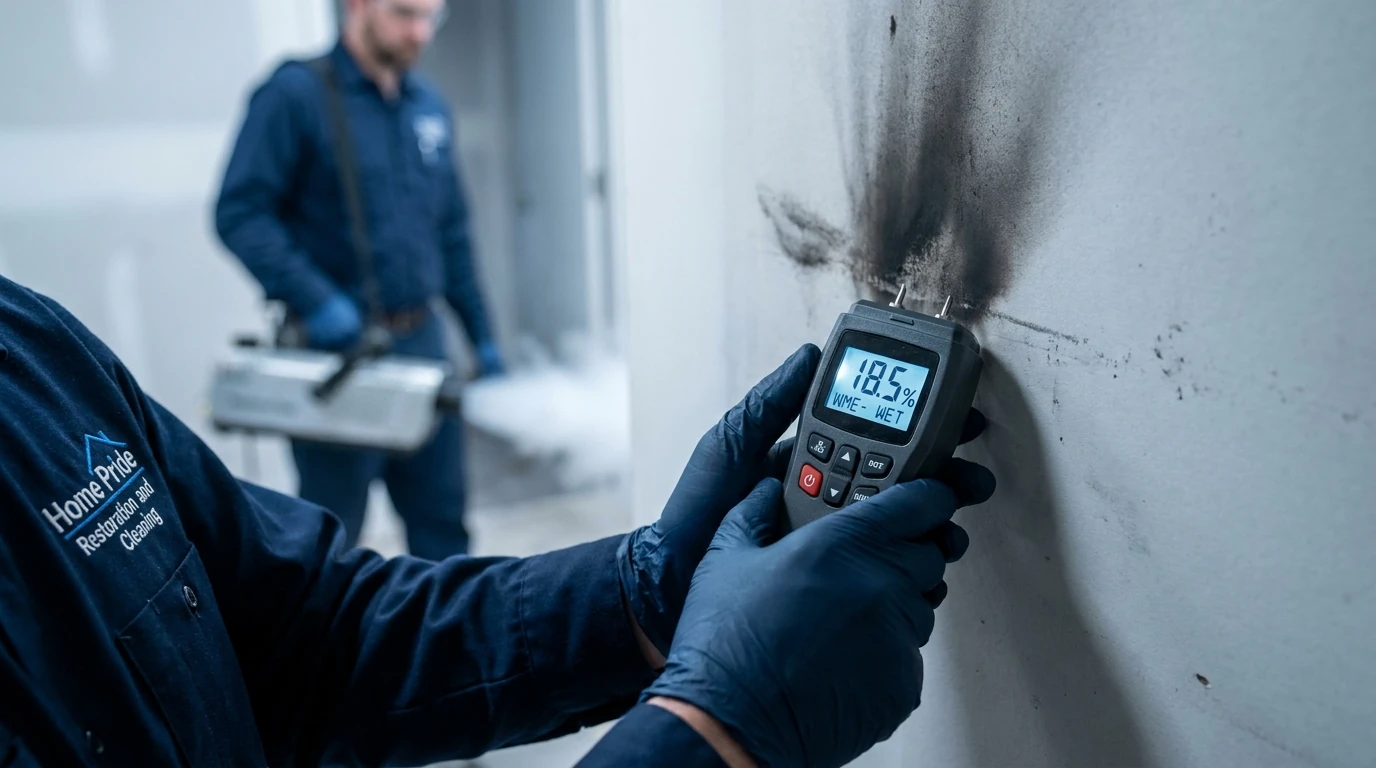
Smoke travels through HVAC systems, penetrates drywall cavities, and deposits acidic soot on every surface it touches. That soot isn’t just cosmetic. If it isn’t removed properly within the first 24-72 hours, it permanently etches metal fixtures, yellows paint, and embeds into porous materials like wood, insulation, and upholstery. Professional smoke odor removal requires HEPA air scrubbers, thermal fogging, or hydroxyl generators, not a coat of paint.
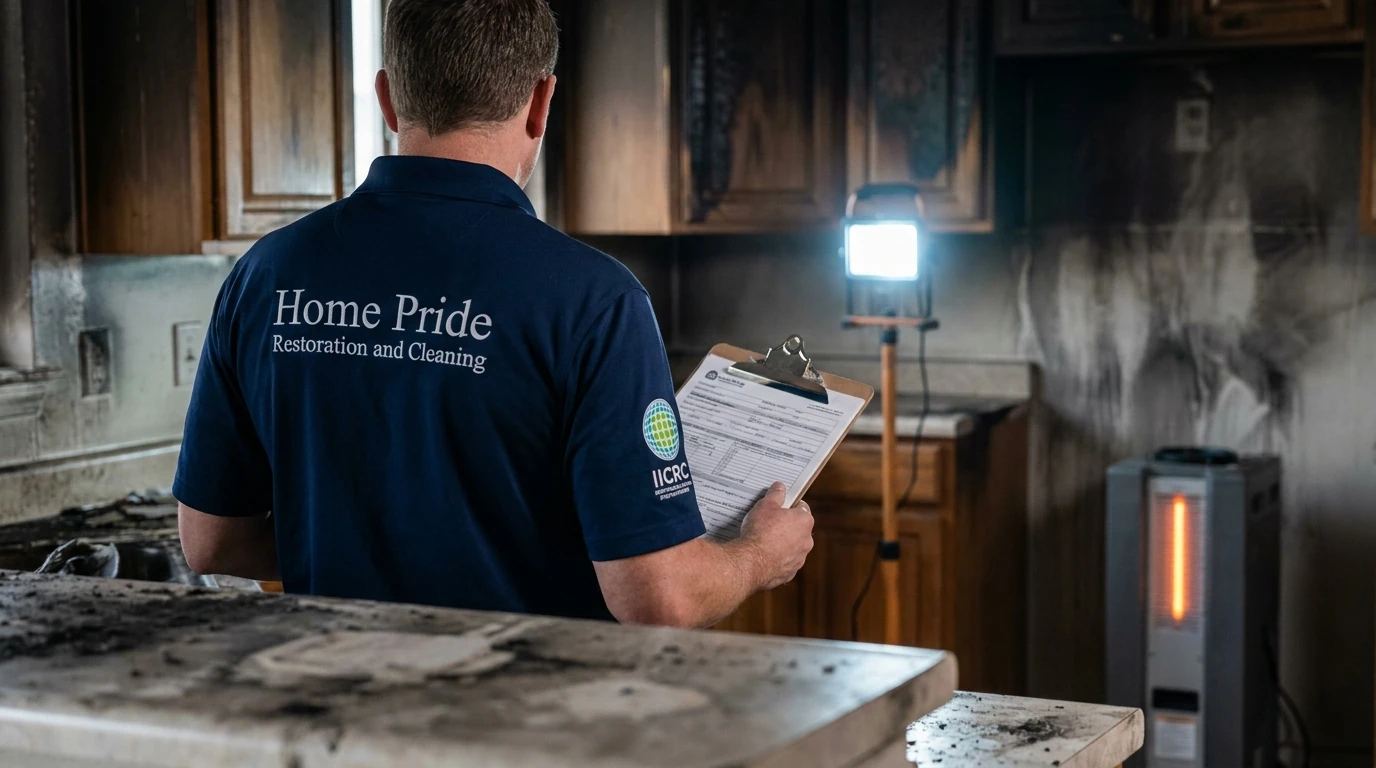
For your claim, document smoke damage separately from fire damage. Photograph every room, including rooms that weren’t near the fire. Adjusters sometimes scope only the burn zone and miss the smoke migration. A restoration company doing a proper assessment will walk the entire structure and note every affected surface in their written scope, that scope is your best protection against a partial payout.
If you’re dealing with soot on walls specifically, our post on how to clean soot off walls covers what’s DIY-safe and what requires a pro.
How do you file a fire insurance claim?
Filing a fire insurance claim has six concrete steps. Moving through them in order protects your payout.
- Call your insurer within 24 hours. Most policies require prompt notice. You don’t need a full damage inventory yet, just open the claim and get a claim number.
- Document everything before cleanup starts. Photograph and video every room, every damaged item, every surface. Don’t throw anything away. Even destroyed items need to be on the inventory.
- Request a written scope from a restoration company. An IICRC-certified restoration company will document damage using industry-standard line items (Xactimate or similar). This scope is what the adjuster compares against. If your scope and the adjuster’s scope disagree, you have a basis to negotiate.
- Create a personal property inventory. List every damaged item with make, model, age, and estimated replacement cost. Check credit card statements and Amazon order history, these are your receipts.
- Track all ALE expenses in real time. Save hotel confirmations, restaurant receipts, and any other out-of-pocket costs from the day you were displaced. Retroactive reconstruction of these expenses is harder and sometimes disputed.
- Don’t sign a final release until all repairs are complete. Adjusters sometimes issue a settlement check before the full scope of damage is known. Signing it as a final settlement can waive your right to reopen the claim if additional damage surfaces during reconstruction.
For a parallel checklist you can use across different types of losses, see our storm damage insurance claim checklist, the documentation principles are nearly identical.
What does fire insurance NOT cover?
Several situations fall outside a standard fire claim, and knowing them ahead of time prevents surprises.
Arson or intentional acts. If the fire was set deliberately by the policyholder, coverage is void. Insurers investigate cause and origin for every significant fire loss.
Vacant homes. Most policies exclude or severely limit coverage if the home has been vacant for 30-60 consecutive days (the threshold varies by policy). If you own a second home or a property between tenants, ask your insurer about a vacancy endorsement.
Wildfire in high-risk zones. In some western states, insurers are adding wildfire exclusions or requiring separate wildfire riders for homes in high-risk zones. Utah homeowners near the wildland-urban interface should review their policy’s wildfire language specifically.
Negligent maintenance. A fire caused by a known electrical hazard you ignored, or a wood stove that hadn’t been cleaned in years, can trigger a coverage dispute. Insurers look at whether the hazard was foreseeable and unaddressed.
Flood and earthquake. These are separate perils requiring separate policies. If a wildfire damages your home and subsequent rain causes mudslide damage, the fire portion is covered but the mudslide typically is not under a standard HO-3.
What should you do right now if you’ve had a fire?
The first 72 hours after a fire determine a lot about how the claim and the restoration go. Here’s what matters most in that window.
Call your insurer and open the claim. Then call an IICRC-certified restoration company to do an emergency assessment. The restoration company’s job in that first visit is to stabilize the structure (board-up, tarping if needed), begin smoke and soot documentation, and set up air scrubbers to start pulling particulates out of the air. Starting that process quickly limits secondary damage and gives your adjuster a professional scope to work from.
Don’t attempt to clean soot yourself before the assessment. Dry soot smears when wiped and embeds deeper into surfaces. Wet cleaning the wrong type of soot can cause permanent staining. A trained technician will identify the soot type (dry, wet, or protein-based) and use the appropriate method.
If the home is uninhabitable, activate your ALE coverage that same day. Call your insurer and ask them to confirm your ALE limit in writing so you know what you’re working with before you book a rental.
For a full step-by-step guide to the days and weeks after a fire, see what to do after a house fire.
Home Pride Restoration and Cleaning is available around the clock for fire and smoke damage assessments. If you need a written scope for your adjuster or want a crew on-site to begin stabilization, call (801) 995-2437.
About Home Pride Restoration and Cleaning
Home Pride Restoration and Cleaning is an IICRC-certified restoration company serving Saratoga Springs, Lehi, Eagle Mountain, Provo, and surrounding Utah communities since 1997 (license RC-25-0737). Their crews handle fire and smoke damage restoration, water damage, mold remediation, and full-service cleaning across residential and commercial properties. They work directly with insurance adjusters and provide written scopes before any work begins.