Sewage Cleanup and Sanitization in Provo
24/7 sewage cleanup and sanitization in Provo, UT. IICRC-certified, insurance billing accepted. Call (801) 995-2437.
Our IICRC-certified technicians are dispatched from our Saratoga Springs, UT headquarters and are typically on-site in Provo within 60 minutes of your call.
Provo sits at roughly 4,500 feet elevation on the eastern bench of Utah Lake, and when the ground freezes hard in January or thaws fast in March, the clay-heavy soils along the Wasatch foothills shift enough to stress sewer laterals that were already aging. When one of those laterals cracks or a municipal main backs up into your basement, you’re not dealing with clean water, you’re dealing with Category 3 contamination: raw sewage, bacteria, and pathogens that begin colonizing porous surfaces within hours. Home Pride Restoration and Cleaning has handled these calls across Utah County since 1997, and our IICRC-certified technicians carry the equipment and training to stop the spread before it becomes a gut-renovation.
Why Provo Properties See Sewage Backup More Than You’d Expect
Provo’s sewer infrastructure is a patchwork. Neighborhoods closer to downtown, particularly around University Avenue and the blocks east of Center Street, contain homes built in the 1940s through 1960s with original cast-iron or clay-tile sewer laterals. Those materials corrode, root-infiltrate, and collapse. Newer subdivisions on the south end of the city, including areas near the Provo Towne Centre corridor, sometimes have undersized mains that surcharge during heavy spring runoff when snowmelt from the Wasatch peaks hits all at once.
Septic systems are also more common on Provo’s fringes than many homeowners realize. Properties on larger lots toward the east bench may still be on private septic, and a saturated drain field after a wet March can push effluent back toward the home’s lowest fixtures. In either scenario, municipal backup or septic overflow, the contamination clock starts the moment sewage contacts your floor, drywall, or subflooring.
Our Sewage Cleanup and Sanitization Process in Provo
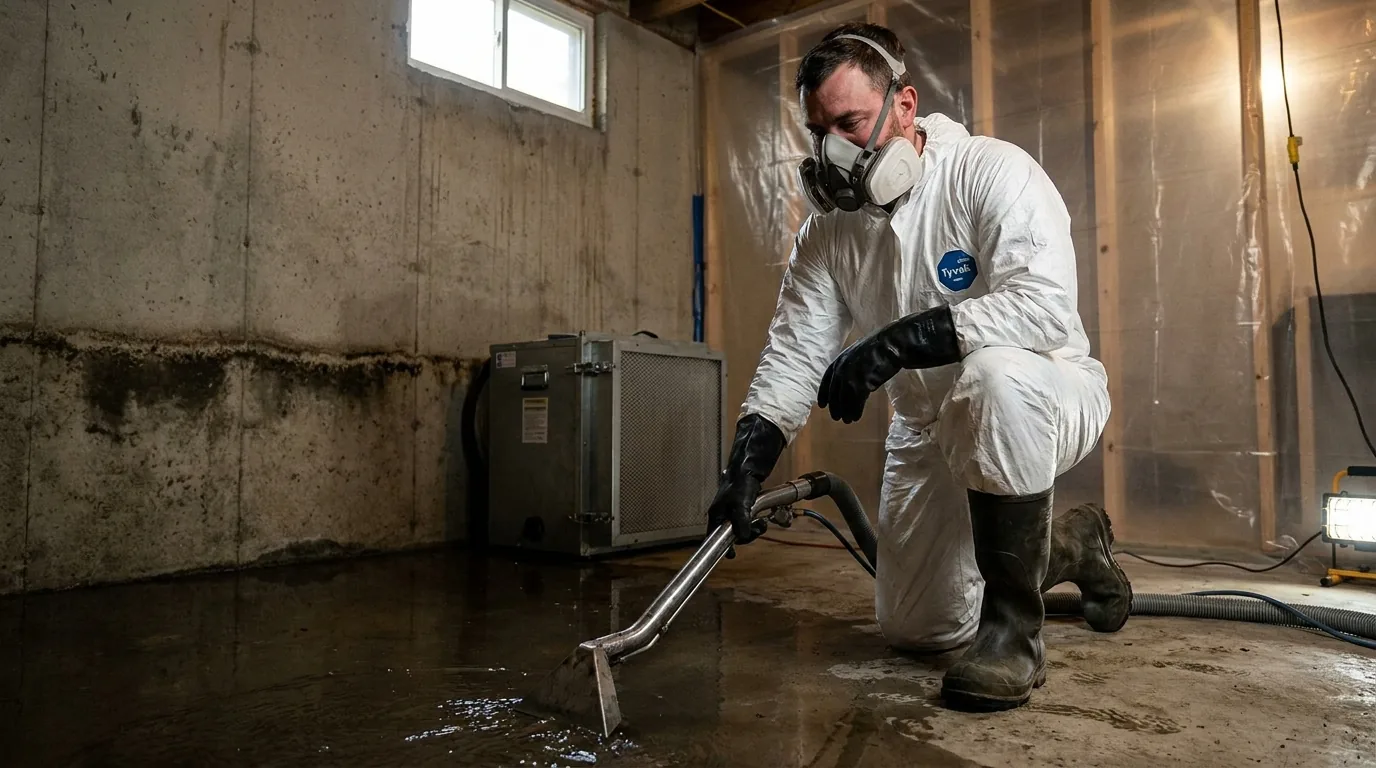
When we arrive, the first priority is containment. Sewage spreads laterally under flooring and wicks vertically into wall cavities faster than most people expect, so we establish a contamination boundary before any material is moved. Here’s what the process looks like on a typical Provo job:
- Extraction, Truck-mounted extractors pull standing sewage and saturated water from hard floors and carpet. We don’t leave this to shop vacs.
- Removal of compromised materials, Drywall below the flood line, saturated insulation, and porous flooring that has absorbed Category 3 water gets removed. Saving it is not worth the health risk.
- Disinfection and antimicrobial treatment, We apply EPA-registered disinfectants to all affected structural surfaces, including subfloor, joists, and framing. This step is documented because your insurance adjuster will ask for it.
- Drying and dehumidification, Industrial desiccant dehumidifiers and air movers run until moisture readings in walls and subfloor return to baseline. In Provo’s dry climate, this is often faster than in coastal markets, but the low humidity can also mask residual moisture in dense materials like concrete block.
- Post-remediation verification, We take final moisture readings and provide a written clearance report before reconstruction begins.
Response Time from Our HQ to Provo
Home Pride Restoration and Cleaning is based in Saratoga Springs, roughly 15 miles northwest of downtown Provo via US-89 South or I-15. On a clear day with normal Utah County traffic, our crew can be on your doorstep in 25–40 minutes from the time you call. During peak commute hours on I-15 through Lehi and American Fork, we route through US-89 to avoid the interchange backup, it’s a route our drivers know well from years of running jobs in Utah County.
If your home is on Provo’s east bench or near the BYU campus area, add roughly 5–10 minutes for the surface-street approach. We’ll give you an honest ETA when you call (801) 995-2437, not a marketing number.
Local Note: Clay Soil and Lateral Movement
One thing we’ve learned working Provo jobs over the years: the expansive clay soils on the bench above University Avenue move seasonally in ways that put unusual lateral stress on sewer connections at the foundation wall. We’ve seen multiple homes in that corridor where the backup wasn’t a clog, it was a sheared joint right where the lateral exits the foundation, caused by soil movement over years of freeze-thaw cycles. If your backup recurs season after season, it’s worth having a plumber camera the lateral before we close out the remediation. We’ll note it in our report if we see signs of structural pipe failure during the job, and we can coordinate with licensed plumbers we’ve worked with in Utah County to get that scoped same-day when possible.
If you’re dealing with sewage in your Provo home right now, every hour matters. Call (801) 995-2437, we’ll dispatch a crew, walk you through what not to touch before we arrive, and handle everything from raw sewage removal through final sanitization so you’re not left guessing whether your home is actually safe.
Serving Provo from our Saratoga Springs headquarters — ★ 5.0 · 36 Google reviews
“He did an amazing job! My stairs were so bad and they looked brand new when he got done!” — B, August 2026Read our reviews on Google →
Sewage Cleanup and Sanitization in Provo: Service Coverage
Frequently Asked Questions
How fast can you arrive for sewage cleanup and sanitization in Provo?
How quickly can you reach the BYU campus area or east bench neighborhoods in Provo for a sewage emergency?
Are older homes near downtown Provo more prone to sewer line backups?
Does Provo's dry climate affect how long sewage remediation and drying takes?
Will my homeowner's insurance cover sewage backup cleanup in Provo, and how does the claims process work?
What's the difference between a municipal sewer backup and a septic overflow, and does it change how you handle cleanup in Provo?
Sewage Cleanup and Sanitization response in Provo
Most Provo calls see a technician on-site within 60 minutes from our Saratoga Springs headquarters.