
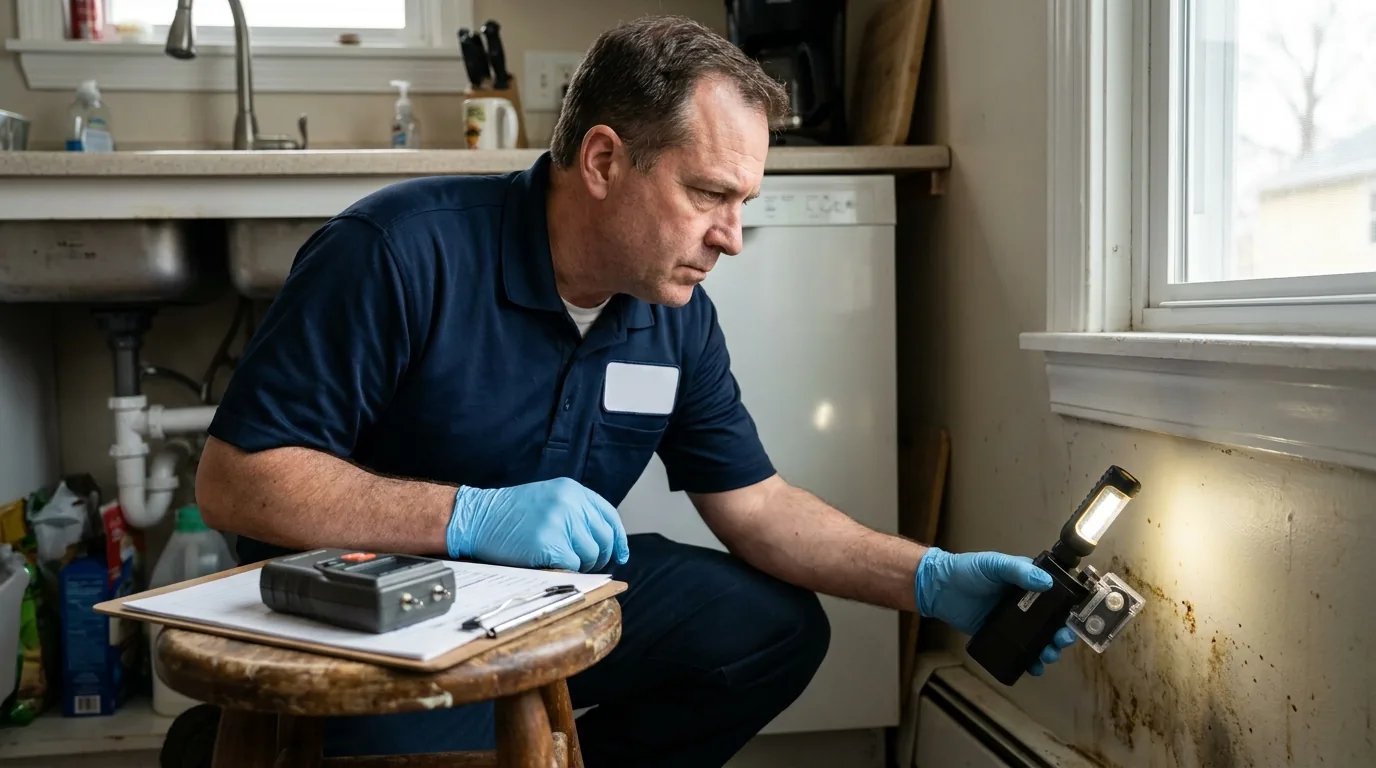
Mold Inspection and Testing in Park City
24/7 mold inspection and testing in Park City, UT. IICRC-certified, insurance billing accepted. Call (801) 995-2437.
Our IICRC-certified technicians are dispatched from our Saratoga Springs, UT headquarters and are typically on-site in Park City within 60 minutes of your call.
Park City’s elevation sits above 6,900 feet, and the swing between a wet spring snowmelt and a dry summer can leave moisture trapped inside walls and crawl spaces long before a homeowner notices a musty smell. At that altitude, temperature differentials between a heated interior and a cold exterior wall are more extreme than anywhere in the Wasatch Front valleys, and that gap is exactly where condensation feeds mold colonies. If you’ve spotted discoloration near a window frame, caught an earthy odor in a basement, or recently dealt with a slow leak from snowpack pressing against a foundation, a professional mold inspection and testing assessment is the right first step.
Why Park City Properties See Elevated Mold Risk
The same conditions that make Park City one of Utah’s most desirable mountain communities also make its homes structurally vulnerable to hidden moisture. Heavy annual snowfall, often exceeding 300 inches at the upper resorts, creates prolonged roof loading and ice-dam cycles. When ice dams form along eaves, meltwater backs up under shingles and can seep into attic sheathing and insulation without ever producing a visible ceiling stain. By the time a homeowner notices anything, mold may have been colonizing wood framing for weeks.
The housing stock adds another layer of complexity. Many properties in the Old Town area were built in the late 1800s and early 1900s as silver-mining-era worker housing. Those older structures often have minimal vapor barriers, original cellulose insulation, and stone or brick foundations that wick ground moisture directly into interior wall cavities. Newer luxury developments, particularly the ski-in/ski-out properties in the Deer Valley corridor, tend to have sophisticated HVAC systems, but those systems can spread spores through ductwork if a mold source goes undetected. Neither building type is immune; they just fail in different ways.
Our Mold Inspection and Testing Process in Park City
A thorough mold assessment here isn’t the same as a quick visual walkthrough. The process starts with a full moisture mapping of the property using thermal imaging and calibrated moisture meters. In Park City homes, we pay particular attention to north-facing walls, crawl spaces under decks, and the underside of roof sheathing in attic spaces, all areas where cold-surface condensation accumulates through the ski season.
After the physical inspection, we collect air samples and, where surface growth is visible or suspected, swab samples for laboratory analysis. Air samples establish a baseline spore count for each room and compare it against an outdoor control sample, a critical step because outdoor mold spore levels in mountain environments differ significantly from those in the Salt Lake Valley. Swab samples identify the specific genera present, which matters when determining remediation scope and whether any species warrant additional precautions. Lab results typically return within 24–48 hours, and we walk you through the findings in plain language, not just a PDF with numbers.
Response Time and Coordination from Our HQ
Home Pride Restoration and Cleaning operates out of Saratoga Springs, roughly 45 miles southwest of Park City via I-80 east through Parley’s Canyon. Under normal traffic conditions, an inspector can reach the 84060 ZIP code in approximately 50–60 minutes. For properties closer to the Kimball Junction area, the drive along US-40 from the I-80 interchange is typically the fastest approach. We schedule mold inspections promptly, usually within 24 hours of your call, because mold doesn’t pause while you wait for an appointment.
If you’re managing a rental property or a second home and aren’t on-site yourself, we’re accustomed to coordinating access with property managers, HOA contacts, or real estate agents. That’s a common scenario in Park City’s vacation-rental market, and we handle it regularly.
Park City Insurance and HOA Coordination
Many Park City homeowners carry mountain-property policies through carriers that require documented evidence, not just a contractor’s opinion, before approving mold remediation claims. Our written inspection report and laboratory results provide exactly that documentation. We detail moisture source, affected materials, spore genera identified, and recommended remediation scope in a format that adjusts well to insurer requirements.
HOA-governed communities, particularly in the Deer Valley and Canyons Village areas, often have their own requirements around remediation work, contractor licensing, noise ordinances during ski season, and sometimes mandatory third-party clearance testing after remediation is complete. We’ve navigated those processes before and can flag relevant HOA considerations early so they don’t delay your project.
Local Note
One thing that surprises homeowners new to Park City: the combination of radiant floor heating and a tight building envelope, common in high-end construction here, can actually suppress visible mold growth on surfaces while allowing it to thrive inside wall cavities where temperatures stay just warm enough to sustain colonies year-round. We’ve inspected properties in the Thaynes Canyon neighborhood where surface walls tested clean but cavity air samples revealed elevated Chaetomium and Stachybotrys counts. If your home has radiant heat and you’re chasing a persistent musty odor that doesn’t match anything visible, that’s a pattern worth investigating with a full cavity assessment.
If something feels off in your Park City home, a smell that lingers after airing out, a family member with unexplained respiratory irritation, or a moisture event that happened months ago and was never fully dried, call Home Pride Restoration and Cleaning at (801) 995-2437. We’ll give you a clear picture of what’s actually in your air and your walls, so you can make informed decisions about what comes next.
Serving Park City from our Saratoga Springs headquarters — ★ 5.0 · 36 Google reviews
“Curt was soooo amazing! Fast and efficient! Very sweet and kind! Would use again if we weren’t moving out of state!!!!!” — Kristina, August 2026
Mold Inspection and Testing in Park City: Service Coverage Map
Frequently Asked Questions
How fast can you arrive for mold inspection and testing in Park City?
Are older homes in Park City's Old Town area more likely to have hidden mold?
How does Park City's snowpack and ice-dam season affect mold inspection timing?
Do Deer Valley or Canyons Village HOAs require anything specific after a mold inspection?
What does the mold testing laboratory analysis actually tell me?
My Park City property is a vacation rental and I'm not local — how does the inspection process work?
Will my homeowners insurance cover mold inspection and testing in Park City?
Mold Inspection and Testing response in Park City
Most Park City calls see a technician on-site within 60 minutes from our Saratoga Springs headquarters.