
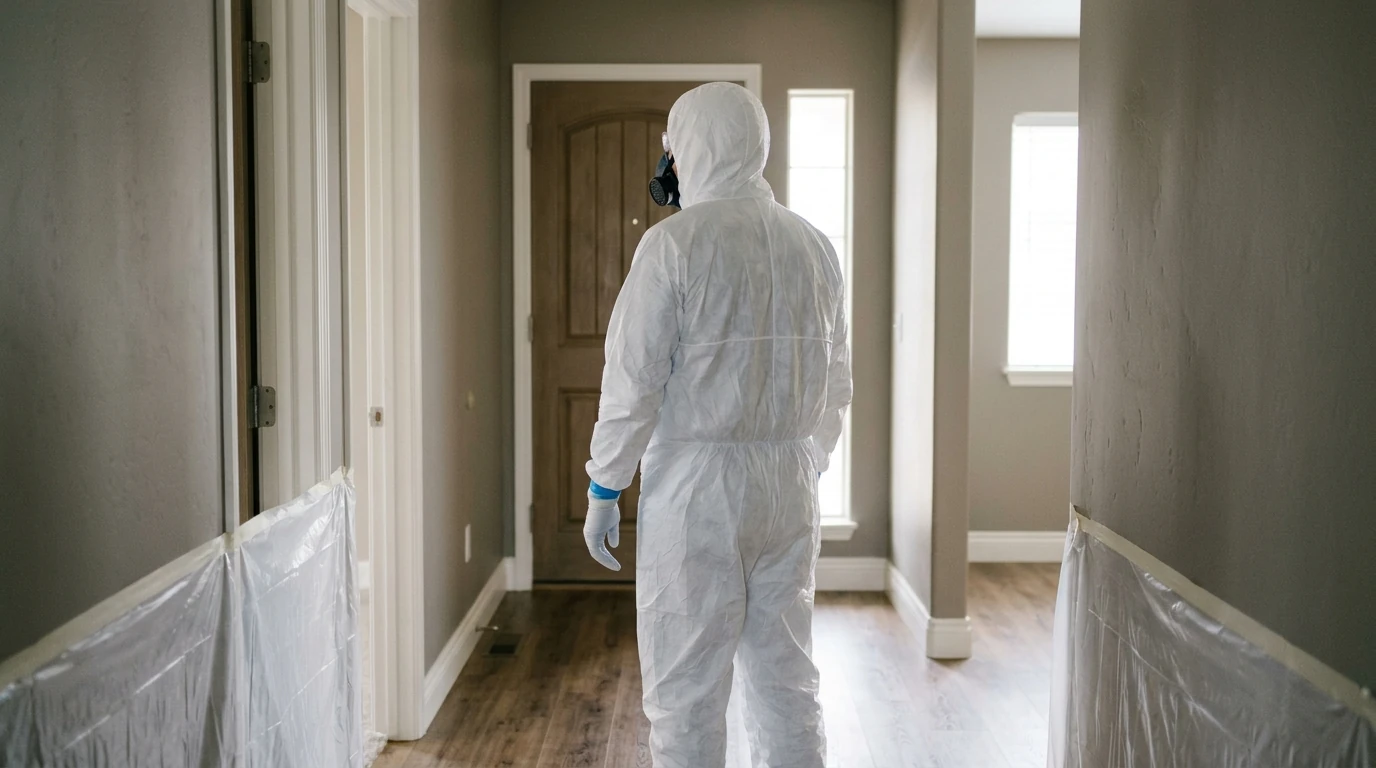
TL;DR: If someone has died unattended in a home in Saratoga Springs, Utah, call 911 first so officers can respond and secure the scene. The Utah Office of the Medical Examiner determines cause of death and releases the property, usually within a few hours to a day. Only after the scene is released should a biohazard and trauma cleanup company be called to decontaminate the space. Insurance or the landlord is typically notified last, once cleanup is underway.
If you just discovered a family member, tenant, or neighbor who passed away days or weeks ago, you are likely still in shock and trying to figure out what to do in what order. This is not a situation anyone should try to manage alone, and it is not a cleaning job for you or a maintenance crew to attempt. There is a specific sequence of calls that protects your safety, respects the legal process, and gets the property back to a livable condition without making anything worse.
Who do I call first when I find an unattended death?
Call 911 immediately. Law enforcement, usually the Utah County Sheriff’s Office or Saratoga Springs Police, needs to respond before anyone else enters the space.
Do not move the person, touch surfaces, open windows, or try to clean anything, even if the smell is overwhelming. Officers will secure the area as a precaution until the medical examiner determines there is no suspicion of foul play. If you are inside the home when you find the person, step outside and wait for first responders rather than wandering through other rooms.
Who releases the scene, the police or the medical examiner?
The Utah Office of the Medical Examiner determines the cause and manner of death and is the authority that releases the scene, not local police. Officers secure the property and may process it briefly for their own report, but the medical examiner’s office has final say on when a cleanup crew can legally enter.
In most unattended-death cases without signs of a crime, release happens within a matter of hours. If the death is being treated as suspicious, the scene can stay closed longer while investigators finish their work. Either way, nothing involving decontamination can start until that release happens, so resist the urge to call a cleaning company before this step is done.
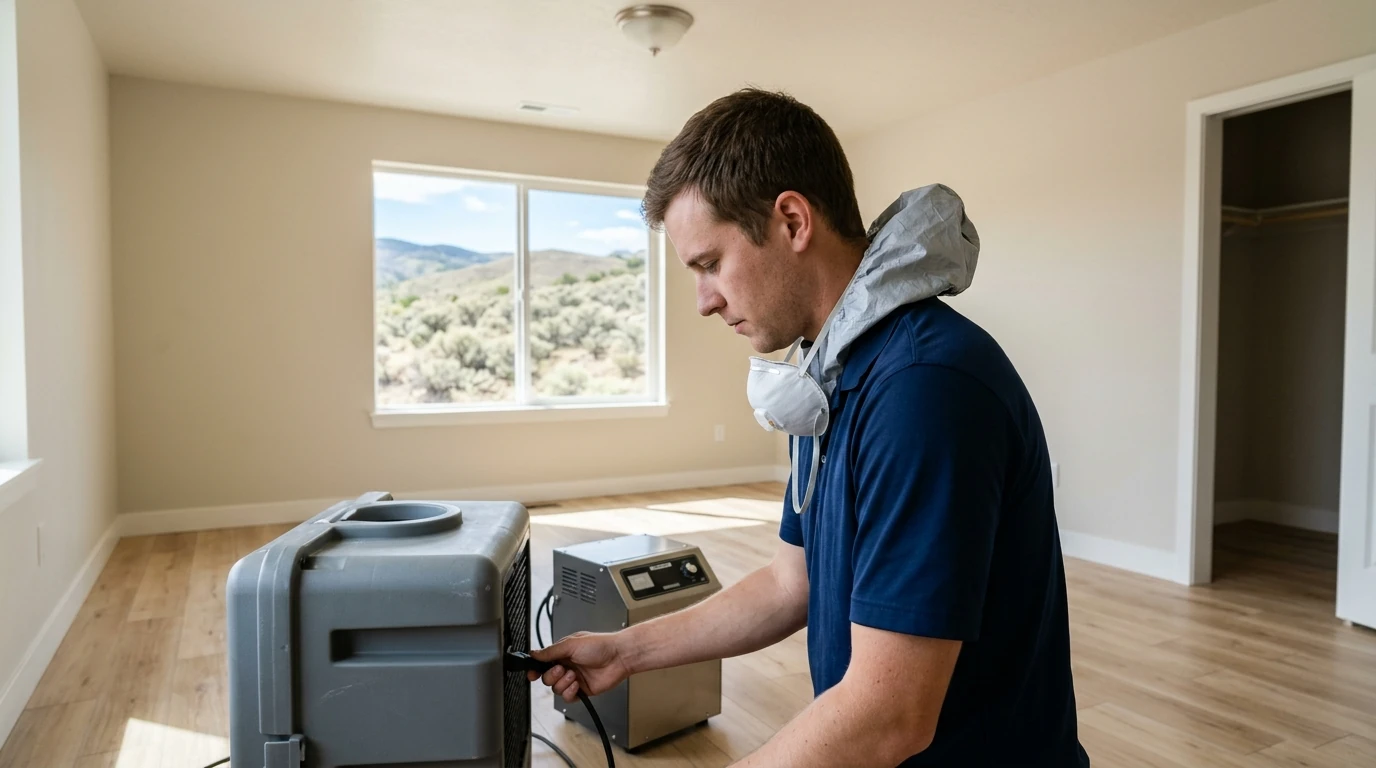
When is it safe to call a cleanup company, and who should that be?
Once officers and the medical examiner have released the property, call a company trained specifically in biohazard and trauma scene cleanup, not a general house cleaner or a handyman. Decomposition fluids carry bloodborne pathogens and other biohazards that require containment, PPE, and disposal procedures set out in the ANSI/IICRC S540 standard for trauma and crime scene cleanup and in OSHA’s bloodborne pathogens standard.
Home Pride Restoration is an IICRC-certified restoration company based in Saratoga Springs, holding a 5.0 rating across 37 Google reviews, and answers calls 24/7 at (801) 995-2437. A crew can assess affected flooring, subfloor, and framing, remove contaminated materials, and begin odor and decontamination work the same day the scene is released. You can also start a biohazard cleanup request here or read more on trauma scene cleanup.
What should the family avoid touching or cleaning?
Do not touch, move, or attempt to clean anything in the affected room, including carpet, bedding, furniture, or personal items, until a trained crew has assessed it. Decomposition can soak into flooring and subfloor long before it’s visible on the surface, and household cleaners will not neutralize the biohazard risk.
Avoid opening windows for long stretches to “air it out” before the crew arrives; this can push odor and contamination into HVAC ducts and other rooms. It’s also wise to keep pets and children out of the affected area entirely. If you need to retrieve something urgent, like medication or documents, from elsewhere in the home, that’s generally fine, but leave the room where the death occurred untouched.
Does insurance cover unattended death cleanup, and who else should I notify?
Coverage varies a lot by policy and by whether the death is tied to a covered peril, so there is no universal yes or no answer. Some homeowners and renters policies include a trauma or biohazard cleanup endorsement; others treat it as an exclusion unless it follows a covered event. Review your policy language or ask your agent directly, and see the Insurance Information Institute’s overview of what standard homeowners policies cover for general guidance.
If the home is a rental, the landlord needs to be notified once cleanup is scheduled, both for access and because many leases require it. Call the insurer or landlord after the cleanup crew is already lined up, not before; holding off on remediation to wait on a coverage decision only gives contamination and odor more time to spread. A reputable cleanup company can also document the work with photos and a written scope that supports a claim either way.
What does odor removal involve after an unattended death?
Odor from an unattended death is not something an air freshener, ozone can, or a few days of open windows will resolve. Decomposition odor settles into porous materials like drywall, subfloor, and insulation, and it often requires removing contaminated materials entirely rather than just masking the smell.
After contaminated materials are removed and the area is sanitized, crews typically run hydroxyl generators or thermal fogging equipment to neutralize odor molecules in remaining porous surfaces, sometimes over several days. You can read more about the process on our odor removal page. For a sense of what a biohazard job in this area typically runs, this cost breakdown walks through the variables, and this guide on choosing a biohazard cleanup company covers what credentials and insurance coverage to ask about.
If you’re in this situation right now, the most useful next step is a direct conversation, not research. Request an assessment here or call once the scene has been released, and a technician can walk you through what the property needs and what to expect from your insurer or landlord.
About Home Pride Restoration
Founded in 1997, this IICRC-certified restoration company has served Saratoga Springs and the surrounding Utah County communities for nearly three decades. Its technicians, including IICRC-registered water damage restoration specialists Curt Eddy and Kimberly Bowman, handle biohazard, trauma scene, and odor removal cleanup alongside the company’s full range of water, fire, mold, and storm restoration services. The team answers calls 24/7 and works directly with families, landlords, and insurance adjusters to restore a property discreetly and safely.
Video Transcript
Finding someone who passed away unattended in their home is traumatic, and knowing exactly what to do next can feel impossible. The first call always goes to 911. Don’t touch anything, don’t open windows, and don’t attempt any cleaning yourself. Officers from the Utah County Sheriff’s Office or Saratoga Springs Police will respond and secure the property first. Only the Utah Office of the Medical Examiner can determine the cause of death and officially release the scene. In most cases without suspicion of foul play, release happens within a few hours, though investigations can take longer. Once the property is released, call a company trained specifically in biohazard and trauma scene cleanup, not a general cleaner or handyman. Decomposition fluids carry bloodborne pathogens, so crews follow strict safety standards with proper protective equipment and containment. Your contractor removes contaminated flooring, subfloor, and personal items, then sanitizes and deodorizes the space from the inside out. Notify your insurance company or landlord only after cleanup is scheduled. Your contractor can document the work to help support any claim. Home Pride Restoration is IICRC-certified, holds a 5.0 rating across 37 reviews, and answers calls 24/7. Call Home Pride Restoration at (801) 995-2437 to schedule an assessment.