
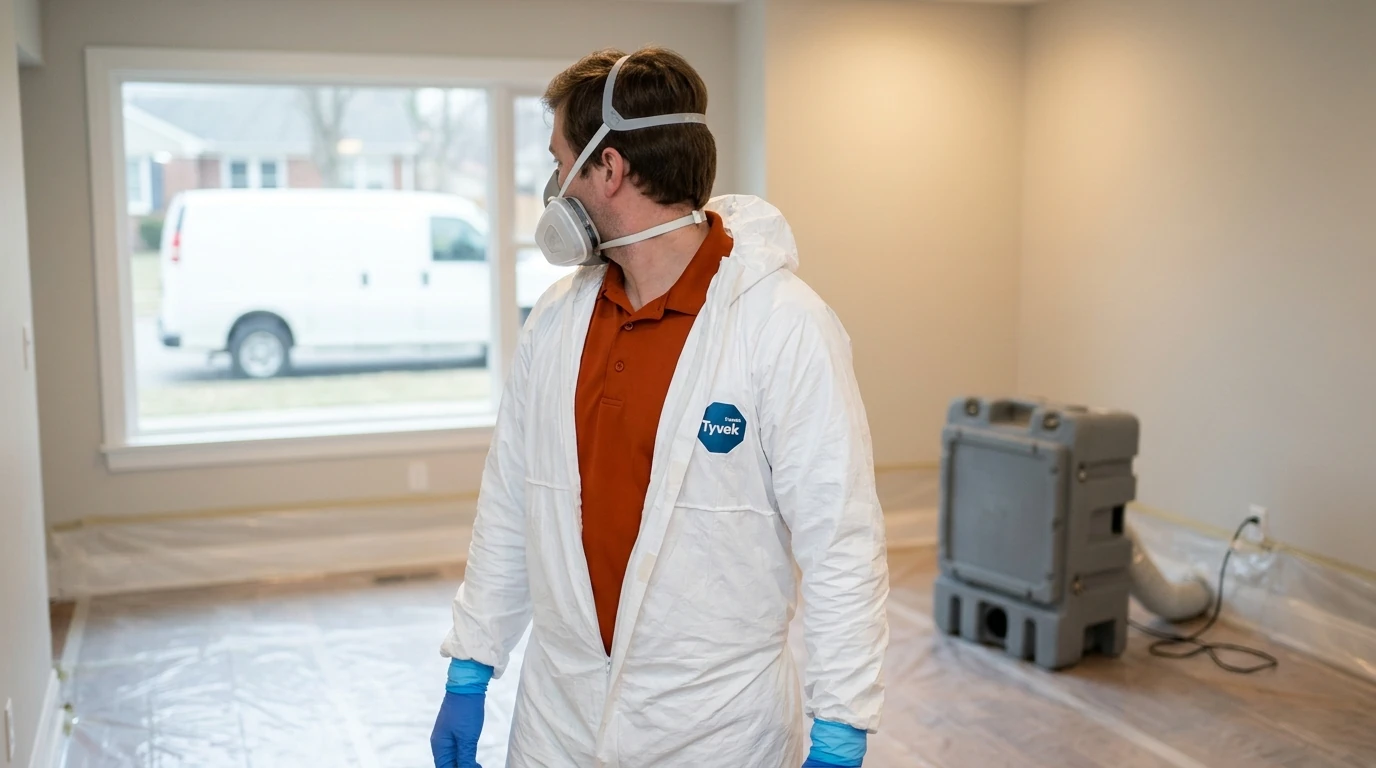
TL;DR: The best biohazard cleanup company in Saratoga Springs, UT is one that responds any hour, arrives in an unmarked or low-profile vehicle, trains its crew to the IICRC S540 standard and OSHA’s bloodborne pathogen rule, handles medical waste disposal, and bills your insurance or the victim compensation program directly. Those five things, not a slogan, are what separate a real biohazard remediation company from a general cleaning service.
If you’re searching for this right now, you’re probably dealing with an unattended death, a suicide, a violent crime scene, or a situation involving blood or bodily fluids in a home or rental unit, and you need someone who can come in quietly, handle it correctly, and not make it worse. This isn’t a job for a carpet cleaner or a handyman with bleach. Here’s exactly what to check before you hand someone the keys.
Who do you call first for biohazard cleanup in Saratoga Springs, UT?
For an unattended death, trauma scene, or sewage-related biohazard in Saratoga Springs, call a company that is IICRC trained, OSHA bloodborne-pathogen compliant, and available around the clock, not a general cleaning crew. Home Pride Restoration answers at (801) 995-2437 24/7 and works directly with Utah County property owners, landlords, and families on these calls.
If law enforcement or the medical examiner is still on scene, they handle that part first. Your job once the scene is released is to secure the property and get a trained crew in before contamination spreads into subfloors, grout lines, or HVAC returns. Waiting even a day lets fluids soak deeper into porous materials, which turns a contained job into a much bigger one.
What certifications should a biohazard cleanup company have?
A legitimate biohazard cleanup company trains its technicians to the IICRC S540 standard for trauma and crime scene cleanup, and complies with OSHA’s bloodborne pathogen rule, which governs how workers handle, transport, and dispose of materials contaminated with blood or other potentially infectious material.
Ask directly: “Is your crew trained to the IICRC S540 standard?” and “How do you dispose of biohazard waste, and are you using a medical waste hauler?” A company that can’t answer both clearly, or gets vague about disposal, is not equipped for this work. Biohazard waste can’t go in a regular dumpster; it has to be manifested and transported by a medical waste service, the same chain of custody a hospital uses.
General IICRC certification (the umbrella credential covering water, fire, mold, and trauma disciplines) is a baseline worth asking about too. It signals the company has invested in formal training rather than learning procedures on the job.
Why does discreet, unmarked response matter?
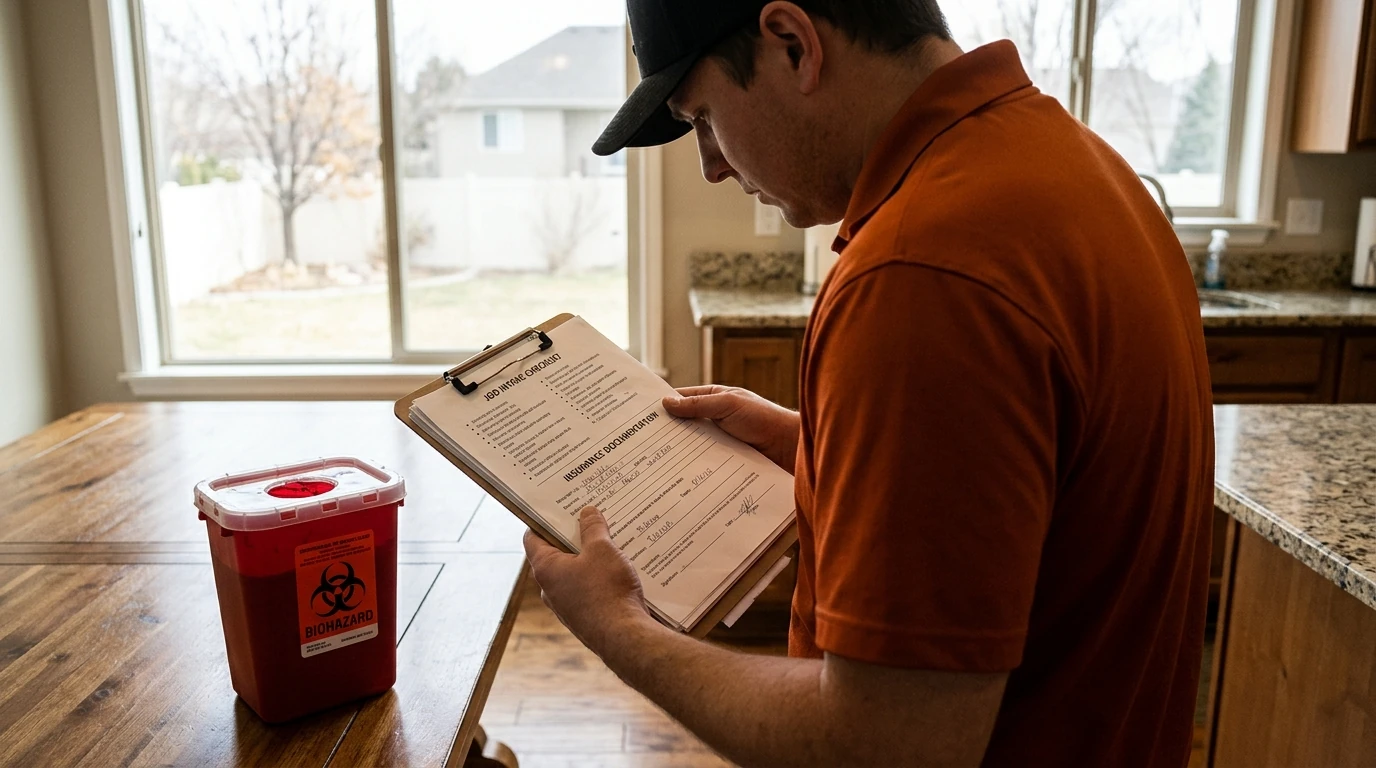
Discretion matters because the people hiring a biohazard cleanup company are almost always grieving, embarrassed, or dealing with neighbors and landlords who don’t need to know the details. A company that rolls up with a giant branded wrap advertising “crime scene cleanup” on the side of a van in a quiet Saratoga Springs cul-de-sac is thinking about marketing, not about you.
The better pattern: plain or lightly marked vehicles, technicians in clean PPE rather than tactical-looking gear, and a crew that works the job without drawing a crowd. If you’re interviewing companies, ask what their vehicles and crew look like on arrival. A good answer is short and boring, which is exactly what you want.
What questions should you ask before hiring a biohazard cleanup company?
Five questions filter out most of the field fast:
-
Are you available right now, or only during business hours? Biohazard situations don’t wait for Monday.
-
What’s your IICRC S540 and OSHA bloodborne pathogen training, specifically? Vague answers are a red flag.
-
Who hauls the waste, and is it a medical waste disposal service? This is the step most unqualified companies skip or outsource poorly.
-
Do you bill insurance or the state crime victim compensation program directly? Many states, including Utah, offer compensation for trauma scene cleanup tied to a qualifying crime; a company that knows how to file that paperwork saves you money and stress.
-
What does your crew wear on arrival, and how many vehicles show up? You want a low-key answer, not a show of force.
If a company hesitates on the disposal question or can’t name the standard they train to, keep calling.
What does the biohazard cleanup process actually involve?
The work generally runs in four phases: scene assessment and containment, removal of contaminated and non-salvageable materials, cleaning and disinfection of everything that can be saved, and air quality verification before the space is handed back. A trauma scene involving flooring, drywall, or subfloor contamination usually means those materials come out entirely; porous surfaces that have absorbed blood or fluid can’t be fully disinfected and are not treated as salvageable under the S540 standard.
After removal, every remaining surface gets cleaned with hospital-grade disinfectants and the space is deodorized, since biological odor tends to linger in HVAC systems and wall cavities long after visible contamination is gone. Related hoarding situations, where biohazard concerns often overlap with structural clutter, follow a similar sequence, see our hoarding cleanup page for how that combination gets handled.
Cost for this kind of job depends heavily on scope and materials affected; our biohazard cleanup cost guide for Saratoga Springs breaks down what typically drives the price up or down.
If you’re facing this today, the fastest path is a direct call rather than a form. A trained crew can usually tell you over the phone whether a scene qualifies as biohazard work and what the first steps will look like.
About Home Pride Restoration
Home Pride Restoration has served Saratoga Springs and the surrounding Utah County area since 1997. The company holds a 5.0 Google rating across 37 reviews and operates 24/7, with technicians including IICRC-credentialed water damage specialists Curt Eddy and Kimberly Bowman. Their work spans biohazard and trauma scene cleanup, hoarding cleanup, water and fire restoration, and related property cleanup services across Saratoga Springs and nearby cities.
Video Transcript
Finding blood or bodily fluids in a home after an unattended death or trauma is overwhelming. You need someone trained, careful, and available right now. Biohazard cleanup isn’t a job for bleach and paper towels. Contaminated fluids soak into flooring and subfloors fast, turning a small problem huge. Home Pride Restoration responds any hour, arriving in unmarked vehicles with trained technicians, never drawing attention from neighbors or landlords. Ask if the crew trains to the IICRC S540 standard and follows OSHA’s bloodborne pathogen rule. Vague answers mean they’re not equipped. Biohazard waste can’t go in a regular dumpster. It must be manifested and hauled by a licensed medical waste service, just like a hospital. Discretion matters. A quiet, low-profile response respects your privacy, while clean PPE and calm crews avoid alarming your neighborhood. Before hiring, ask about availability, training, waste disposal, and whether they bill insurance or victim compensation programs directly for you. The process includes containment, removing unsalvageable materials, disinfecting every surface, and verifying air quality before handing the space back. Your contractor documents every step, which helps support your insurance or crime victim compensation claim throughout the process. Don’t wait. Fluids spread deeper every hour. Call Home Pride Restoration LLC at (801) 995-2437 to schedule an assessment.