TL;DR: Water damage restoration in Park City, UT costs between $1,800 and $12,000 for most residential jobs, with the average falling around $3,500–$5,500. Category 1 (clean water) jobs run lower; Category 3 (sewage or floodwater) jobs run significantly higher. The Wasatch Back’s high-altitude climate, mountain home construction styles, and premium labor market push local prices above national averages. Acting within the first 24–48 hours is the single biggest factor in keeping costs down.
You just found water somewhere it shouldn’t be, maybe a burst pipe in your ski condo near Park City Mountain Resort, a flooded basement in Prospector, or a slow roof leak that finally soaked through your attic insulation. You need a number before you call anyone. This guide breaks down what restoration actually costs in the Park City market, what drives the price up or down, and what your homeowners policy is likely to cover.
What Does Water Damage Restoration Actually Cost in Park City?
Water damage restoration in Park City runs $1,800–$12,000+ for most homes, with the typical residential job landing between $3,500 and $5,500. That range is wide because the final bill depends on four variables: water category, affected square footage, materials involved, and how quickly mitigation started.
Here’s how those variables break down in practice:
Water category is the most important cost driver. The IICRC S500 standard classifies water losses into three categories:
- Category 1 (clean water): A supply line failure, appliance hose, or clean pipe burst. Lowest contamination risk. Typical cost: $1,800–$4,500 depending on size.
- Category 2 (gray water): Dishwasher overflow, washing machine backup, or toilet overflow without solids. Requires more aggressive sanitization. Typical cost: $3,000–$7,000.
- Category 3 (black water): Sewage backup, floodwater from outside, or any water that’s been sitting long enough to become heavily contaminated. Highest remediation cost. Typical cost: $5,500–$12,000+.
Park City’s altitude and climate add a wrinkle: homes here often have unfinished crawl spaces, ski-boot rooms, and mechanical rooms that stay damp longer than similar spaces at lower elevations. That extended drying window can push a Category 1 job into Category 2 territory if mitigation is delayed.
Affected square footage matters, but not linearly. Restoration companies price by the job, not strictly by the foot. A 200-square-foot finished basement with tile floors and drywall costs more to restore than 200 square feet of unfinished concrete, because the materials determine the scope of demolition, drying, and rebuild.
How Is Water Damage Restoration Priced Per Square Foot?
Restoration contractors typically charge $4–$12 per square foot for mitigation (extraction, drying, and antimicrobial treatment), with finished spaces at the higher end and unfinished spaces at the lower end. Reconstruction, replacing drywall, flooring, cabinets, is priced separately and adds $15–$40+ per square foot depending on materials.
Here’s a rough breakdown by job size for the Park City area:
| Scenario | Estimated Range |
|---|---|
| Small appliance leak, 1 room, Cat 1 | $1,800 – $3,200 |
| Burst pipe, 2–3 rooms, Cat 1 | $3,500 – $6,000 |
| Basement flooding, finished, Cat 2 | $5,000 – $9,000 |
| Sewage backup, 1–2 rooms, Cat 3 | $6,000 – $12,000 |
| Whole-floor water event, Cat 2–3 | $10,000 – $25,000+ |
These ranges reflect the Wasatch Back labor market, which runs 15–25% above national averages due to the area’s cost of living and the specialized nature of mountain home restoration.
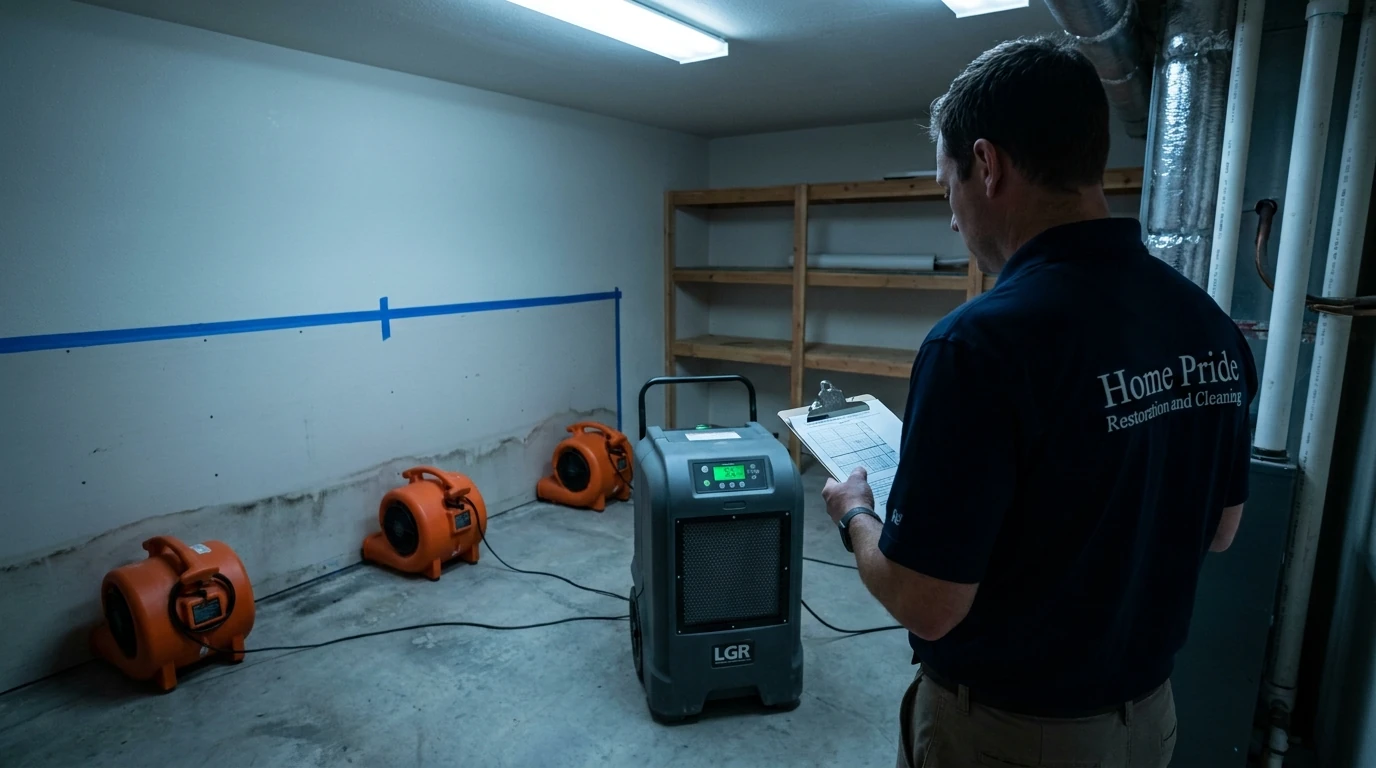
Emergency extraction, the first truck on-site pulling water out of your floors, is often billed separately at $500–$1,500 depending on the volume of water and equipment required. That cost is almost always covered by homeowners insurance when the loss is sudden and accidental.
What Pushes the Cost Higher in Park City Specifically?
Several factors make Park City restoration jobs more expensive than the national average, and knowing them helps you evaluate a quote.
Mountain home construction. Many Park City and Deer Valley properties have complex rooflines, exposed timber framing, stone veneer, and custom millwork. When water touches those materials, the restoration scope expands fast. Replacing a custom-milled baseboard in a Deer Valley ski home costs far more than a standard pine baseboard in a tract house.
Altitude and drying time. At 7,000 feet, the lower ambient humidity actually helps drying, but colder temperatures (especially in unheated vacation properties) slow it down. A home that sat unoccupied and unheated after a pipe burst in January may need 30–50% more drying time than a heated primary residence, which means more equipment-days and higher mitigation costs.
Vacation property delays. Many Park City properties are second homes. By the time the owner gets a leak alert or a neighbor’s call, the water has been sitting for days. Extended saturation means more material removal, a higher likelihood of mold growth (mold can begin colonizing within 24–48 hours per EPA guidance), and a more complex restoration scope. If you own a vacation property in the area, a leak detection system is one of the most cost-effective investments you can make.
Mold remediation as a secondary cost. If mitigation is delayed, mold remediation gets added to the bill. A contained mold remediation job runs $1,500–$5,000; a widespread mold event in a finished basement can reach $10,000–$20,000. Getting extraction and drying started within 24–48 hours is the most reliable way to avoid that secondary cost. Our post on how quickly mold grows after water damage covers the timeline in detail.
Reconstruction is a separate line item. Mitigation (extraction, drying, demo of unsalvageable materials) and reconstruction (rebuilding what was removed) are typically scoped and billed separately. Your restoration contractor handles mitigation; reconstruction may be done by the same company or a separate general contractor. Make sure your written scope of work distinguishes between the two.
Does Insurance Cover Water Damage Restoration in Park City?
Most standard homeowners policies cover sudden, accidental water damage, a burst pipe, a failed appliance line, or an ice dam that forces water through your roof. They do not cover gradual leaks, flooding from outside (that requires separate flood insurance through the NFIP), or damage caused by deferred maintenance.
For Park City homeowners, the most common covered losses are:
- Burst or frozen pipes (extremely common in mountain properties during cold snaps)
- Appliance failures (dishwasher, refrigerator ice-maker line, water heater)
- Ice dam water intrusion
- Roof leaks from sudden storm damage
The most common denials are:
- Slow leaks that went undetected for weeks or months
- Sump pump failures (unless you have a sump pump rider)
- Flooding from snowmelt or surface water entering the home
- Damage in a property left unoccupied beyond the policy’s vacancy clause (often 30–60 days)
If you’re filing a claim, document everything before any work starts, photos, video, moisture readings. A written scope of work from your restoration contractor is what the adjuster uses to calculate the payout. For a deeper look at what policies typically cover, see our guide on does homeowners insurance cover water damage.
Park City homeowners with vacation properties should also check their policy’s vacancy clause carefully. Many standard policies limit or exclude coverage if the home has been unoccupied for more than 30 or 60 consecutive days, which is easy to hit if the property sits empty between rental seasons.
How Do You Get an Accurate Estimate?
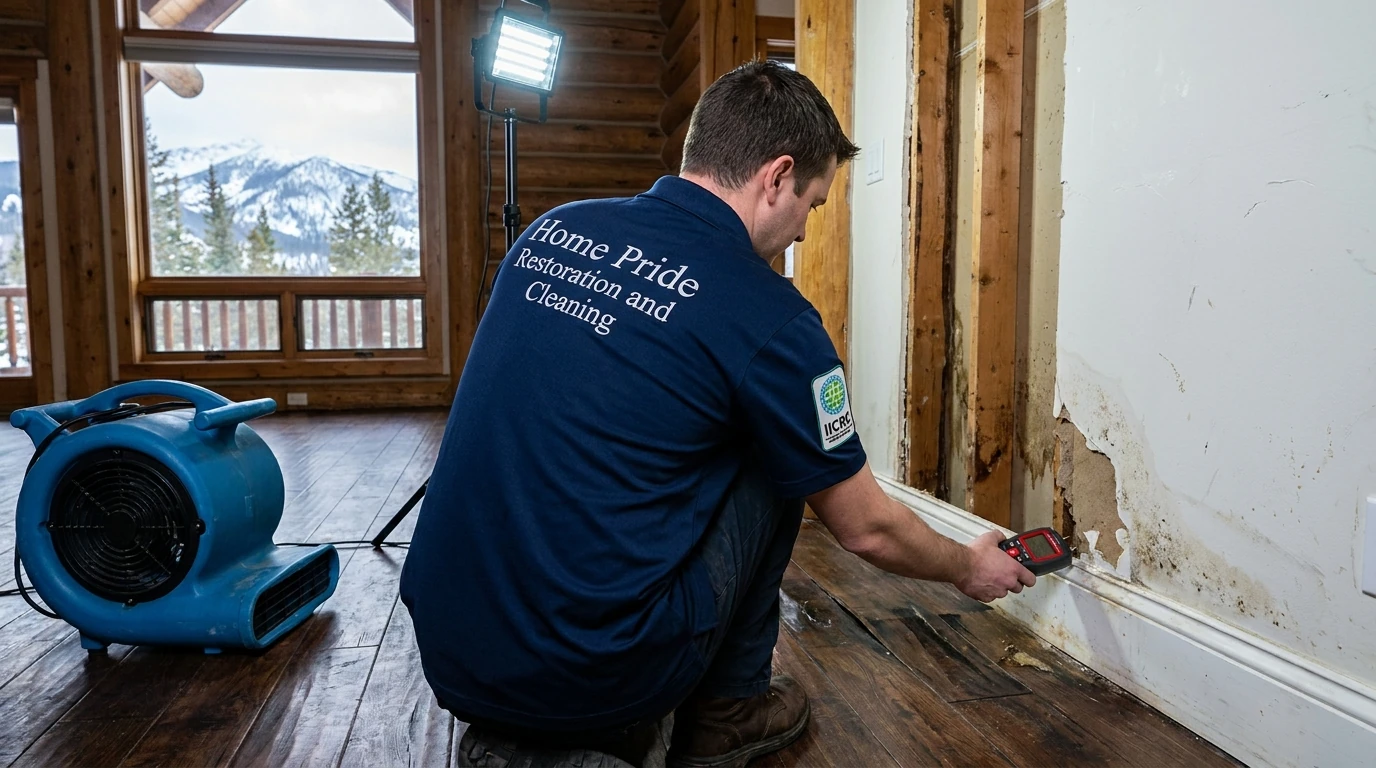
The only way to get an accurate restoration estimate is an on-site moisture assessment. Any number quoted over the phone without seeing the damage is a placeholder, not a real scope.
A legitimate assessment includes:
- Moisture mapping with a calibrated moisture meter and thermal imaging camera to find hidden saturation behind walls and under floors
- Water category determination, the source and contamination level of the water
- Affected material inventory, what can be dried in place vs. what needs to come out
- A written scope of work with line items your insurance adjuster can review
Be cautious of any contractor who skips the moisture mapping step or quotes a flat rate before seeing the property. Underbidding the scope and then adding change orders mid-job is a common pattern in disaster restoration, one our post on choosing a restoration company covers in detail.
Home Pride Restoration and Cleaning provides written scopes after every on-site assessment. If you’re dealing with water damage in Park City or anywhere on the Wasatch Back, call (801) 995-2437 to schedule an assessment, available 24/7.
About Home Pride Restoration and Cleaning
Home Pride Restoration and Cleaning LLC is an IICRC-certified restoration company serving Park City, Heber City, and communities across northern Utah since 1997 (license RC-25-0737). Their crews handle water damage mitigation, basement flooding cleanup, mold remediation, and full-scope restoration for residential and commercial properties throughout the Wasatch Back. Available 24/7 for emergency response.