
TL;DR: Hail damage on a roof shows up as round, soft bruises on asphalt shingles, missing granules that expose the black asphalt mat, and cracked or dented flashing. Cosmetic granule loss alone usually doesn’t leak, but any bruise that cracks through the mat, or hail paired with high wind that lifts shingle edges, can let water reach the decking within hours. If you see water stains on an interior ceiling after a hailstorm, treat it as an active leak and get the roof tarped and the moisture documented the same day.
If a hailstorm just rolled through the Wasatch Back and you’re standing in your driveway squinting up at the roofline trying to decide if it’s worth a ladder, you’re not alone. Homeowners in Heber City and Park City deal with this every summer when fast-moving mountain storms drop hail on one street and skip the next. The tricky part isn’t spotting a shattered window. It’s telling the difference between shingles that took a cosmetic hit and a roof that’s now quietly letting water into the attic.
What Does Hail Damage Look Like on a Roof?
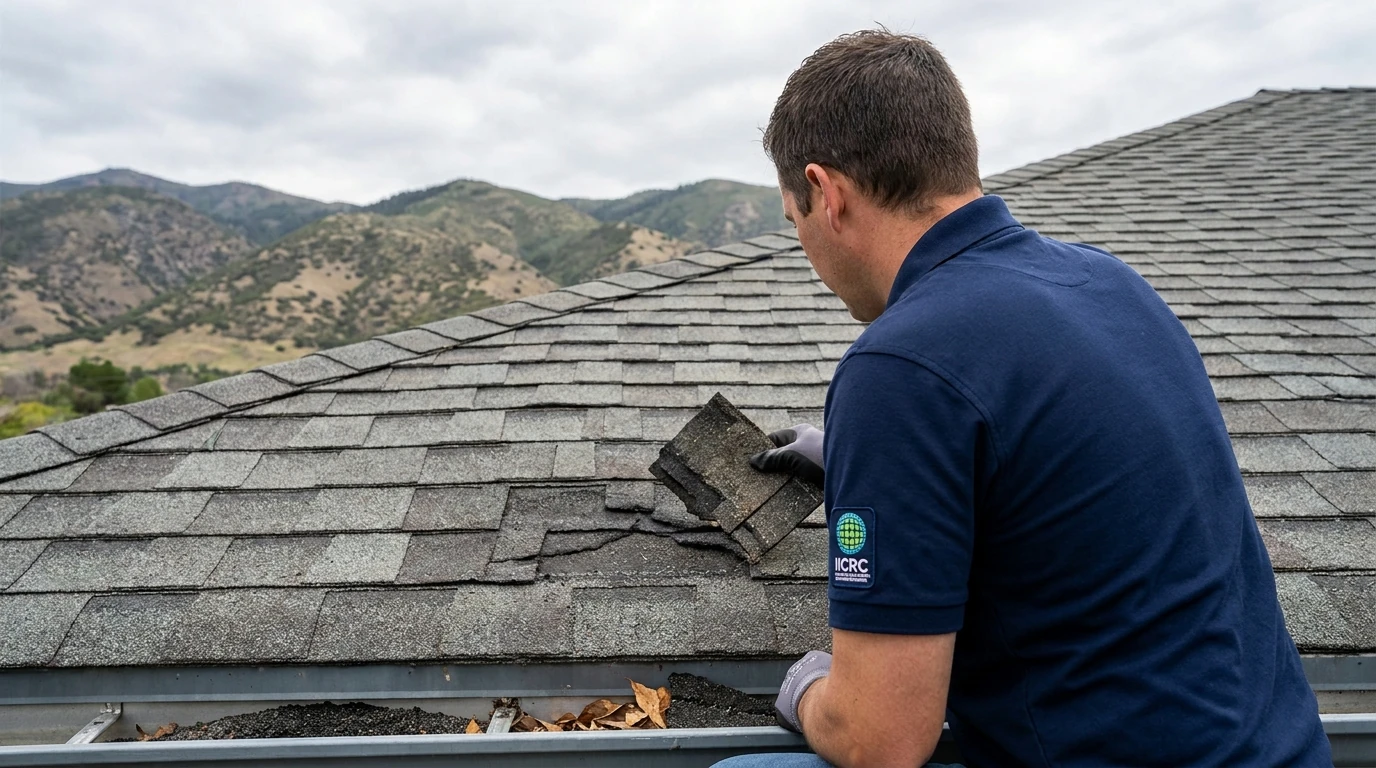
Hail damage on an asphalt shingle roof looks like round or irregular soft spots where the impact knocked granules loose and bruised the mat underneath. From the ground you may not see much. Up close, or from a drone photo, the bruises look like dark, slightly shiny circles scattered across the slope that took the brunt of the storm, usually the side facing the direction the wind was blowing.
Other signs include granules collecting in gutters and downspouts (they look like coarse black sand), dented gutters and downspout caps, cracked or split metal flashing around vents and chimneys, and chipped or dented skylights. Soft metal, like vent caps and gutter aprons, dents easily and is often a better indicator of hail size than the shingles themselves. Hail an inch or larger (about golf-ball size) is far more likely to crack a shingle mat than the smaller pea-to-marble hail that’s common in Wasatch Back summer cells.
If your shingles are older, brittle from UV exposure, or already past their expected service life, even smaller hail can cause a mat fracture that newer shingles would shrug off. Roof age matters as much as hail size when you’re deciding whether an inspection is worth scheduling.
How Do I Tell Cosmetic Damage from Wind Damage That Lets Water In?
Cosmetic damage means granule loss and surface bruising with the shingle mat still intact; a functional breach means the mat is cracked, torn, or lifted enough that water can travel under it to the decking. The distinction matters because cosmetic damage rarely needs emergency repair, while a functional breach needs a tarp and a moisture check right away.
Hail rarely acts alone. A lot of Wasatch Back storms bring straight-line wind gusts of 50 to 60 mph alongside the hail, and wind damage to a roof often shows up as lifted or missing shingle tabs, creased shingles (a soft fold line rather than a clean crack), and exposed nail heads where the sealant strip tore loose. Wind-lifted shingles that haven’t fully blown off can look fine from the street but leave a gap that funnels wind-driven rain straight under the shingle course above.
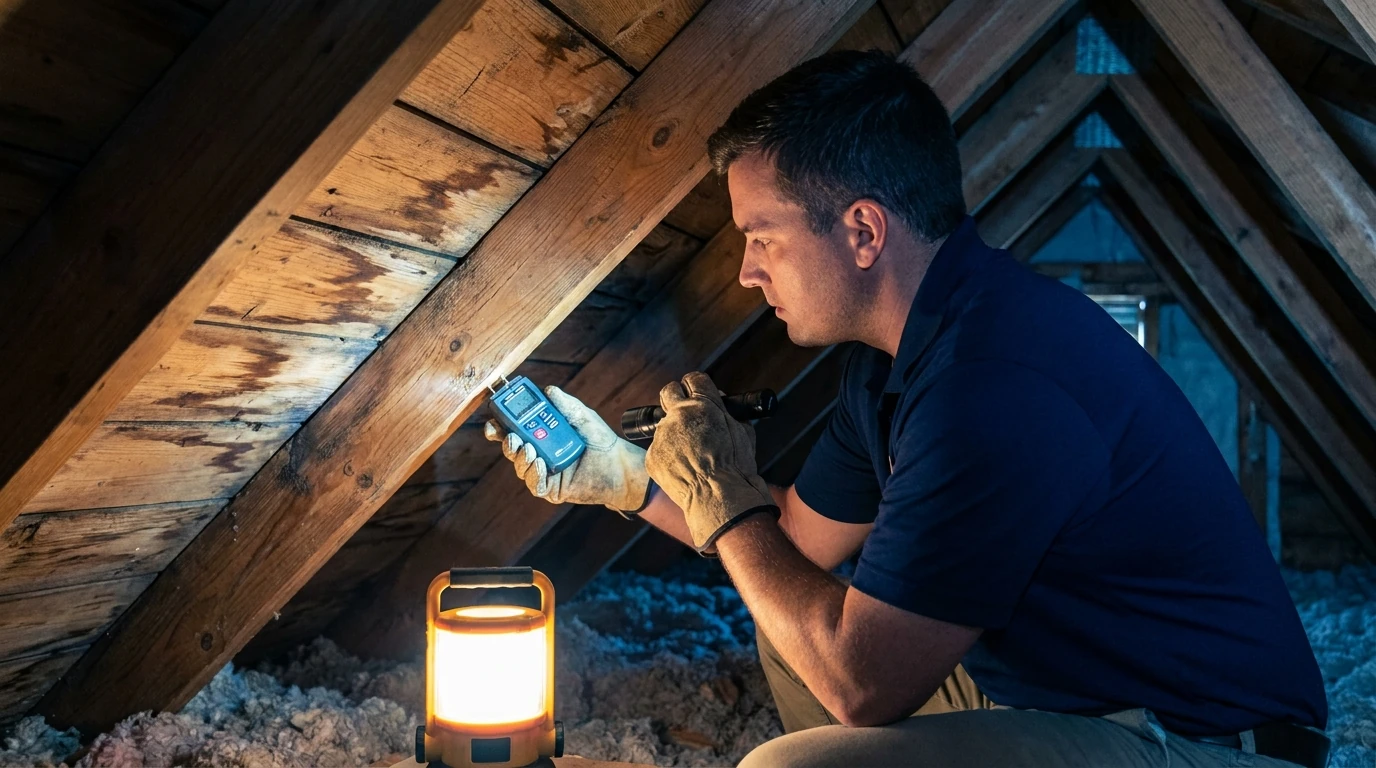
The fastest way to check for a real breach without climbing on a wet, possibly damaged roof yourself: look at the attic. Bring a flashlight up and check the underside of the decking near the ridge and around any vent penetrations for dark water staining, new mold spotting, or a damp smell. Staining that follows a nail line or runs down a rafter is a strong sign water has already found its way in, even if you can’t see a hole from outside.
What Should I Do in the First 24 to 48 Hours After a Hailstorm?
Document the damage before you touch anything, get any active leak tarped, and avoid walking a wet or hail-damaged roof yourself. Photos taken within the first day or two, especially of granule loss in gutters and any interior water staining, carry more weight with an insurance adjuster than photos taken weeks later after weather has washed evidence away.
- Photograph everything from the ground first. Wide shots of each roof slope, close-ups of gutter debris, and any ceiling or wall stains inside. Note the date and, if you can, the approximate hail size (nickel, quarter, golf ball).
- Check the attic for active water intrusion. A flashlight scan of the decking and insulation near suspected impact areas tells you whether this is urgent or something that can wait for a scheduled inspection.
- Get a tarp on any confirmed breach. A properly installed tarp, secured under the shingle course above the hole rather than just laid over it, buys time until permanent repairs happen. This isn’t a job for a homeowner on a ladder in wind-damaged conditions.
- Call your insurer, but get an independent inspection too. Many Utah homeowners policies cover sudden, storm-caused roof damage; our storm damage insurance claim checklist walks through what to have ready before that first call.
If water has already reached the decking, treat the interior moisture like any other water intrusion event. Wet insulation and framing that sit un-dried for more than 48 hours create real conditions for mold growth, which is when a cosmetic roof problem turns into an interior remediation project.
What Does Storm Damage Restoration Include After Hail?
Storm damage restoration after hail covers three phases: emergency stabilization (tarping and board-up), moisture mapping and drying of any affected interior areas, and coordination of the permanent roof repair with your insurance adjuster. It’s the difference between patching a hole and actually closing out the claim correctly.
On the stabilization side, that means a proper tarp or emergency board-up the same day damage is confirmed, not a temporary fix that fails in the next wind event. From there, if water reached the attic or living space, technicians use moisture meters and thermal imaging to map exactly how far the water traveled, since hail-driven leaks often wick sideways along rafters well past the visible entry point. Drying follows the IICRC S500 standard for structural drying, which sets the benchmark for how long equipment needs to run and how drying is verified before a space is considered dry.
On the paperwork side, a written scope of damage, dated photos, and moisture readings give your adjuster something concrete to work from instead of a verbal description. For homes where the initial hail event also brought high wind, our wind damage insurance coverage guide covers how insurers typically split hail and wind claims, which is worth knowing before you sign off on an estimate.
If you’re not sure whether what you’re looking at is worth a claim, a roof and attic assessment settles it faster than guessing from the ground. Home Pride Restoration and Cleaning can document the damage, tarp anything urgent, and start the interior drying conversation the same visit if water has already gotten in.
About Home Pride Restoration and Cleaning
Home Pride Restoration and Cleaning is an IICRC-certified restoration company (license RC-25-0737) that has served Saratoga Springs and the surrounding Wasatch Front and Wasatch Back, including Heber City and Park City, since 1997. Their crews handle storm damage restoration, roof leak repair, water damage restoration, and mold remediation, and the company operates 24/7 for emergency stabilization work.