TL;DR: Standard homeowners insurance in Utah covers storm damage caused by wind, hail, lightning, and the weight of snow or ice. It does not cover flooding from rising water, storm surges, or gradual wear and tear. If a windstorm tears off shingles and rain gets in, that interior water damage is typically covered. If a river overflows and floods your basement, that requires a separate flood policy. Knowing the difference before you file saves you from a denied claim.
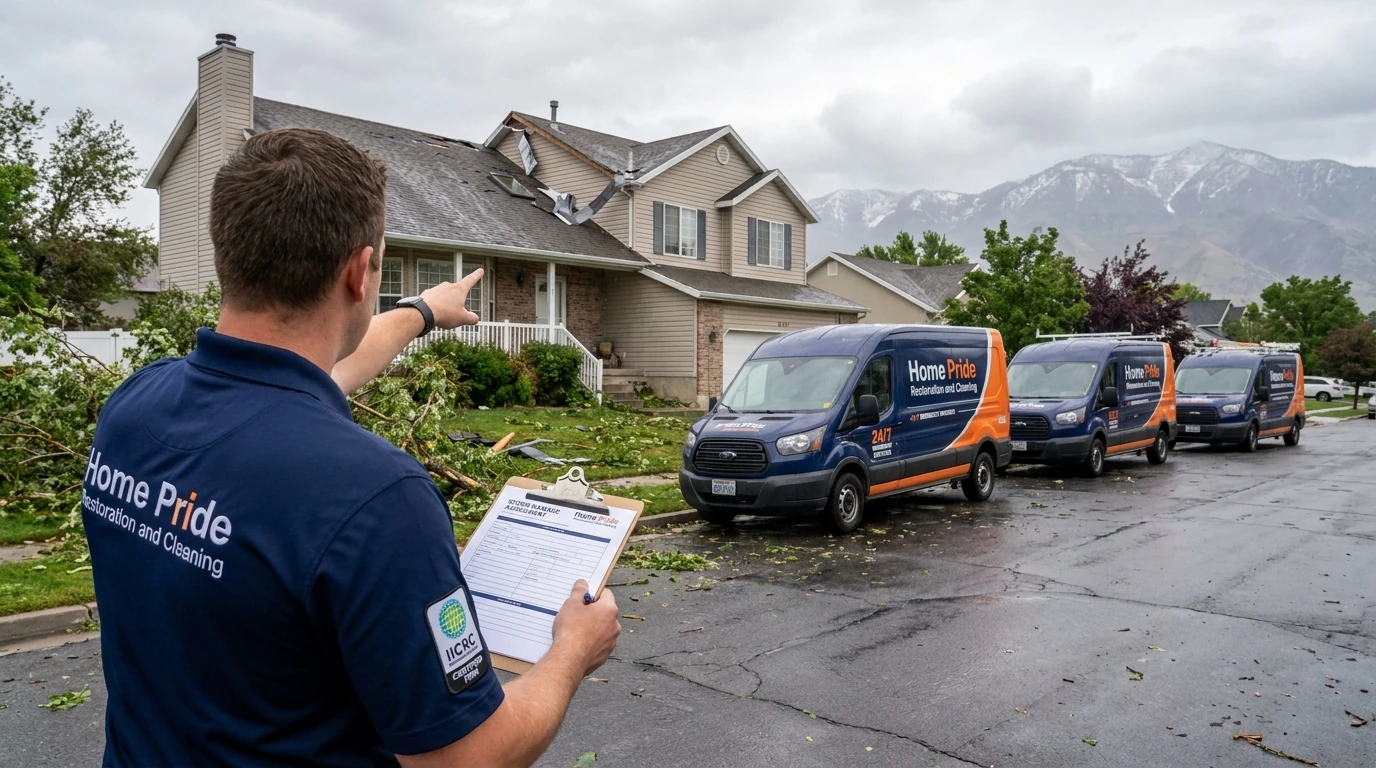
You just walked through your house after a storm and the damage is real: shingles in the yard, a cracked window, water stains spreading across the ceiling. Now you are wondering whether your homeowners policy actually covers any of it. The answer depends on what caused the damage, not just what the damage looks like. Utah homeowners get this wrong more than you might expect, and a misunderstood exclusion can mean a five-figure bill comes back to you.
What storm damage does homeowners insurance typically cover?
Standard homeowners insurance (the HO-3 policy most Utah homeowners carry) covers sudden, accidental damage from named perils. For storms, that typically includes wind, hail, lightning strikes, and the weight of snow or ice. If a hailstorm punches holes in your roof and water enters the attic, both the roof damage and the resulting interior water damage are generally covered under the same claim. The same logic applies to a tree limb that crashes through a window or a lightning strike that starts a small fire.
Here is what the covered-vs-excluded split looks like in practice:
Typically covered under a standard HO-3 policy:
- Wind and windstorm damage (including tornadoes)
- Hail damage to roofing, siding, and windows
- Lightning strikes and resulting fire
- Weight of snow, sleet, or ice causing a roof collapse or structural damage
- Ice dam damage when ice buildup forces water under shingles and into the interior
- Interior water damage that enters through a storm-created opening
Typically NOT covered:
- Flooding from rising water, storm surges, overflowing rivers or lakes
- Sewer or drain backup (requires a separate endorsement)
- Gradual wear and tear, even if a storm exposed it
- Damage the insurer deems pre-existing or due to deferred maintenance
- Earthquake damage (requires a separate policy)
One note on ice storms specifically: if ice accumulates on your roof and the weight causes structural damage, that is generally covered. But if an ice dam forms and forces water into your walls over weeks of slow melting, some insurers push back by arguing the damage was gradual. Document everything immediately after the storm.
What storm damage is NOT covered by homeowners insurance?
The biggest coverage gap Utah homeowners hit is flood damage. Standard homeowners insurance does not cover flooding caused by rising water, period. That includes overflow from Utah Lake, a swollen creek, or runoff that enters your basement after a heavy monsoon rain. If water enters your home from the ground up rather than through a storm-created opening in the structure, it is almost certainly a flood loss, not a wind/hail loss.
Flood coverage requires a separate policy, typically through the National Flood Insurance Program (NFIP) administered by FEMA, or a private flood insurer. If you live near a floodplain in Utah County or along the Wasatch Front, this distinction is not academic.
The second major exclusion is wear and tear. If a storm reveals that your 22-year-old roof was already failing, your insurer may deny the claim or reduce the payout significantly, arguing the damage was pre-existing. This is one reason a professional damage assessment matters: a written scope that documents storm-specific impact (hail strikes, lifted shingles, wind-torn flashing) versus general aging is the difference between an approved and a denied claim.
The Utah Insurance Department is the state regulator for homeowners policy disputes. If your claim is denied and you believe it was wrongly handled, that is your first call.
Does homeowners insurance cover roof damage from a storm?
Yes, in most cases. If wind or hail physically damages your roof, your HO-3 policy covers the repair or replacement, minus your deductible. However, two policy details matter here.
First, check whether your policy pays actual cash value (ACV) or replacement cost value (RCV). ACV policies depreciate your roof based on age, so a 15-year-old roof may only pay out a fraction of replacement cost. RCV policies pay what it actually costs to replace the roof with like materials today. Most Utah homeowners should have RCV coverage, but it is worth confirming before a storm hits.
Second, some policies now carry a separate wind and hail deductible, often expressed as a percentage of your home’s insured value (1-2%) rather than a flat dollar amount. On a $400,000 home, a 2% wind/hail deductible means you pay $8,000 out of pocket before coverage kicks in. Read your declarations page carefully.
For roof leak repair after storm damage, the restoration process typically starts with emergency tarping to stop active water intrusion, followed by a full damage assessment, then repair or replacement. Getting that sequence documented is critical for your claim.
Does homeowners insurance cover additional living expenses after storm damage?
If storm damage makes your home uninhabitable, most standard policies include Additional Living Expenses (ALE) coverage, also called Loss of Use. This pays for hotel stays, temporary rentals, restaurant meals above your normal food budget, and similar costs while your home is being repaired.
ALE coverage is typically capped at a percentage of your dwelling coverage (often 20-30%) or a set dollar amount, and it runs for a defined period. Keep every receipt. Your insurer will want documentation of every expense you claim above your normal cost of living.
The key trigger is “uninhabitable.” A damaged roof that is actively leaking into living spaces usually qualifies. A cracked window that you can still live around typically does not. When in doubt, ask your adjuster in writing and document the response.
What should you do immediately after storm damage?
The first 24-48 hours after a storm set the foundation for your entire claim. Here is the sequence that protects you:
- Make the property safe first. If there is structural risk, gas leaks, or downed power lines, call 911 and your utility company before anything else.
- Document everything before touching it. Walk the property and photograph every piece of damage: the roof from multiple angles, every broken window, every interior water stain, every piece of damaged personal property. Video is better than photos alone.
- Prevent further damage. Your policy requires you to take reasonable steps to stop additional loss. That means tarping an open roof, boarding a broken window, or extracting standing water. Keep all receipts for emergency materials or services.
- Contact your insurer. Report the claim promptly. Most policies have a notice requirement, and delays can complicate coverage.
- Get a professional damage assessment. An independent restoration contractor’s written scope gives you a documented baseline that is harder for an adjuster to minimize.
For the full step-by-step claim filing process, the Storm Damage Insurance Claim Checklist covers what to prepare before you call your insurer.
What does the storm damage restoration process actually look like?
Once your claim is open and emergency stabilization is done, professional storm damage restoration follows a defined sequence. Understanding the phases helps you evaluate whether the work being proposed is complete.
Phase 1: Emergency stabilization. Tarping, board-up, water extraction if interior flooding occurred. This happens within hours of the loss.
Phase 2: Damage documentation. A thorough written scope with photos, moisture readings, and material quantities. This is what your adjuster uses to set the claim value. A weak scope means a low settlement.
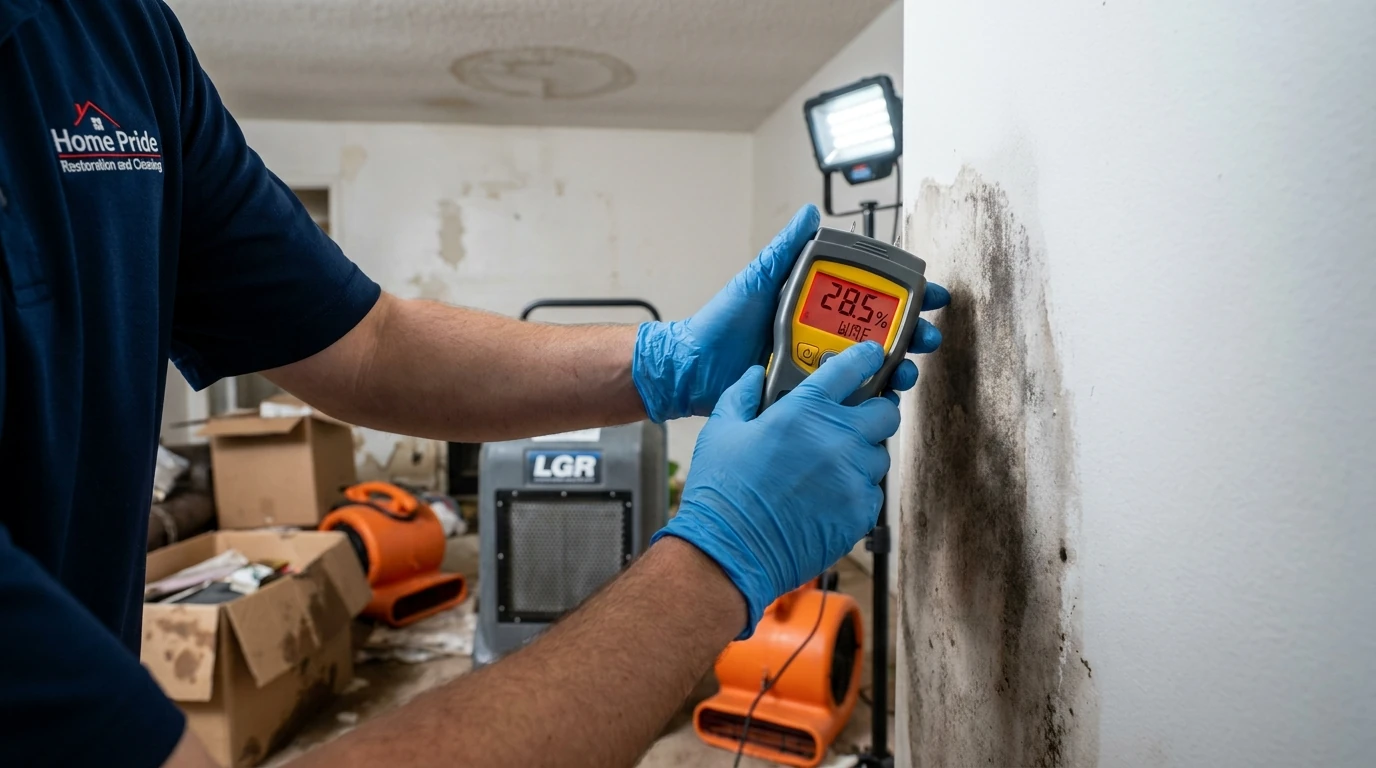
Phase 3: Drying and dehumidification. If water entered the structure, IICRC S500-standard drying protocols apply: air movers, LGR dehumidifiers, and daily moisture readings until materials reach their dry standard. Skipping this step leads to mold growth within 24-72 hours.
Phase 4: Structural repair. Roofing, framing, drywall, insulation, flooring, and finishes, in that order.
Phase 5: Final inspection and documentation. Moisture readings confirm the structure is dry. Photos document completed work. This paperwork closes the claim cleanly.
If water entered your home during the storm, water damage restoration is part of the same loss. It is worth confirming with your contractor that drying is included in the scope, not just the structural repairs.
Home Pride Restoration and Cleaning LLC serves homeowners across Utah County and the Wasatch Front, handling storm damage assessment, emergency stabilization, and the full restoration scope from first call through final inspection. If you need a written damage assessment to support your claim, call (801) 995-2437.
About Home Pride Restoration and Cleaning
Home Pride Restoration and Cleaning is an IICRC-certified restoration company serving Saratoga Springs, Lehi, Eagle Mountain, Provo, and surrounding Utah communities since 1997 (license RC-25-0737). Their crews handle storm damage restoration, roof leak repair, water damage restoration, fire and smoke damage, mold remediation, and a full range of cleaning services across the Wasatch Front and Utah Valley.
Video Transcript
After a Utah storm, you’re staring at shingles in the yard and water stains on the ceiling — and wondering what your insurance actually covers. Standard homeowners insurance covers wind, hail, lightning, and snow weight damage. But it does NOT cover flooding from rising water. If wind tears off shingles and rain soaks your attic, both the roof damage and interior water damage are typically covered under one claim. But if a creek overflows and floods your basement, that’s a flood loss — and you need a separate flood policy for that. Ice dams are a gray area. Weight damage is covered, but slow melting over weeks? Document everything immediately so your insurer can’t call it gradual damage. Your policy may pay actual cash value or full replacement cost. On an older roof, that difference could mean thousands less in your pocket. Watch for separate wind and hail deductibles too. On a $400,000 home, a 2% deductible means $8,000 out of pocket before coverage starts. A professional written assessment documenting storm-specific damage versus normal wear is often the difference between an approved and a denied claim. If your home becomes uninhabitable, your policy’s Additional Living Expenses coverage can pay for hotels and meals while repairs are made. Don’t guess at what’s covered. Call Home Pride Restoration and Cleaning LLC at 801-995-2437 for a free estimate and expert storm damage assessment.