TL;DR: When a frozen pipe bursts in Heber City, shut off the main water supply immediately, document everything with photos before cleanup begins, and call a restoration crew within the first few hours. Repair costs typically run $150–$500 for the pipe itself, but water damage cleanup adds $1,500–$10,000+ depending on how long water ran and which rooms it reached. The faster you act, the lower that second number gets.
It’s July now, but if you’re reading this after a cold snap hit Heber Valley overnight and you woke up to a wet ceiling or water running down a wall, you’re in the right place. Heber City sits at roughly 5,600 feet elevation in a valley that regularly sees temperatures drop below zero from late fall through early spring. That combination of altitude, cold-air drainage from the Wasatch Back, and older housing stock in neighborhoods like Center Street and the areas near Soldier Hollow means frozen pipes aren’t a freak event here, they’re a recurring seasonal reality. This guide walks you through the first hour, the repair costs you’ll actually face, and how to keep it from happening again before the next freeze.
What should I do the moment I find a burst frozen pipe?
Shut off the main water supply valve first, before you do anything else. Every second water runs freely adds to the damage footprint and your eventual cleanup bill. The main shutoff is usually near the water meter, in Heber City homes, that’s often in a utility room, crawl space, or near the garage. Turn it clockwise until it stops.
Once the water is off:
- Don’t touch standing water near electrical outlets, panels, or appliances. Turn off the circuit breaker for any affected rooms if you can do it safely from a dry location.
- Take photos and video of everything, the burst pipe, the water spread, soaked drywall, wet flooring, damaged contents. Your insurance adjuster will want this documentation, and it establishes the pre-cleanup condition.
- Move valuables, documents, and electronics out of the wet zone if you can do so safely.
- Open cabinet doors under sinks on exterior walls to let warm air reach any other pipes that may still be frozen.
- Call your restoration company. Water damage follows a 24–48 hour mold clock, mold can begin growing within 24 to 48 hours of a moisture event, according to the EPA. Getting extraction and drying equipment running the same day matters.
Do not try to thaw a burst pipe with an open flame or heat gun near drywall. If the pipe hasn’t burst yet but you suspect it’s frozen (no water flow, visible frost on the pipe), a hair dryer on low heat applied from the faucet end toward the frozen section is the safest DIY approach. If the pipe has already let go, the thawing is secondary, the water damage is the emergency.
For a complete step-by-step checklist, see our Burst Pipe Emergency Checklist.
How much does frozen pipe damage actually cost to repair?
Frozen pipe repair costs break into two separate buckets: the plumbing repair and the water damage restoration. Most homeowners focus on the pipe, but the restoration bill is almost always larger.
Plumbing repair: Replacing a burst section of copper or PEX pipe typically costs $150–$500 for a straightforward split in an accessible location. If the pipe is inside a finished wall, behind tile, or in a crawl space, expect $500–$1,500 once drywall or flooring access is factored in.
Water damage restoration: This is where costs vary widely based on three factors, how long water ran, how many rooms it reached, and what category of water it is. A clean-water burst (Category 1, from a supply line) that’s caught within an hour and affects one room might run $1,500–$3,000 for extraction, drying, and minor drywall repair. The same pipe left running overnight into a finished basement with carpet, insulation, and drywall can push $8,000–$15,000 or more.
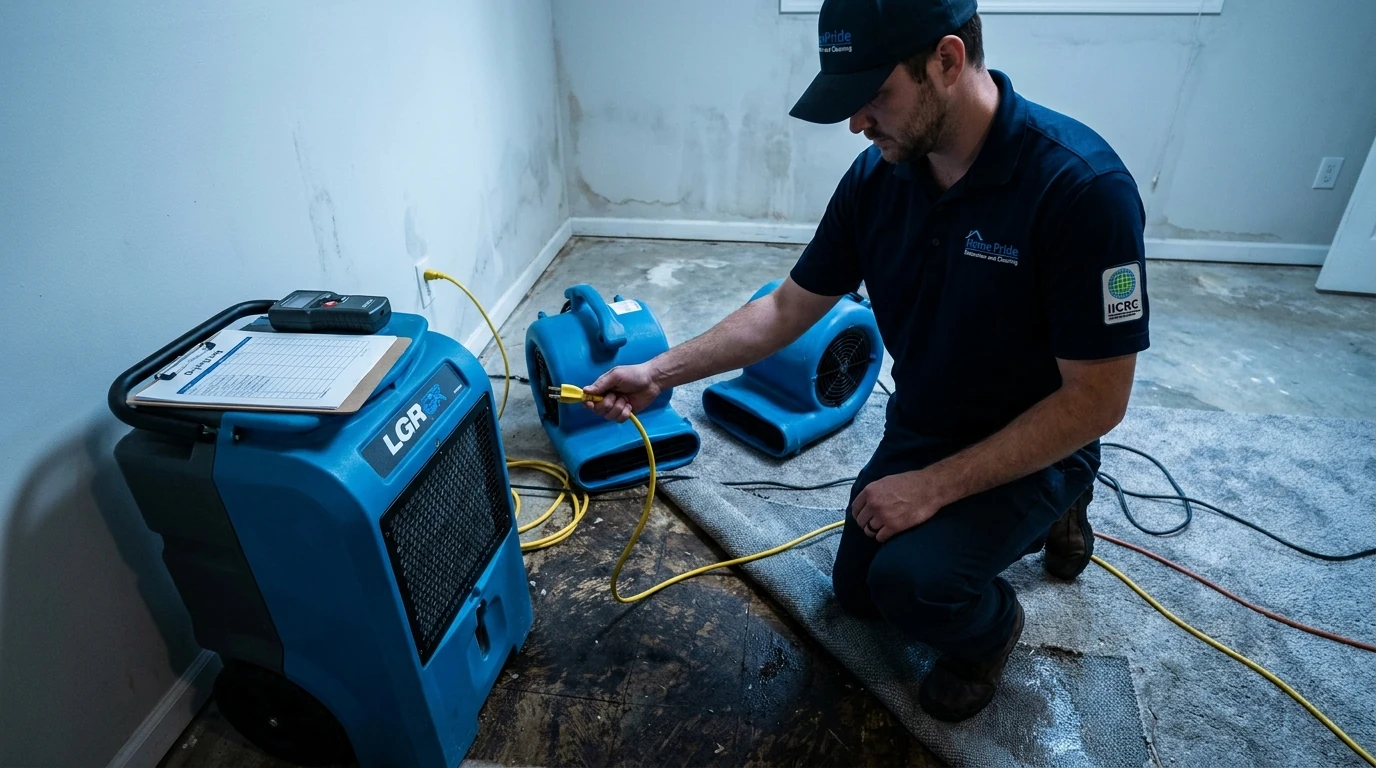
The IICRC S500 standard, the restoration industry’s governing document for water damage, classifies losses by water category and moisture penetration class. Class 3 losses (water that has wicked into walls, ceilings, and insulation) require structural drying with industrial LGR dehumidifiers and air movers running for 3–5 days minimum. That equipment time, plus daily moisture readings and technician visits, is what drives the restoration cost.
Insurance coverage: Most standard homeowners policies cover sudden, accidental pipe bursts, including frozen pipes, as long as the home was adequately heated. A home left unheated during a Heber Valley cold snap may face a coverage dispute. Document your thermostat settings if you can. For a full breakdown of what policies typically cover, see Does Homeowners Insurance Cover Frozen Pipes?
What are the hidden damage risks most homeowners miss?
The visible wet area is rarely the full extent of the damage. Water travels along framing, inside wall cavities, and under flooring before it shows up on a surface you can see.
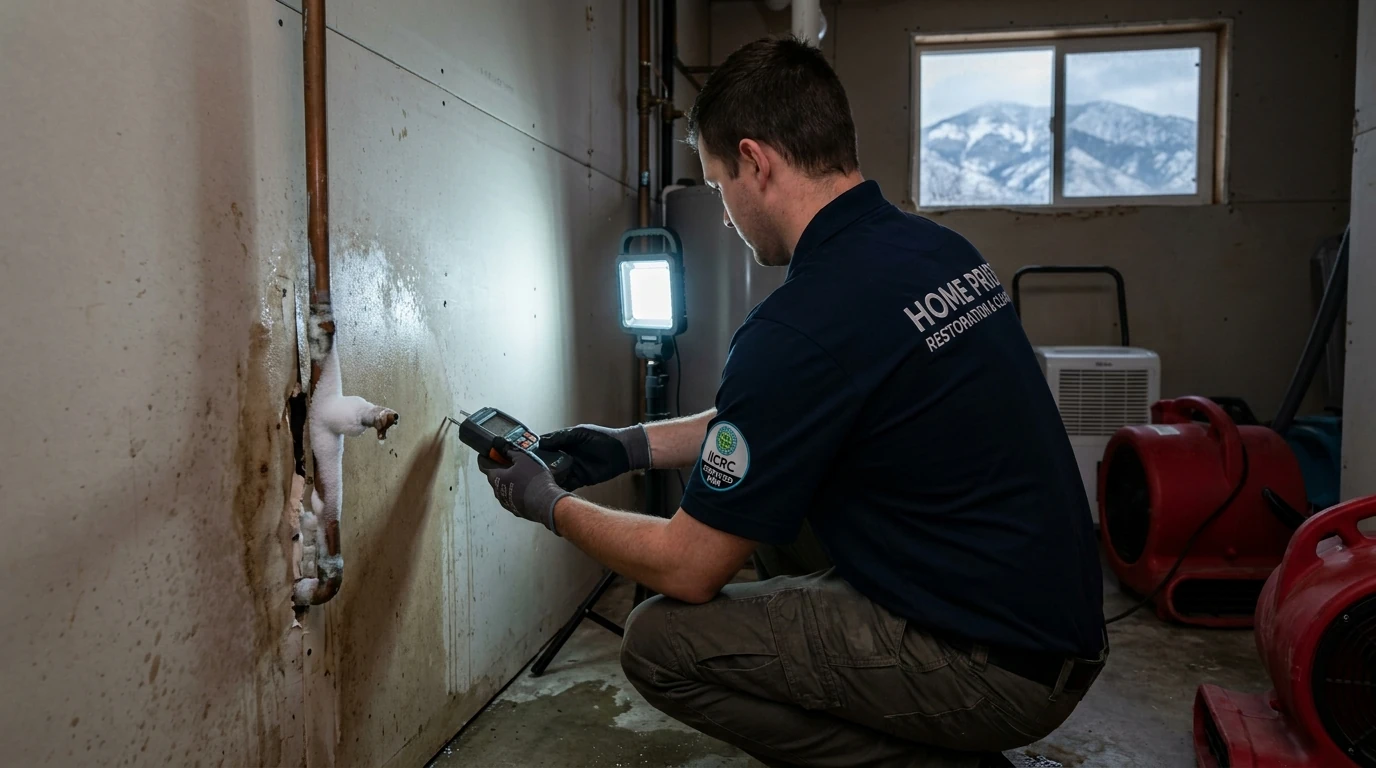
Subfloor and insulation saturation is the most common hidden problem. Water that reaches a wood subfloor can soak 6–12 inches beyond the visible wet line. Insulation in floor cavities and exterior walls holds moisture for weeks if not extracted and dried properly. A moisture meter, the kind a certified restoration tech carries, reads moisture content in wood framing and drywall to find water that isn’t visible to the eye.
Mold behind walls. If a burst pipe in a wall cavity goes undetected for more than 24–48 hours, mold can establish inside the wall before you see any surface signs. By the time you smell it or see discoloration, the colony is already active. See How Quickly Does Mold Grow After Water Damage? for what the timeline actually looks like.
Structural framing damage. Prolonged moisture in wood framing doesn’t just feed mold, it begins the rot process. Rim joists in crawl spaces and band joists along exterior walls are especially vulnerable in Heber City homes where pipes run close to uninsulated perimeter framing.
Secondary freeze events. If a pipe bursts and the home loses heat during the repair process, other pipes in the same wall cavity or crawl space are now at risk. Keep the heat on and confirm the plumber has checked adjacent runs before you consider the job done.
How do I prevent frozen pipes before the next cold season?
The most effective prevention steps for Heber City homes address the specific vulnerabilities of high-altitude valley construction: exterior wall pipe runs, uninsulated crawl spaces, and garage-adjacent water lines.
Insulate pipe runs in exterior walls and crawl spaces. Foam pipe insulation (the split-sleeve type) is inexpensive and installs in minutes. Focus on any pipe within 12 inches of an exterior wall or in an unconditioned crawl space. Crawl space encapsulation, sealing the crawl space floor and walls with a vapor barrier and conditioning the air, is the most complete solution for homes with significant pipe runs below the floor.
Keep cabinet doors open on exterior walls when temperatures drop below 20°F. This lets conditioned air circulate around sink supply lines that run along exterior walls.
Set a minimum thermostat temperature of 55°F if you leave the home unoccupied. This is the threshold most insurance policies point to when evaluating frozen-pipe claims for vacant properties.
Shut off and drain irrigation systems and hose bibs before the first hard freeze. Heber Valley’s first sub-freezing nights typically arrive in October, well before the main winter sets in.
Know where your main shutoff is before you need it. Walk every adult in the household to the shutoff valve location now, so no one is searching for it at 2 a.m. with water running.
If you want a professional eye on your home’s pipe vulnerability before winter, a moisture assessment can identify high-risk runs and crawl space conditions that aren’t obvious from inside the living space.
Home Pride Restoration and Cleaning responds 24/7 to frozen and burst pipe emergencies throughout Heber City and the surrounding Heber Valley. If you’re dealing with active water damage, call (801) 995-2437 to reach the team directly. For planned assessments or non-emergency questions, visit the Heber City service area page or the frozen pipe restoration service page.
About Home Pride Restoration and Cleaning
Home Pride Restoration and Cleaning LLC is an IICRC-certified restoration company serving Heber City, Saratoga Springs, and communities across Utah County and the Wasatch Back since 1997 (license RC-25-0737). Their crews handle water damage, burst and frozen pipe restoration, mold remediation, fire and smoke damage, and full-service cleaning across the region. Available 24/7 for emergency response.