TL;DR: Standard homeowners insurance typically covers the water damage caused by a frozen pipe that bursts, as long as you took reasonable steps to maintain heat in the home. The pipe repair itself is usually not covered, only the resulting damage. For Park City second homes and vacant ski properties, the rules are stricter: if your insurer can show the home was unheated and unoccupied, they can deny the claim entirely.
You flew back to Salt Lake after a ski weekend, the temperature dropped to single digits on Old Town Road, and now your property manager is calling about water pouring through the ceiling of your Park City condo. Before you call your insurer, you need to know exactly what your policy covers, and what it doesn’t, so you don’t accidentally say something that gives them grounds to deny you.
Does homeowners insurance cover frozen pipe damage?
Yes, most standard homeowners policies cover the water damage caused by a frozen pipe, but not the cost to repair or replace the pipe itself. The Insurance Information Institute confirms that sudden and accidental water damage from a burst pipe is a covered peril under most HO-3 policies. What that means in practice: the soaked drywall, ruined flooring, damaged cabinetry, and any structural repairs are covered. The plumber’s bill to fix the pipe is not.
The key word in every policy is “sudden and accidental.” A pipe that freezes and bursts during a cold snap qualifies. A pipe that has been slowly corroding or leaking for months does not. Adjusters are trained to look for signs of long-term neglect, so document everything before you touch it.
For a broader look at how water damage claims work in general, see our post on does homeowners insurance cover water damage.
What can void a frozen pipe insurance claim?
The most common reason insurers deny frozen pipe claims is failure to maintain adequate heat. If your policy requires you to keep the home at a minimum temperature (typically 55°F) and the adjuster finds evidence the heat was off or set below that threshold, they can deny the claim as a result of neglect rather than a covered peril.
Here are the specific conditions that put a claim at risk:
- Unheated vacant home. If you shut the heat off entirely before leaving for the season, most policies treat the resulting freeze as foreseeable neglect, not an accident.
- Extended vacancy without notice. Many policies have a vacancy clause: if the home is unoccupied for more than 30 or 60 consecutive days (the exact number varies by policy), coverage for certain perils, including frozen pipes, may be suspended unless you purchased a vacancy endorsement.
- Turned-off utilities. Shutting off the water supply and draining the system is actually the right move for a vacant home. Leaving the water on with no heat is the worst combination.
- Ignored maintenance. Pipes in uninsulated exterior walls or unconditioned crawl spaces that freeze repeatedly without being addressed can be treated as a known maintenance issue.
Park City sits at roughly 7,000 feet elevation. Overnight lows in the Deer Valley and Thaynes Canyon neighborhoods regularly drop below 0°F from November through March. That’s not a freak event, it’s the normal operating environment. Your insurer knows this, and so does their adjuster.
How do vacant and second-home policies handle frozen pipes differently?
If your Park City property is a second home or a short-term rental, your standard HO-3 policy may already have limited coverage for frozen pipes during vacancy. Many owners of properties near Deer Valley Resort or the Park City Mountain area discover this only after a loss.
There are three policy types to know:
- Standard HO-3 with vacancy clause. Covers frozen pipe damage if the home was occupied within the policy’s vacancy window (usually 30-60 days) and heat was maintained. Most common for primary residences.
- Seasonal/secondary home endorsement. Some insurers offer a rider that extends frozen pipe coverage to homes that are intentionally unoccupied for part of the year, provided you meet specific conditions (heat maintained, water shut off and drained, or a property manager checking in regularly).
- Vacant home policy. A standalone policy for properties that will be unoccupied for an extended period. Coverage is narrower and premiums are higher, but it fills the gap a standard HO-3 leaves.
If you rent your Park City property on a short-term basis, you may also need a landlord policy (DP-3) or a short-term rental endorsement, and those have their own frozen pipe provisions. Review your declarations page before the first hard freeze, not after.
How do you file a frozen pipe insurance claim the right way?
Filing correctly from the first call matters. Adjusters look for consistency between what you report and what the physical evidence shows.
Step 1: Stop the water first. Shut off the main supply valve immediately. If you’re not on-site, your property manager or a plumber needs to do this. Every minute the water runs increases the damage and your out-of-pocket exposure.
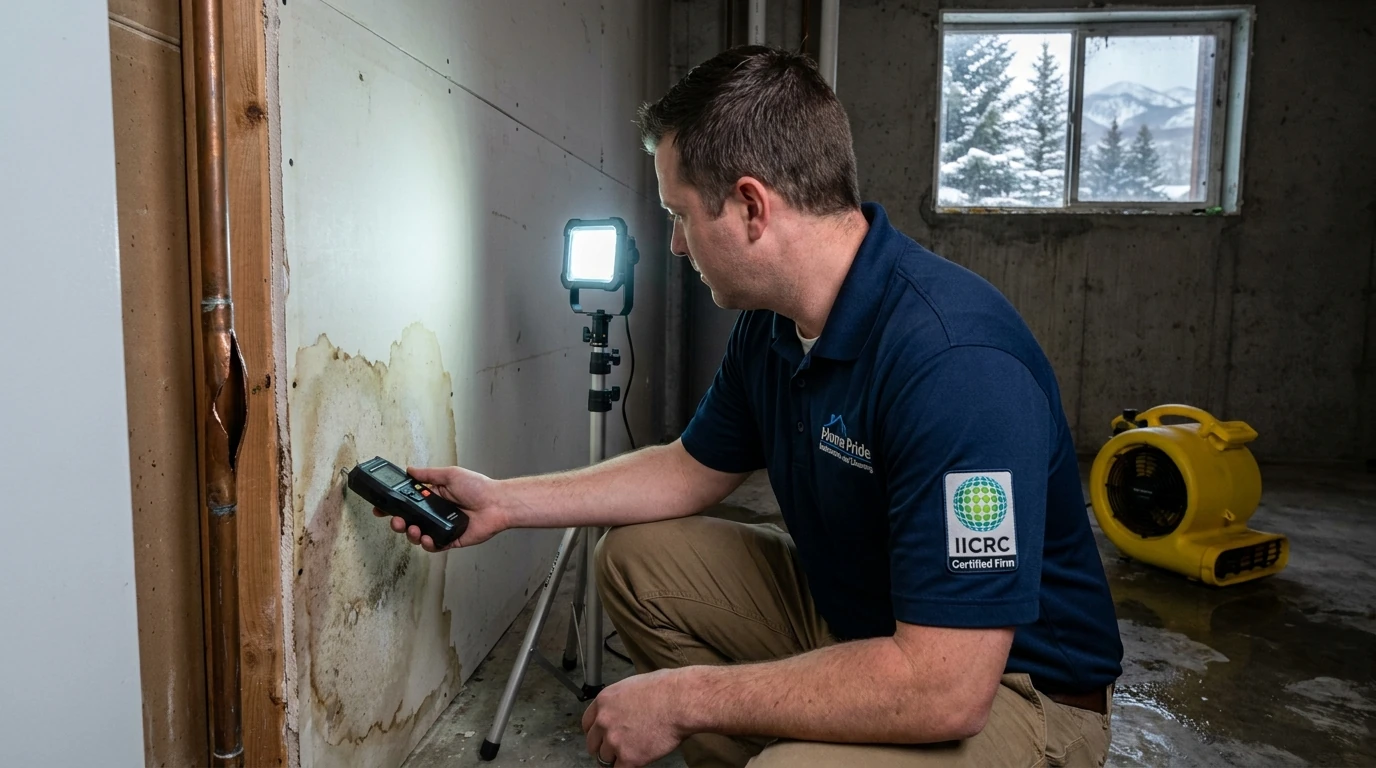
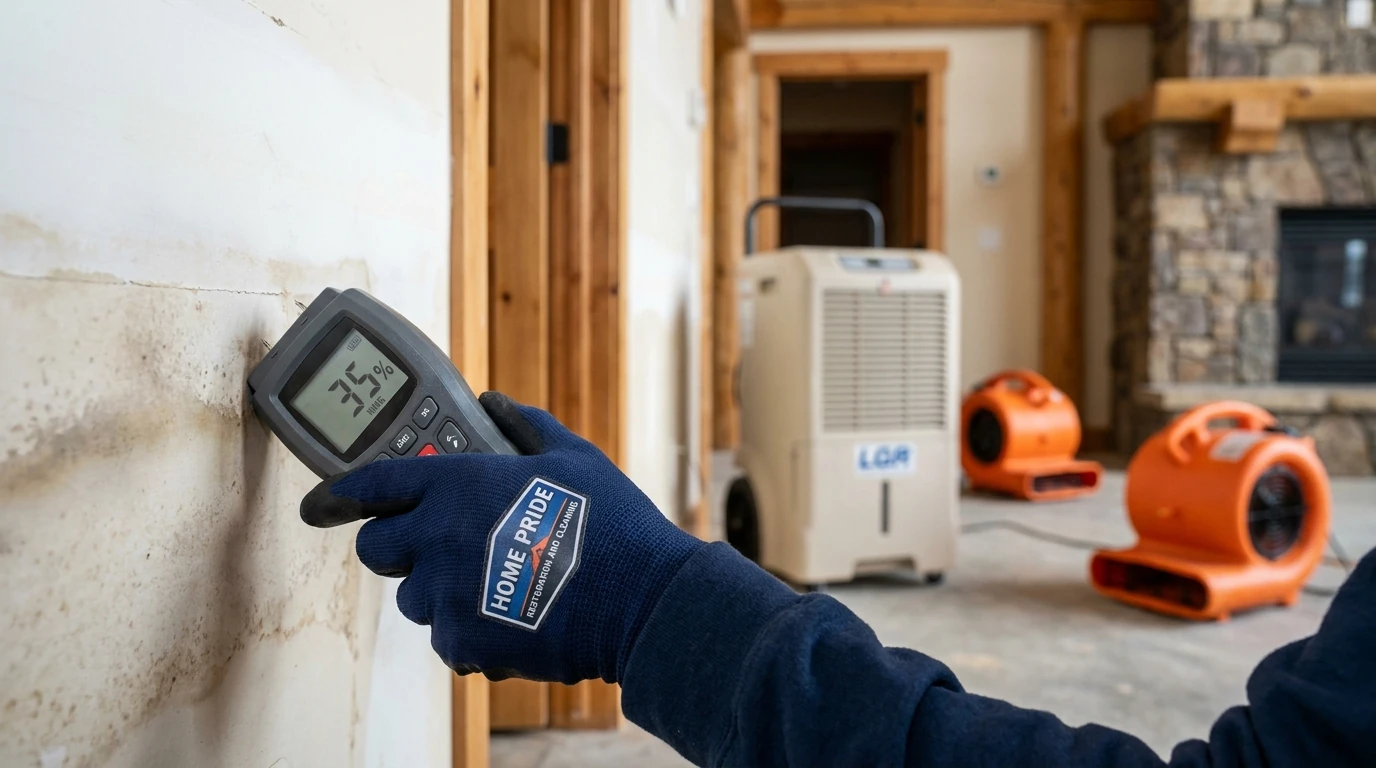
Step 2: Document before you dry anything. Take photos and video of every affected area, ceilings, walls, floors, contents. Capture the thermostat reading and any smart-home temperature logs if you have them. That data directly supports your “heat was maintained” argument.
Step 3: Call your insurer to open the claim. Report the loss as “sudden and accidental water damage from a frozen and burst pipe.” Do not speculate about cause if you’re not certain. Let the adjuster make the cause determination.
Step 4: Mitigate immediately. Your policy almost certainly requires you to take reasonable steps to prevent further damage. That means extraction, drying, and containment, not waiting for the adjuster to arrive before you act. Document everything you do and keep all receipts.
Step 5: Get a written scope from a restoration contractor. Before you agree to any adjuster’s estimate, have an IICRC-certified restoration company walk the loss and provide a scope of work. Adjusters sometimes miss secondary damage, wet insulation inside walls, moisture in subfloor systems, or the beginning of mold growth. Our frozen pipe restoration and water damage restoration teams document losses to the IICRC S500 standard, which gives your claim the technical backing it needs.
For a step-by-step emergency response guide, see our burst pipe emergency checklist.
What should Park City second-home owners do before the next freeze?
The best time to protect your Park City property is before the temperatures drop, not after. A few specific steps can prevent a freeze entirely and protect your coverage if one happens anyway.
Set a minimum thermostat temperature of 55-60°F. This is the threshold most insurers reference. Smart thermostats with remote monitoring and low-temperature alerts are worth the $150 investment for any unoccupied mountain property.
Shut off and drain the water supply if the home will be vacant for more than two weeks. No water in the pipes means no burst pipes. This is the single most effective prevention measure, and it’s what most experienced Park City property managers recommend for shoulder-season gaps between rentals.
Open cabinet doors under sinks on exterior walls. If you are leaving the water on, this allows heated air to reach pipes that would otherwise be exposed to exterior cold.
Insulate vulnerable pipes. Pipes running through garages, crawl spaces, or against exterior walls in older Park City homes, particularly properties built before the 1980s in the Old Town area, are at the highest risk. Foam pipe insulation costs a few dollars per linear foot.
Review your policy’s vacancy clause now. Call your agent and ask specifically: “If my home is unoccupied for 45 days and a pipe freezes, am I covered?” Get the answer in writing.
If you want to go deeper on ice-related damage specific to the Park City area, our post on ice dam removal in Park City covers the roof-leak side of the same problem.
When a freeze does happen, the window for limiting damage is short. Home Pride Restoration and Cleaning responds 24/7 to frozen and burst pipe losses across the Park City area. Request a water damage assessment at (801) 995-2437.
About Home Pride Restoration and Cleaning
Home Pride Restoration and Cleaning LLC is an IICRC-certified restoration company serving Park City, Saratoga Springs, and communities throughout Utah County and Summit County since 1997 (license RC-25-0737). Their crews handle water damage, frozen and burst pipe restoration, mold remediation, and fire and smoke losses for residential and commercial properties. Available 24/7 for emergency response.