Junk & Debris Removal in Saratoga Springs
24/7 junk & debris removal in Saratoga Springs and surrounding areas. IICRC-certified, insurance billing accepted. Call (801) 995-2437.
What Junk & Debris Removal actually involves
That garage you’ve been walking past for three years, the one with the broken treadmill, the boxes of your late parent’s belongings you weren’t ready to sort, the water-damaged drywall stacked against the wall after last spring’s leak, it doesn’t clear itself. Neither does the post-renovation debris pile in the driveway, the hoarded storage unit you just inherited, or the yard full of storm-downed branches and fence sections. Junk and debris removal is the physical, labor-intensive work of loading, hauling, and responsibly disposing of material that has accumulated faster than any one household can manage. It’s not glamorous, but done right it’s the difference between a property that functions and one that quietly becomes a liability.
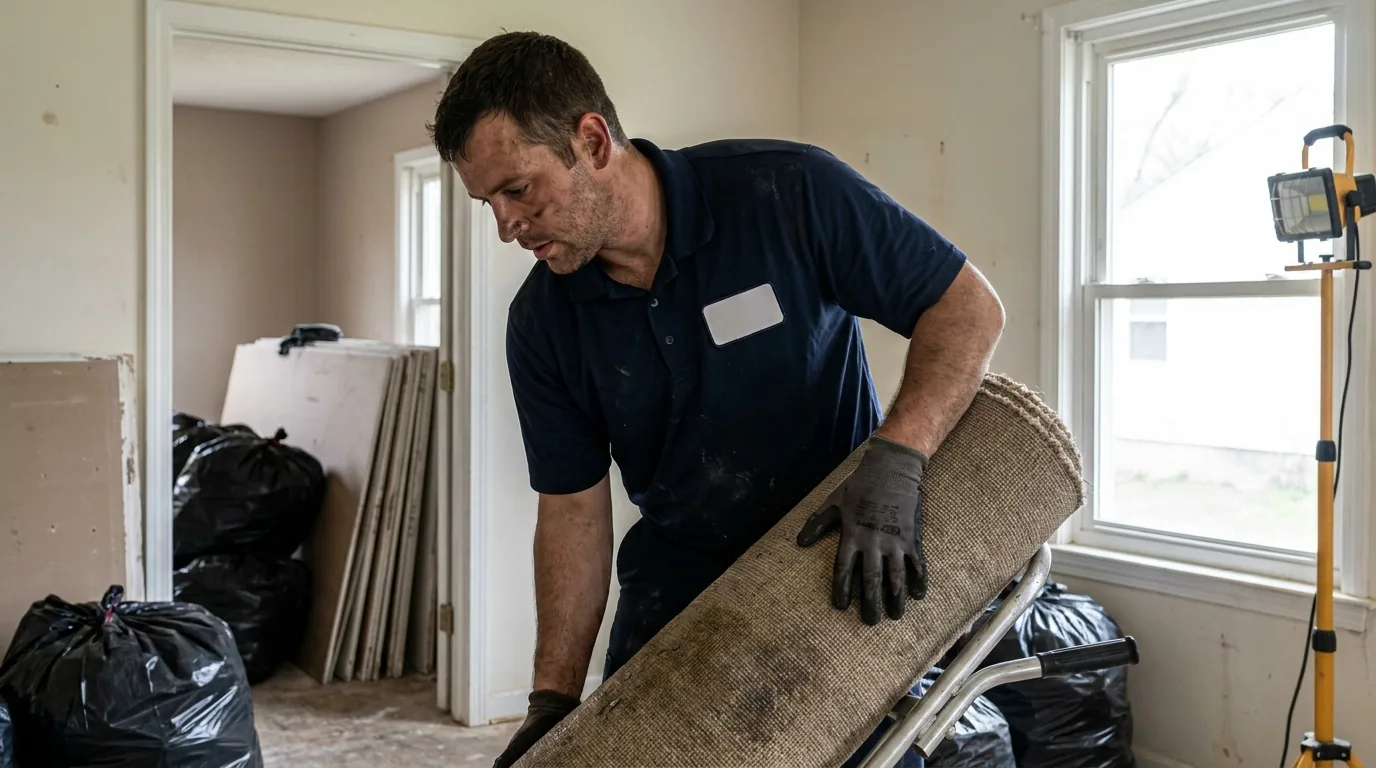
The actual work involves more than a truck and a strong back. Crews assess load weight and volume before touching anything, oversized loads require weight distribution planning to avoid vehicle damage and road violations. Bulky items like mattresses, appliances, and furniture are broken down or disassembled on-site when necessary. Hazardous materials, old paint cans, propane tanks, fluorescent tubes, electronics, are separated from general debris because they cannot legally go to a standard landfill. Recyclable metal, cardboard, and clean wood are sorted for diversion. What’s left goes to a licensed transfer station. A full single-car garage cleanout typically runs two to four hours; a whole-property estate cleanout may span one to three days depending on access and volume.
Our process
-
On-site walkthrough and volume estimate. Before a single item moves, a crew lead walks the space with you. We’re looking at cubic yardage, item weight, any materials that require special handling (electronics, refrigerants, paint, batteries), and access constraints, narrow hallways, second-floor bedrooms, steep driveways. This step prevents surprises on both sides.
-
Hazardous and regulated material separation. Anything that can’t go to a general landfill gets flagged and staged separately. This includes fluorescent bulbs, aerosol cans, oil-based paints, propane cylinders, and e-waste. Saratoga Springs and the broader Utah County area have specific drop-off and disposal requirements for these categories, and skipping this step exposes you, and the hauler, to fines.
-
Systematic load-out. We work room by room or zone by zone, not randomly. Heavy items come out first to protect flooring and walls; fragile or sentimental items you’ve flagged to keep are moved to a designated hold area before the main haul begins. Appliances are dollied, not dragged. Crew members work in pairs on anything over 75 pounds.
-
Debris sorting for recycling and donation diversion. Clean metal, cardboard, and intact furniture in usable condition are sorted at the truck. Donation-eligible items, furniture, clothing, working small appliances, are flagged for drop-off at local organizations rather than the landfill when volume and condition allow. This reduces your disposal footprint and, in some cases, generates a donation receipt you can use for tax purposes.
-
Final sweep and photo documentation. Once the space is cleared, we do a final walkthrough with you. The cleared space is swept or blown out, and we photograph the finished condition. If this cleanout is connected to a restoration project, an insurance claim, or an estate proceeding, that documentation matters.
What separates a good cleanout from a bad one
The most common failure in junk removal is illegal dumping, loads that never reach a licensed facility. It’s more widespread than most homeowners realize, and if debris with your address on it turns up at an illegal dump site, the liability follows you, not the hauler. Always ask for a disposal manifest or transfer station receipt.
The second failure is misclassification of hazardous material. A refrigerator contains refrigerant that must be recovered by an EPA-certified technician before disposal. Old chest freezers, window AC units, and dehumidifiers fall under the same rule. Haulers who skip refrigerant recovery are cutting a corner that carries real environmental and legal consequences.
The third failure is damage during load-out. Crews in a hurry drag heavy items across hardwood floors, knock door frames with appliances, and leave gouges in drywall. A crew that uses furniture sliders, door frame protectors, and proper dollies adds maybe 20 minutes to a job and saves you a repair bill.
For estate cleanouts connected to probate or insurance claims, photo documentation of item condition before removal is not optional, it’s evidence. Adjusters and attorneys rely on it.
Seasonal and regional considerations
Saratoga Springs sits at roughly 4,500 feet on the west bench of Utah Lake, which means late-season snowfall can arrive in October and linger into April. Outdoor debris removal, storm damage, landscaping waste, construction material, has a practical window. Spring is the busiest season: winter storms drop branches and fence sections, and homeowners emerging from months indoors suddenly confront everything that accumulated in garages and basements. Booking in March or April, before the rush, typically means faster scheduling.
Utah County’s rapid growth also means a steady stream of post-construction debris from renovation projects. Drywall scraps, lumber offcuts, tile, and concrete are heavy and require separate disposal from general household junk, mixed loads cost more to process at the transfer station, so sorting on-site saves money.
Service area
Home Pride Restoration and Cleaning is based in Saratoga Springs and regularly handles junk and debris removal in Eagle Mountain, Lehi, American Fork, Cedar Hills, Highland, and surrounding Utah County communities. City-specific pages for each of those areas link back here with local scheduling details.
If the pile has been there long enough that you’ve stopped seeing it, it’s time. Call (801) 995-2437 to schedule your on-site volume estimate and get a same-week haul date on the calendar.
Frequently Asked Questions
How do you handle appliances that contain refrigerant — old fridges, freezers, window AC units?
What's the difference between a standard junk removal load and an estate or whole-house cleanout?
Can you remove construction and renovation debris, or only household junk?
How do I know my load actually went to a licensed disposal facility and wasn't illegally dumped?
What items can't you take, and what should I do with them before the crew arrives?
Looking for the best junk & debris removal company in Saratoga Springs?
Home Pride Restoration and Cleaning provides licensed and insured junk & debris removal in Saratoga Springs, UT and the surrounding area, and has served local property owners since 1997. Customers rate us 5.0 out of 5 stars across 36 Google reviews. We answer calls 24/7 — call (801) 995-2437 for immediate help.
Need Junk & Debris Removal now?
We respond 24/7 across Saratoga Springs and surrounding UT cities.
Related Coverage
- Our Restoration Services
- Contact Home Pride Restoration and Cleaning
- Junk & Debris Removal in American Fork
- Junk & Debris Removal in Eagle Mountain
- Junk & Debris Removal in Herriman
- Junk & Debris Removal in Lehi
- Junk & Debris Removal in Orem
- Junk & Debris Removal in Pleasant Grove
- Junk & Debris Removal in Provo
- Junk & Debris Removal in Riverton
- Junk & Debris Removal in South Jordan