
Storm Damage Restoration in Park City
24/7 storm damage restoration in Park City, UT. IICRC-certified, insurance billing accepted. Call (801) 995-2437.
Our IICRC-certified technicians are dispatched from our Saratoga Springs, UT headquarters and are typically on-site in Park City within 60 minutes of your call.
Park City sits at 7,000 feet, and that elevation changes everything about how storms behave here. A late-spring system can drop 18 inches of wet, heavy snow on Old Town’s century-old Victorian rooflines one week and send golf-ball hail through Deer Valley’s newer construction the next. When a storm tears through at altitude, the damage compounds fast, saturated insulation, cracked flashing, downed trees punching through decks, and the thin mountain air slows drying times in ways that catch property owners off guard. Home Pride Restoration and Cleaning has been responding to exactly these conditions since 1997, and our IICRC-certified crews understand what Summit County storms actually do to homes.
Why Park City Properties See Unusual Storm Damage Patterns
The same geography that makes Park City one of the best ski destinations in the country also makes it a target for weather events that don’t follow Wasatch Front norms. Storms tracking in from the northwest can stall against the Uinta foothills and dump precipitation for hours longer than the forecast suggests. Old Town’s historic district, many homes built in the late 1800s and early 1900s during the silver mining era, carries original wood framing, true-dimension lumber, and unreinforced masonry chimneys that respond to wind and impact loading very differently than modern stick-frame construction. A fallen cottonwood branch that would dent a modern composite roof can split a century-old shake substrate clean through.
At the same time, newer resort-adjacent developments like those near the Canyons Village area often feature large glass panels, steep-pitch rooflines, and architectural overhangs designed for aesthetics rather than load-shedding. Those overhangs catch wind like sails. Ice dams form at the eave transitions, and when they release, the meltwater follows the path of least resistance, straight into wall cavities and subfloor systems.
Our Storm Damage Restoration Process in Park City
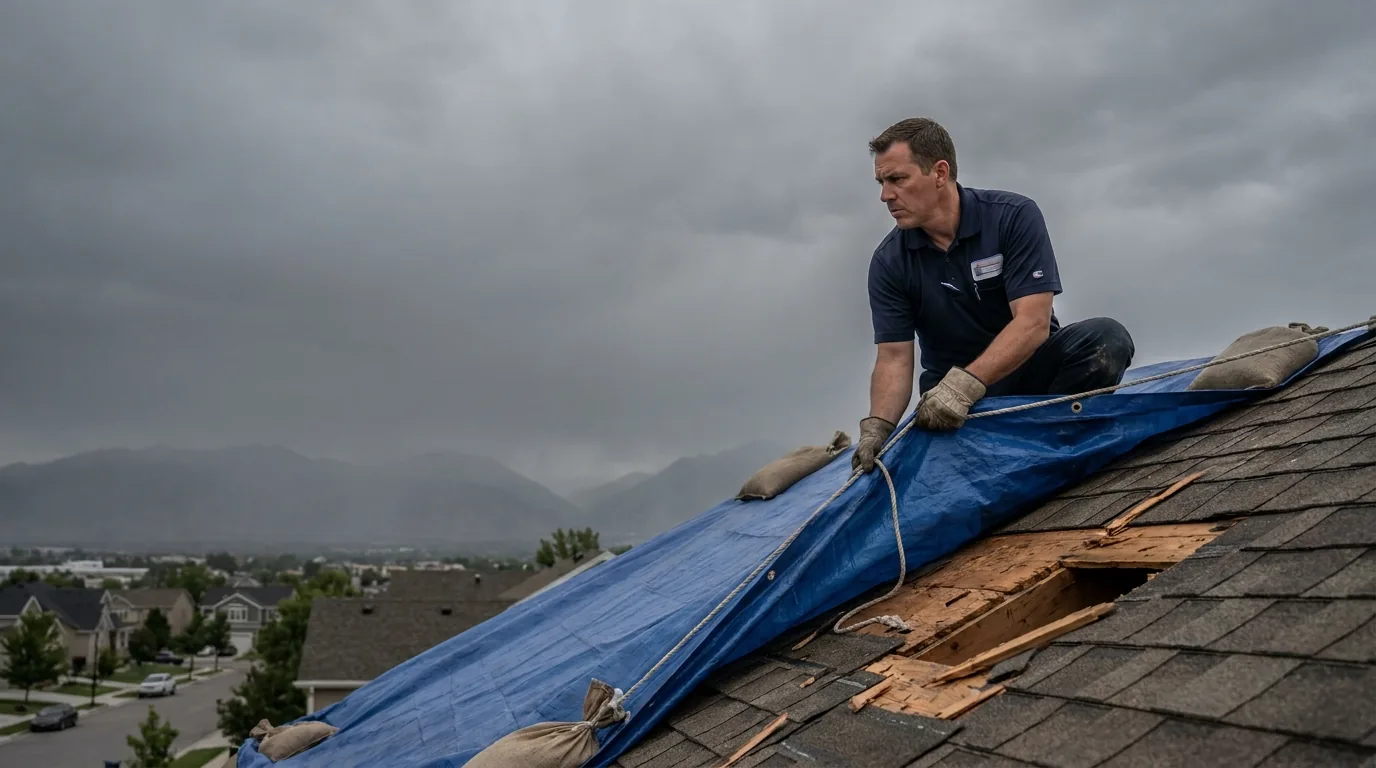
The first thing we do on any storm call is a rapid exterior and interior triage, roof, windows, doors, and any penetrations where water is actively entering. We document everything photographically before touching a single piece of debris, because your insurance adjuster will need that record. Once the structure is stabilized with emergency tarping or board-up as needed, we move to moisture mapping with thermal imaging and calibrated moisture meters. In Park City’s climate, ambient humidity swings dramatically between a sunny afternoon and a cold night, so we take multiple readings over time rather than relying on a single snapshot.
Drying at elevation requires adjusted equipment settings. The lower atmospheric pressure at 7,000 feet means standard desiccant and refrigerant dehumidifiers perform differently than they do in Salt Lake City, we account for that in our equipment deployment. Structural drying typically runs 3 to 5 days depending on material type, with daily monitoring logs we share with you and your adjuster. Once the structure is dry and cleared, reconstruction scoping begins, and we coordinate directly with your insurance carrier to keep the timeline moving.
Response Time to Park City
Home Pride’s headquarters is in Saratoga Springs, and our crews travel US-40 and I-80 to reach Summit County. Under normal road conditions, we can have a technician on-site in Park City within approximately 90 minutes of your call. During or immediately after a major storm event, when US-40 through Parley’s Canyon may be running slow or under chain control, we stage crews closer to the area proactively when forecasts warrant it. If your property is in the 84060 ZIP code, call (801) 995-2437 as soon as the storm clears or even while it’s still moving through; earlier calls mean earlier staging.
Park City Insurance and HOA Coordination
Summit County storm claims have some patterns worth knowing. Many Park City properties, particularly in resort-adjacent communities and Deer Valley, fall under HOA governance that dictates approved exterior materials, color palettes, and even the contractors permitted to work on common elements. We’ve navigated those approval processes before, and we’ll pull the relevant HOA documentation early so material selections don’t delay reconstruction. On the insurance side, storm damage claims in Utah typically require a licensed contractor’s scope of loss to supplement the adjuster’s estimate; our license (#RC-25-0737) satisfies that requirement, and we write detailed line-item scopes in the format carriers expect.
Local Note
One thing that surprises property owners in Old Town and the surrounding historic core: Park City’s historic preservation guidelines can restrict the replacement materials you’re allowed to use on a storm-damaged exterior, even on a private residence. If a storm takes out original wood siding or a period-appropriate window, the city may require like-for-like replacement rather than a modern substitute, and that affects both your material costs and your insurance settlement. We flag this at the scoping stage, before you’ve committed to anything, so there are no surprises when the permit comes back with conditions attached.
When a storm hits Park City, the damage doesn’t wait for business hours, and neither do we. Call (801) 995-2437 any time, day or night, and we’ll get eyes on your property, stop the bleeding, and build a clear path from emergency stabilization through full restoration.
Serving Park City from our Saratoga Springs headquarters — ★ 5.0 · 36 Google reviews
“Curt was soooo amazing! Fast and efficient! Very sweet and kind! Would use again if we weren’t moving out of state!!!!!” — Kristina, August 2026
Storm Damage Restoration in Park City: Service Coverage Map
Frequently Asked Questions
How fast can you arrive for storm damage restoration in Park City?
How long does it typically take your crew to reach Old Town Park City after a major storm?
Does Park City's historic preservation overlay affect what materials can be used to repair storm damage in the Old Town district?
Are homes in the 84060 ZIP code more susceptible to ice-dam damage after storms than properties lower on the Wasatch Front?
Why does structural drying take longer at Park City's elevation than in Salt Lake City?
How do HOA rules in Deer Valley and resort-adjacent communities affect the storm damage repair process?
Will my homeowners insurance cover storm damage restoration in Park City?
Storm Damage Restoration response in Park City
Most Park City calls see a technician on-site within 60 minutes from our Saratoga Springs headquarters.