
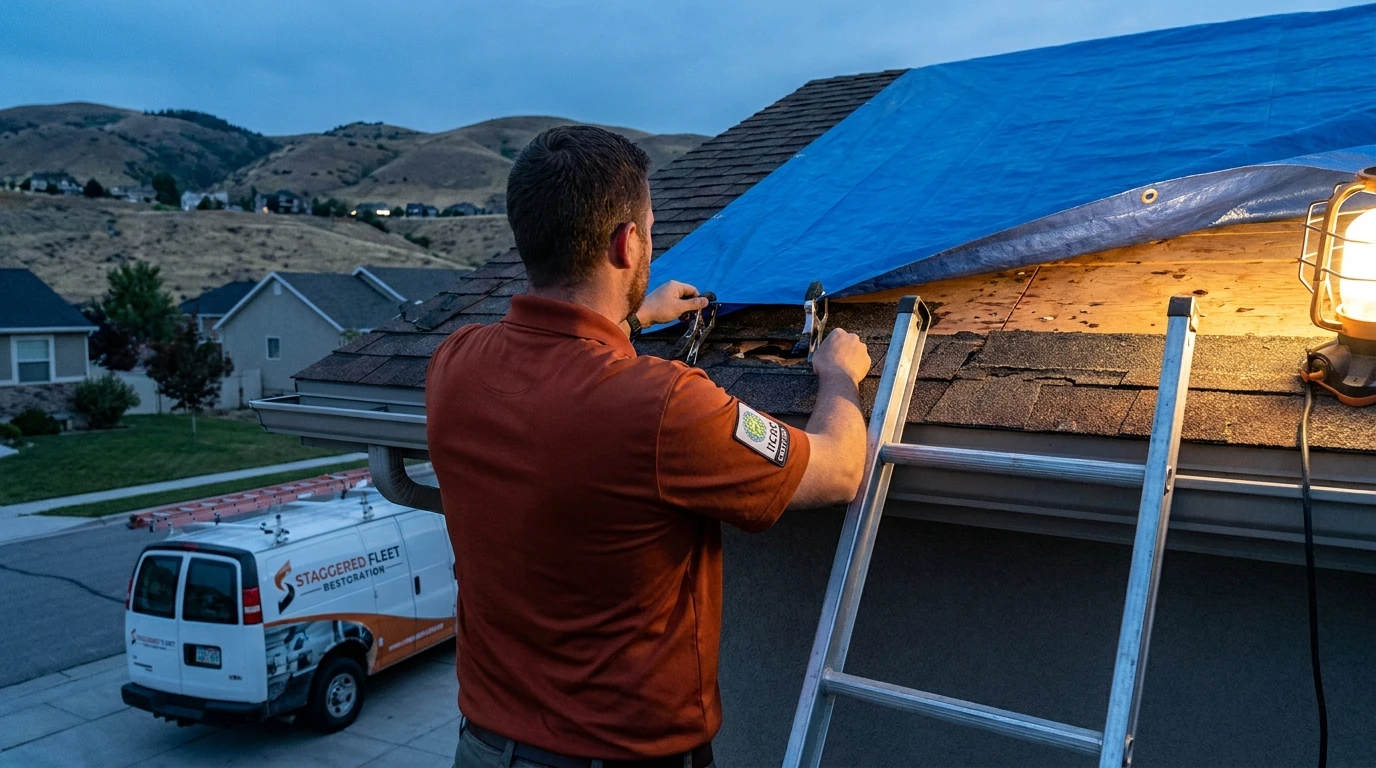
TL;DR: Wind damage to a roof usually shows up as missing or lifted shingles, exposed nail heads, torn flashing, or a soft spot where water has started coming through decking. In the first 48 hours, photograph the damage from the ground, get a tarp on any exposed area before the next storm, and call your insurer and a restoration crew before you climb a ladder yourself. Most homeowners’ policies cover sudden wind damage but exclude damage from gradual wear, so documentation matters as much as the repair.
If you woke up to shingles scattered across the lawn after a canyon wind event rolled off the Wasatch Front overnight, you’re not imagining the severity. Gusts that funnel down through the passes around Saratoga Springs, Eagle Mountain, and Lehi regularly hit 50 to 70 mph during fall and spring wind events, and that’s well past the point where asphalt shingles start to lift and tear. The roof itself may look mostly intact from the driveway. The real damage is often in the details: a torn ridge cap, a lifted flashing seam, or a patch of decking that’s now only one plywood layer away from your attic insulation.
What Does Wind Damage to a Roof Actually Look Like?
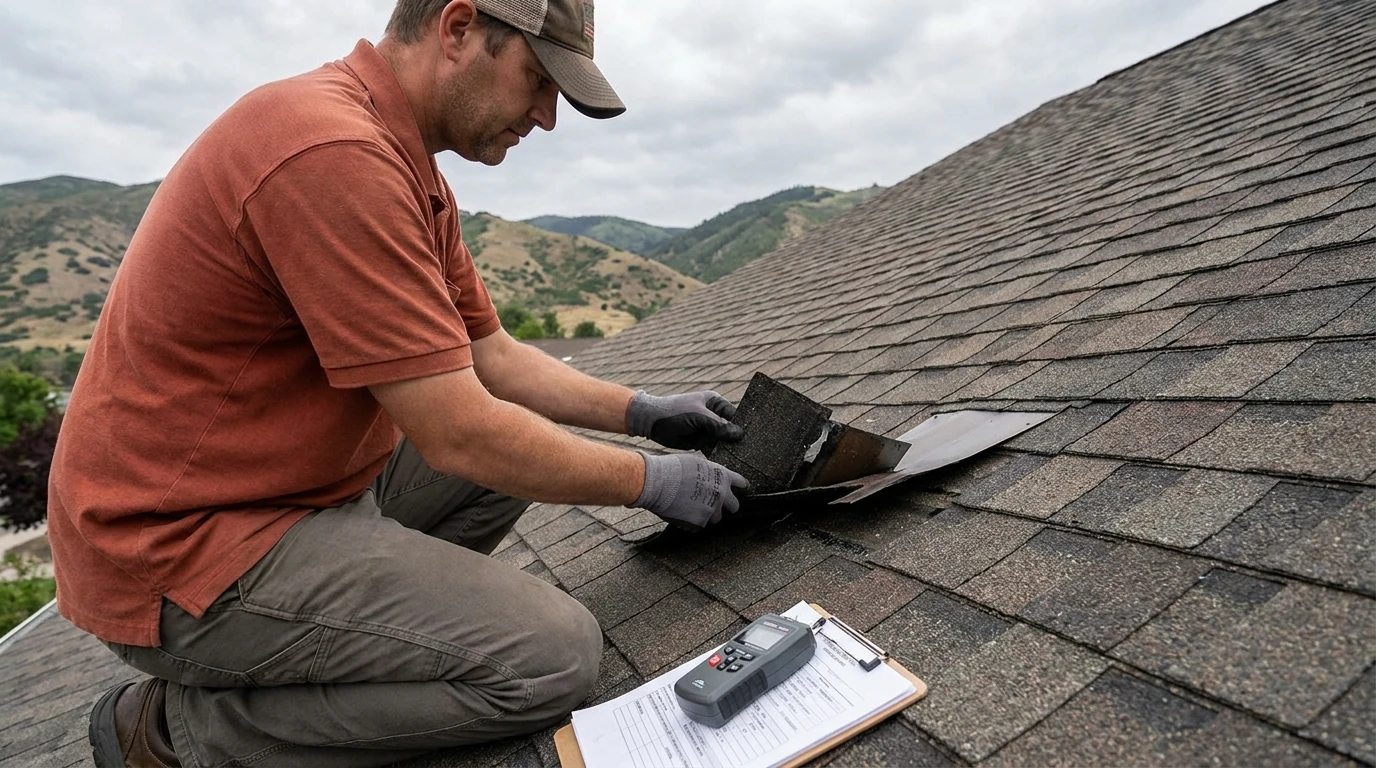
Wind damage rarely looks like a hole. It looks like shingles that are missing, curled, or creased, with the black asphalt mat visible where the granule surface tore away. Look for shingles in the yard or gutters, lifted or missing ridge caps along the roof peak, bent or detached flashing around chimneys and vents, and dented or dislodged gutters.
From the ground, use binoculars rather than climbing up. Check for a straight line of missing shingles (a sign of uplift along one wind-exposed slope), granules collecting at the base of downspouts, and any soft or sagging spots visible from inside the attic if you have safe access. A single missing shingle rarely causes immediate leaking, but a cluster of missing shingles or exposed underlayment means water intrusion is a matter of time, not chance.
If the storm also brought hail, check for dime- to quarter-sized dents in the shingles and on any metal flashing or gutters. Hail and wind often arrive together in the same system, and insurers evaluate them separately on a claim.
What Should You Do in the First 48 Hours After Wind Damage?
The first 48 hours are about stopping water intrusion and documenting the loss, in that order. Photograph the roof from the ground and from inside the attic if it’s safe, note the date and approximate wind speeds from a local weather report, and get a tarp over any exposed decking before the next weather system arrives.
Start by walking the exterior and interior. Look for water stains on ceilings, damp insulation in the attic, or daylight visible through the roof deck. Take wide shots of the whole roof slope and close-up shots of torn or missing shingles. If you can safely access the attic, a flashlight sweep along the rafters after a storm often reveals the first signs of a leak before it reaches the ceiling drywall.
Don’t wait to report the damage to your insurer, and don’t assume a small amount of missing shingles isn’t worth a call. Most policies have a reasonable window to report storm losses, and delaying can complicate the claim later. If you’re not sure what to document or how your policy treats storm claims, our storm damage insurance claim checklist walks through exactly what adjusters ask for.
Should You Tarp the Roof Yourself or Call a Crew?
A homeowner can tarp a small, accessible, low-slope area temporarily, but a steep roof, a large exposed section, or any decking damage is a job for a trained crew with fall protection. Wind events that are strong enough to tear shingles also leave roofs unstable underfoot, and emergency rooms see a predictable spike in ladder falls after every major windstorm.
If you do attempt a small temporary patch, use a heavy-gauge poly tarp rated for roofing, run it over the ridge rather than stopping at the damaged area, and anchor it with 2x4 battens screwed through the tarp grommets into the roof deck, not just nails through the material. Never tarp in active wind gusts over 20 mph, and never tarp after dark.
For anything beyond a single small patch, this is where emergency roof tarping from a trained crew earns its cost. A proper tarp job seals the deck against wind-driven rain, not just vertical rain, which matters a great deal in canyon-wind events where rain comes in sideways. It also gives your insurance adjuster a clean, documented mitigation step, which supports the claim rather than complicating it.
Does Homeowners Insurance Cover Wind Damage to a Roof?
Most standard homeowners’ policies in Utah cover sudden, wind-related roof damage as a named peril, but coverage usually excludes damage caused by years of wear, poor maintenance, or a roof that was already past its expected service life. The adjuster’s job is to determine whether the damage pattern matches a specific storm event or long-term deterioration.
That distinction is exactly why the photographs and timestamps from the first 48 hours matter so much. A claim supported by dated photos, a weather report showing recorded wind speeds, and a written repair estimate moves faster and gets questioned less than a claim built on memory alone. Many policies also carry a separate wind/hail deductible, which can be a percentage of your home’s insured value rather than a flat dollar amount, so it’s worth reading your declarations page before you assume full coverage.
We cover the coverage question in more depth, including how insurers typically treat partial roof replacement versus full replacement, in does homeowners insurance cover wind damage.
Who Should You Call First After Storm Damage?
Call a restoration or roofing crew to stop active water intrusion first, then call your insurer once the damage is documented and temporarily secured. Reporting the mitigation step alongside the claim shows the insurer you acted in good faith to prevent further loss, which policies generally require.
If water is actively entering the attic or ceiling, that’s an emergency regardless of the hour. Home Pride Restoration and Cleaning LLC has handled wind-damaged roofs across Saratoga Springs, Lehi, Eagle Mountain, and the rest of Utah County since 1997, and our crews are IICRC certified for the water mitigation work that often follows a torn roof, not just the tarp itself. Getting the right crew on the roof and the water out of the attic in the same visit keeps a wind event from turning into a mold problem two weeks later.
The IICRC sets the industry standard for water mitigation response, and Ready.gov has useful guidance on preparing your property ahead of the next severe weather event, which is worth a look before the next wind season rolls through.
A torn roof after a windstorm feels urgent because it is. The good news is the sequence is simple: document, tarp, then claim. Get those three steps right in the first two days and the repair that follows tends to go smoothly, whether it’s a patch of shingles or a full slope replacement.
About Home Pride Restoration and Cleaning
Home Pride Restoration and Cleaning is an IICRC-certified company (license RC-25-0737) serving Saratoga Springs, Utah and the surrounding Wasatch Front communities since 1997. Their crews handle storm damage restoration, emergency board-up and tarping, roof leak repair, and water damage mitigation across the region, available 24/7 for active water intrusion.