
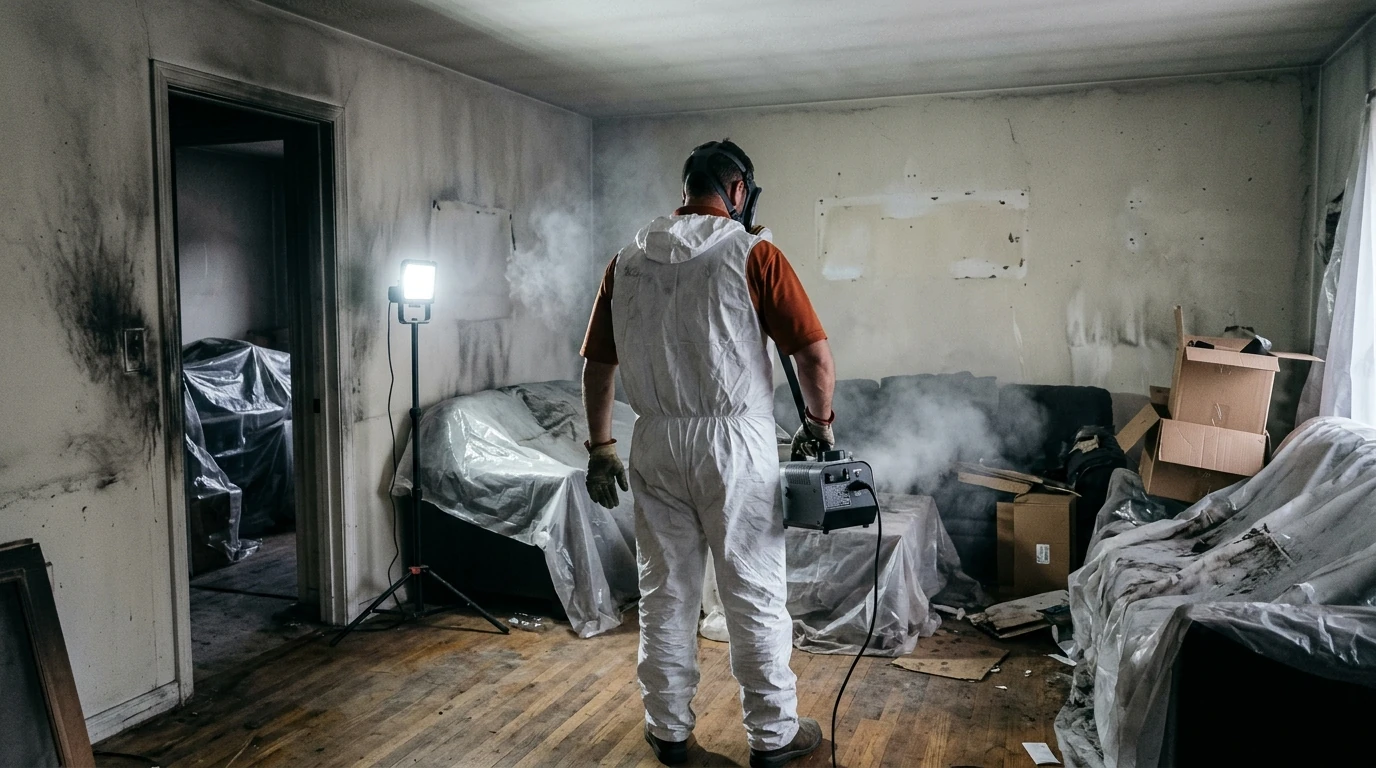
TL;DR: The best smoke damage restoration company for a Saratoga Springs home holds IICRC Fire and Smoke Restoration Technician (FSRT) training, uses thermal fogging and hydroxyl or ozone equipment rather than surface wiping alone, handles contents pack-out and inventory, and bills directly with your insurance adjuster. A general cleaning service without that training and equipment can mask odor for a few weeks, but it rarely removes it for good.
If your house just had a fire, even a small one confined to a kitchen or garage, you’re probably already getting calls from cleaning companies promising they can “handle the smoke smell.” This is the moment where the wrong choice costs you twice: once in money spent on a service that doesn’t work, and again months later when humidity shifts and the odor comes back. Smoke damage restoration is a different trade than carpet cleaning or general janitorial work, and the gap shows up in exactly what equipment and training walks through your door.
What separates a real smoke damage restoration company from a general cleaning service?
A real smoke damage restoration company treats soot and smoke odor as a chemistry problem, not a surface-cleaning problem. Soot particles are microscopic and acidic, and they embed into drywall pores, insulation fibers, and HVAC ductwork, not just sit on top of surfaces the way dust does.
There are also different soot types that require different treatment. Protein soot, from a grease or kitchen fire, is nearly invisible but produces a strong, persistent odor. Synthetic soot, from burning plastics or furniture, is heavier and oilier and smears if wiped with the wrong agent. A carpet cleaning company’s truck-mount extractor and general-purpose deodorizer were never built for either problem. They address the smell you can detect today, not the smoke residue sitting inside your wall cavities.
The IICRC, the industry body that trains and certifies restoration technicians, publishes the standard that defines this work: the ANSI/IICRC S700 Standard for Professional Fire and Smoke Damage Restoration. A company working to that standard documents the type of soot present, selects cleaning agents accordingly, and verifies odor removal rather than just masking it.
What certifications should a smoke damage company actually hold?
Ask specifically for IICRC Fire and Smoke Restoration Technician (FSRT) certification, not just a general “certified cleaning company” claim. FSRT training covers soot chemistry, structural cleaning methods, and odor-control equipment that general carpet or janitorial certifications don’t touch.
A company’s marketing can say “IICRC certified” without naming which individuals hold which credential or what standard they’re trained to. Ask for the technician’s name and registration number, the same way you’d ask a contractor for a license number. A legitimate company will have this on hand immediately, because the credential belongs to a specific person, not just the business name on the truck.
What equipment should a smoke restoration crew bring to the job?
The equipment tells you more than the sales pitch does. A properly equipped smoke restoration crew typically brings a thermal fogger (which replicates the heat of combustion to drive deodorizing agents into the same pores smoke penetrated), hydroxyl generators or an ozone generator for unoccupied spaces, and HEPA air scrubbers to capture airborne soot particles during cleanup.
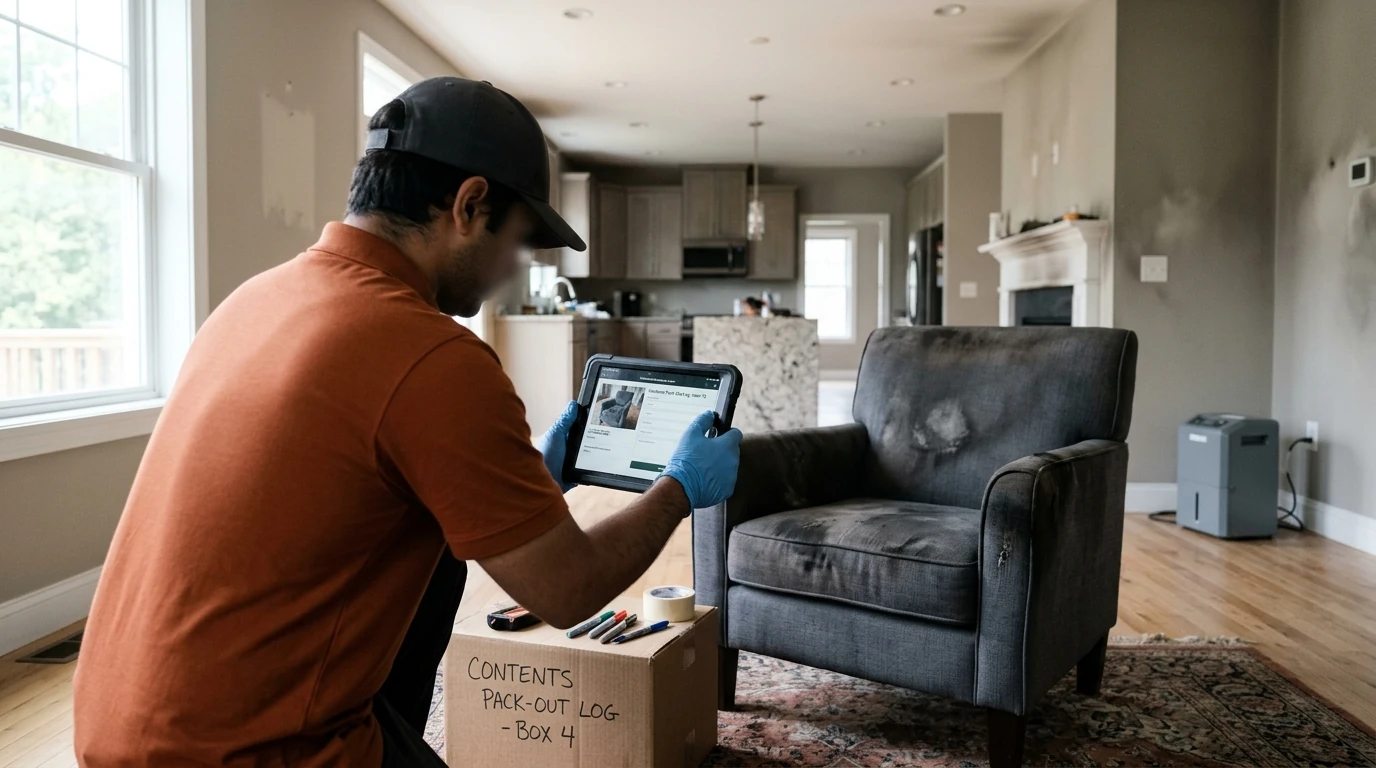
For contents, that is furniture, clothing, electronics, and keepsakes affected by smoke, a real restoration company documents and photographs everything before it leaves the property, moves it to a climate-controlled facility for ultrasonic or specialty cleaning, and returns an itemized inventory. If a company shows up with only a shop vac and an air freshener, that is the carpet-cleaning toolkit, not the fire-restoration toolkit.
What questions should you ask before you hire a smoke damage company in Saratoga Springs?
A short list of direct questions separates a qualified crew from a general handyman service fast:
- Which technician holds IICRC FSRT certification, and what is their registration number?
- Do you handle both the structure (walls, ceilings, HVAC) and the contents (furniture, textiles, electronics) in-house, or do you subcontract one of those?
- Will you bill my insurance company directly, or do I pay out of pocket and submit for reimbursement?
- What equipment will you actually use for odor, thermal fogging and hydroxyl treatment, or a scented masking spray?
- Will I receive a written scope of work before cleaning begins?
A company that answers all five without hedging has done this work before. One that gets vague on the equipment question is worth a second call.
Who should you call for smoke damage restoration in Saratoga Springs, UT?
For smoke damage restoration in Saratoga Springs and the surrounding west Utah County area, look for a company that pairs IICRC FSRT training with in-house contents handling and direct insurance billing. Home Pride Restoration is IICRC certified, has operated in Utah County since 1997, and runs a 24/7 line at (801) 995-2437.
Saratoga Springs homes, many built in the last fifteen years in master-planned subdivisions near Utah Lake, often have open-concept layouts and shared HVAC returns. That means smoke from a single-room fire can travel further through the ductwork than it would in an older, more compartmentalized home, which makes duct cleaning and air scrubbing as important as wiping down walls. A crew that only cleans the room where the fire happened is leaving odor sitting in the system that will recirculate it through the rest of the house.
If you’re still assessing the damage, our fire damage restoration process and odor removal pages walk through what each phase actually involves, and the smoke damage restoration cost guide breaks down typical pricing by scope.
Getting a written scope before any cleaning starts protects both your insurance claim and your timeline. A company confident in its own equipment and training will put that scope in writing without pushback.
About Curt Eddy
This article was reviewed by Curt Eddy, an IICRC-certified water damage restoration technician (Register #70228752) with Home Pride Restoration, a company serving Saratoga Springs, Lehi, Eagle Mountain, American Fork, and the surrounding Utah County area since 1997. The company’s crews handle fire, smoke, water, mold, and biohazard restoration work across the region.