
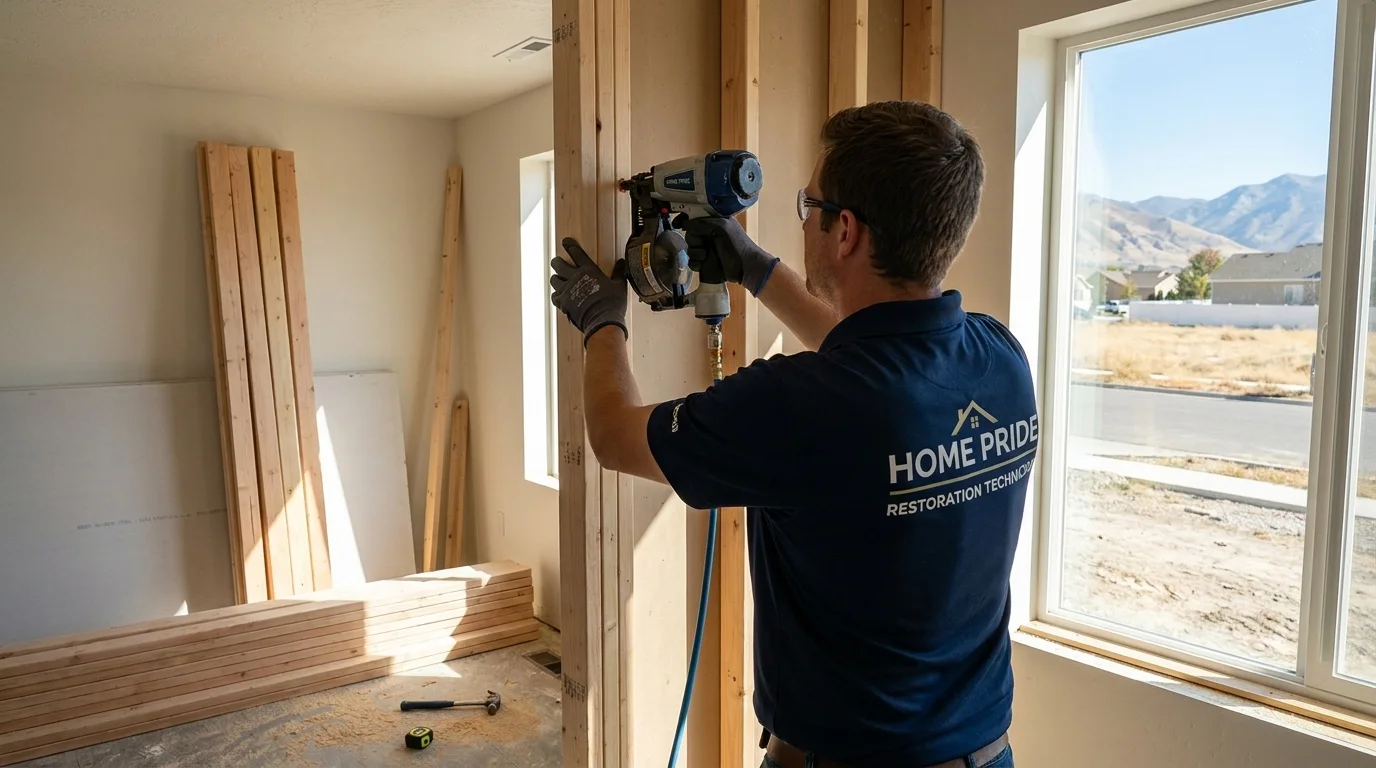
Reconstruction Services in Saratoga Springs
24/7 reconstruction services in Saratoga Springs and surrounding areas. IICRC-certified, insurance billing accepted. Call (801) 995-2437.
When the drying equipment comes out and the demolition crew finishes, a lot of homeowners discover the hardest part is still ahead: the house has to be put back together. Reconstruction services saratoga springs cover everything from a single drywall section after a slow leak to full structural rebuild services after a kitchen fire took out framing, electrical, and subfloor. This is the work that turns a gutted, tarped-off house back into a place a family can live in again, and it’s where a lot of restoration jobs either come together cleanly or drag on for months because the scope of work was never written right in the first place.
What reconstruction services actually involve
Post-damage reconstruction picks up where mitigation leaves off. That might mean replacing a section of drywall and baseboard after a water loss, or it might mean reframing a wall, rerouting wiring, and rebuilding a kitchen from the studs out after fire damage reconstruction is needed. The scope depends entirely on what was removed during mitigation and what the structure needs to meet code again. For small losses, timelines run a few days. For post-disaster rebuilding involving multiple rooms, structural framing, or permitted electrical and plumbing work, timelines stretch into weeks. Materials matter too: matching existing trim profiles, flooring, and cabinetry is often harder than the structural work itself, especially in homes with older finishes that are no longer in production.
Our process
- Scope of work and estimate. Before anything gets rebuilt, we document what was removed, what’s structurally sound, and what needs replacing, then put it in writing so you and your adjuster are looking at the same scope.
- Permits and code review. Structural reconstruction involving framing, electrical, or plumbing typically requires permits through the local building department. We pull what’s required before work starts, not after.
- Framing and rough-in. Studs, subfloor, and any structural members get replaced to match the original layout, followed by rough electrical, plumbing, or HVAC work where it was disturbed.
- Insulation, drywall, and finishing. Walls get closed up, taped, and finished, then paint, trim, flooring, and fixtures go back in to match the rest of the home as closely as materials allow.
- Final walkthrough. We inspect the finished space against the original scope of work before calling the job complete, so nothing gets missed in the handoff.
What separates a good reconstruction response from a bad one
The most common problem in post-disaster rebuilding isn’t the framing or the drywall, it’s starting the rebuild before the structure is actually dry or before remediation is fully cleared. Closing up a wall over framing that still reads wet, or over soot that wasn’t fully removed, buries a problem that resurfaces months later as odor, staining, or mold growth. A second common issue is scope creep that an adjuster won’t cover: reconstruction that replaces more than what was damaged, without documentation to justify it, often gets kicked back during the claims process. Good reconstruction work ties back directly to the mitigation report, matches moisture readings and photos taken during the original assessment, and gets permitted when permits are required, because unpermitted structural work can complicate a home sale or a future insurance claim. Adjusters also look closely at whether materials and labor in the estimate match the actual damage, not a generic line-item template, which is why a detailed written scope matters more here than almost any other part of the restoration process.
What does reconstruction cost?
Costs vary widely because reconstruction scope depends on what was removed, how much structural work is involved, and whether finishes need to match existing materials. These are typical industry ranges, not a quote: every loss is different, and Home Pride Restoration and Cleaning provides a written scope of work with itemized pricing before any reconstruction begins.
| Scenario | Typical range |
|---|---|
| Single room drywall and paint | $1,500 - $4,000 |
| Flooring replacement, one room | $2,000 - $6,000 |
| Kitchen or bathroom rebuild after fire or water loss | $8,000 - $25,000 |
| Structural framing repair (wall or subfloor section) | $3,000 - $12,000 |
| Full room reconstruction after major fire damage | $20,000 - $60,000+ |
| Multi-room post-disaster rebuild | $40,000 and up |
Homeowners insurance typically covers reconstruction costs tied directly to a covered peril, such as fire, a burst pipe, or storm damage, though coverage for upgrades beyond original condition is usually excluded.
Seasonal & regional considerations
Saratoga Springs sees cold winters with freeze-thaw cycles that can delay exterior work like siding, roofing tie-ins, or concrete repair tied to a reconstruction project. Interior reconstruction isn’t weather-dependent in the same way, but scheduling framing and drywall work around winter heating demands and shorter daylight hours can affect timelines slightly. Homes built during the area’s rapid growth in the 2000s and 2010s tend to have fairly standard framing and drywall assemblies, which usually simplifies material matching compared to older housing stock.
Service area
Home Pride Restoration and Cleaning provides reconstruction services to Saratoga Springs and the surrounding Utah County communities, including Lehi, Eagle Mountain, American Fork, and Pleasant Grove. Our team is IICRC certified and licensed (#RC-25-0737) to handle structural reconstruction from scope through final finish.
If mitigation is finished and your home needs to be rebuilt, get a reconstruction scope of work from our team so you know exactly what’s being replaced, what it will cost, and how it ties back to your insurance claim. Call (801) 995-2437 to get started.
Services We Handle
- Water Damage Remodeling
Frequently Asked Questions
Does homeowners insurance cover reconstruction after water or fire damage?
Do I need a permit for reconstruction work after a fire or water loss?
How is a reconstruction scope of work different from a repair estimate?
Can reconstruction start before the structure is fully dry?
How long does fire damage reconstruction usually take compared to water damage reconstruction?
Looking for the best reconstruction company in Saratoga Springs?
Home Pride Restoration and Cleaning provides licensed and insured reconstruction in Saratoga Springs, UT and the surrounding area, and has served local property owners since 1997. Customers rate us 5.0 out of 5 stars across 36 Google reviews. We answer calls 24/7 — call (801) 995-2437 for immediate help.
Need Reconstruction now?
We respond 24/7 across Saratoga Springs and surrounding UT cities.
Related Coverage
- Our Restoration Services
- Contact Home Pride Restoration and Cleaning
- Restoration Services in Alpine
- Restoration Services in American Fork
- Restoration Services in Benjamin
- Restoration Services in Bluffdale
- Restoration Services in Cedar Fort
- Restoration Services in Cedar Hills
- Restoration Services in Draper
- Restoration Services in Eagle Mountain
- Restoration Services in Fairfield
- Restoration Services in Heber City
- Restoration Services in Herriman
- Restoration Services in Highland