
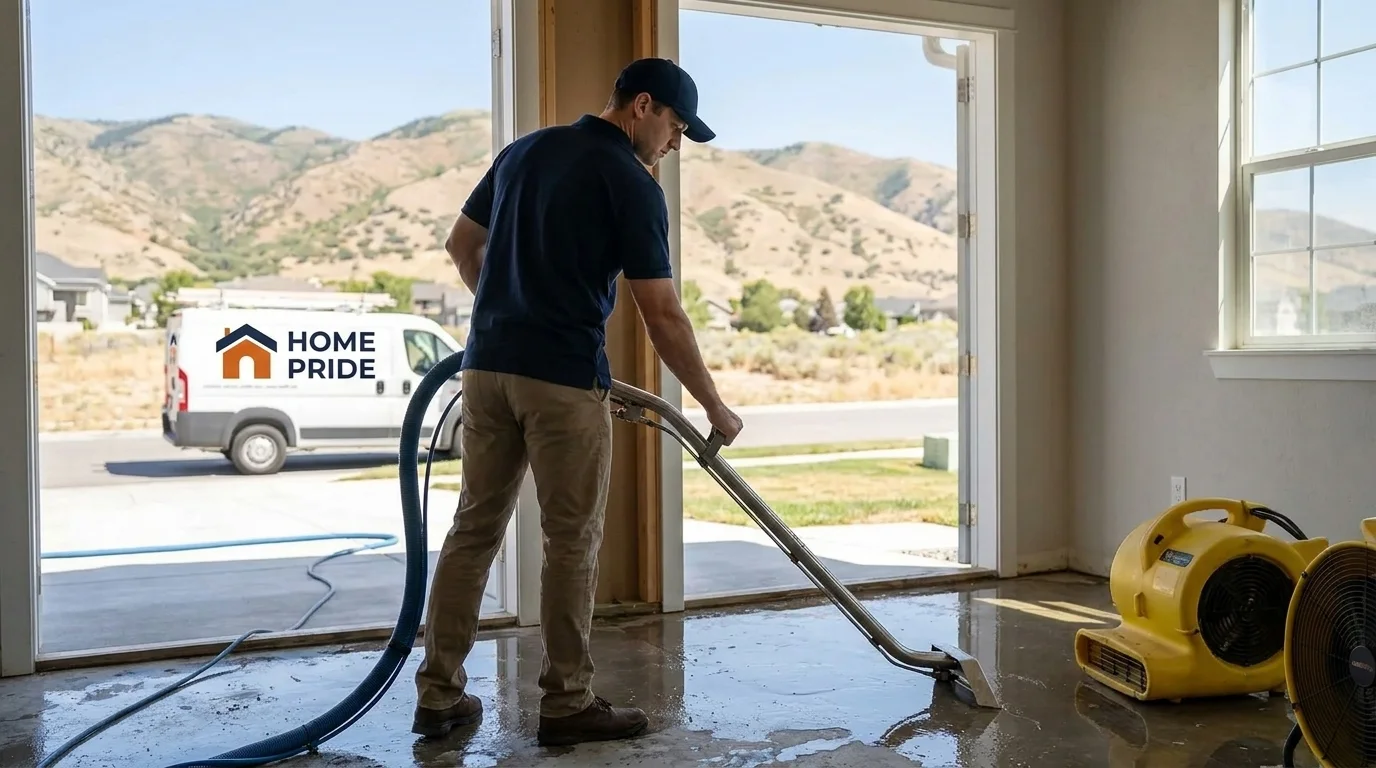
24/7 Emergency Flood Damage Restoration in Saratoga Springs
24/7 emergency flood damage restoration in Saratoga Springs and surrounding areas. IICRC-certified, insurance billing accepted. Call (801) 995-2437.
Flood damage in Saratoga Springs? Call now for emergency service at (801) 995-2437. When floodwater enters a home, whether from spring runoff along the Jordan River corridor, a failed sump pump during a cloudburst, or overland flow across unfinished lots common in newer developments, the water carries silt, lawn chemicals, and sometimes sewage back into living spaces. That contamination level changes everything about how the cleanup has to be handled, and it’s why flood damage restoration is treated differently than a clean-water pipe leak.
What flood damage restoration actually involves
Flood damage restoration deals with Category 3 water, the industry term for water that has picked up contaminants from soil, storm drains, or sewage backflow before entering the structure. Unlike a broken supply line, floodwater has usually traveled across yards, streets, or crawlspaces, so it arrives carrying grit, bacteria, and sometimes fuel or chemical residue from garages and sheds. Materials that soak in contaminated water, drywall, carpet pad, baseboards, and often the carpet itself, generally can’t be dried and saved the way they could with clean water. The work involves controlled demolition of porous materials below the flood line, extraction of standing water, antimicrobial treatment of framing and subfloor, and a structural drying phase that’s monitored daily until moisture readings in studs and subfloor return to normal. On a typical single-story home with a few inches of flooding, that drying window runs several days to a week depending on how much material had to come out and how the HVAC and ductwork held up.
Our process
- Water source and contamination assessment. Before any equipment goes in, we identify where the water came from and classify it, since sewage-adjacent or chemical-contaminated flooding requires different PPE and disposal than storm runoff.
- Extraction and controlled demolition. Standing water is pumped and extracted first, then saturated drywall, baseboards, and flooring that can’t be sanitized are removed to the height the water reached, often called the flood cut.
- Cleaning and antimicrobial application. Exposed studs, subfloor, and slab are cleaned and treated to address the bacteria and organic matter floodwater leaves behind, not just the moisture.
- Structural drying with daily monitoring. Air movers and dehumidifiers run until moisture meters confirm framing and subfloor are back to a dry standard, with readings logged for the insurance file.
- Documentation for the claim. Photos, moisture logs, and a written scope are compiled throughout, since flood claims tend to draw more scrutiny from adjusters than a simple appliance leak.
What separates a good flood damage response from a bad one
The most common mistake is treating floodwater like clean water, drying materials that should have been removed because they can’t be sanitized, only to see odor or mold surface weeks later. A careful crew pulls baseboards and checks behind them, pulls back carpet rather than drying over it, and inspects wall cavities for wicking even when the surface drywall looks fine. Adjusters reviewing flood claims typically look for documented moisture readings at multiple points, photos of the flood line before demolition, and a clear line between what was removed and why. Skipping the antimicrobial step, or applying it without removing enough contaminated material first, is another shortcut that shows up later as persistent odor or a callback. We carry IICRC certification and hold Utah contractor license RC-25-0737, and every flood job gets a written scope before demolition starts so there’s a clear record of what came out and why.
What does flood damage restoration cost?
Costs vary with how much water entered, how long it sat before cleanup started, and how much demolition is needed to remove contaminated materials. A key point many homeowners don’t expect: standard homeowners insurance typically does not cover flood damage from rising water or storm runoff, that usually requires a separate flood policy through the National Flood Insurance Program, while damage from an internal failure like a sump pump backup may fall under a standard policy depending on its wording. Every loss is different, which is why we provide a written scope of work and cost estimate before any work begins.
| Scenario | Typical range |
|---|---|
| Single room, shallow flooding, minimal demo | $1,500 - $4,000 |
| Multi-room flooding with flood cut and drywall removal | $4,000 - $9,000 |
| Finished basement flood with flooring and framing exposure | $8,000 - $18,000 |
| Whole-floor flooding with contents loss and antimicrobial treatment | $15,000 - $30,000+ |
Seasonal & regional considerations
Saratoga Springs sees its highest flood risk during spring snowmelt, when runoff from the Wasatch Front can overwhelm yard grading and window wells faster than homeowners expect, and during the occasional summer cloudburst that drops more rain than the storm drains in newer subdivisions can carry. Homes built on a slab in the newer developments east of the lake are especially prone to water finding its way in through expansion joints and utility penetrations rather than obvious cracks, which means a flood response here often includes checking areas that don’t look wet at first glance.
Service area
We respond to flood damage calls throughout Saratoga Springs and the surrounding Utah County communities, including Eagle Mountain, Lehi, American Fork, and the Lindon and Pleasant Grove areas. Local terrain, from lakefront lots to foothill runoff paths, factors into how quickly we expect water to spread and where it tends to collect.
If water has already come through the walls or up through the floor, don’t wait for it to look worse before calling. Schedule your flood damage assessment with Home Pride Restoration and Cleaning at (801) 995-2437 and get a written scope before any demolition starts.
Frequently Asked Questions
Does homeowners insurance cover flood damage restoration?
Why can't flood-soaked carpet and drywall just be dried out?
How long does flood damage restoration typically take?
What should I do before the restoration crew arrives after a flood?
Does flooding always lead to mold?
Looking for the best flood damage restoration company in Saratoga Springs?
Home Pride Restoration and Cleaning provides licensed and insured flood damage restoration in Saratoga Springs, UT and the surrounding area, and has served local property owners since 1997. Customers rate us 5.0 out of 5 stars across 36 Google reviews. We answer calls 24/7 — call (801) 995-2437 for immediate help.
Need Flood Damage Restoration now?
We respond 24/7 across Saratoga Springs and surrounding UT cities.
Related Coverage
- Our Restoration Services
- Contact Home Pride Restoration and Cleaning
- Restoration Services in Alpine
- Restoration Services in American Fork
- Restoration Services in Benjamin
- Restoration Services in Bluffdale
- Restoration Services in Cedar Fort
- Restoration Services in Cedar Hills
- Restoration Services in Draper
- Restoration Services in Eagle Mountain
- Restoration Services in Fairfield
- Restoration Services in Heber City
- Restoration Services in Herriman
- Restoration Services in Highland