
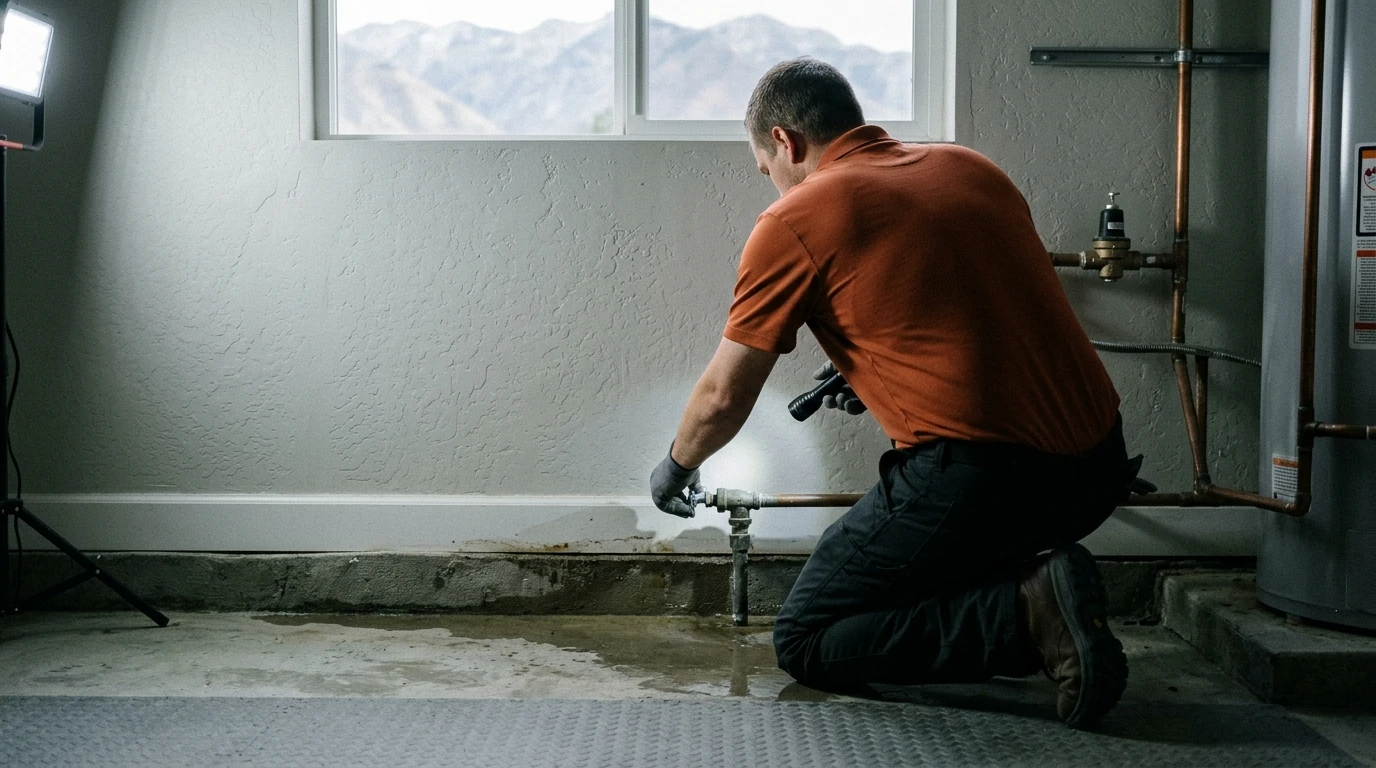
TL;DR: If a pipe just burst in your Saratoga Springs home, shut off the main water valve and the breaker to any flooded outlets first. Call a plumber to stop the leak, then call a water damage restoration company to start extraction and drying within the hour. You need both calls, not one, because a stopped pipe doesn’t undo standing water and drywall that’s already soaking it in.
You just heard the hiss, or you walked into a room with water spreading across the floor and you don’t know which number to dial first. That confusion costs time, and with a burst pipe, time is the thing you can’t get back. Here’s the order that actually protects your home, from the first 60 seconds through the insurance call.
What should you do in the first 60 seconds?
Shut off the main water supply valve immediately, then cut power to any outlets or fixtures sitting in or near standing water. Those two moves stop the flooding from getting worse and remove the shock hazard before anyone else walks into the room.
The main shut-off is usually near the water meter or where the line enters the house, often in the garage, a utility closet, or the basement. If you don’t know where yours is, find it today, before this happens again. Once the water’s off, move anything valuable off the floor and out of the spray path. Don’t step into standing water near outlets or a water heater until the breaker’s off.
If the water is coming from the ceiling or a wall you can’t access, stop guessing and move to the next step. You don’t need to find the exact break before you make the calls below.
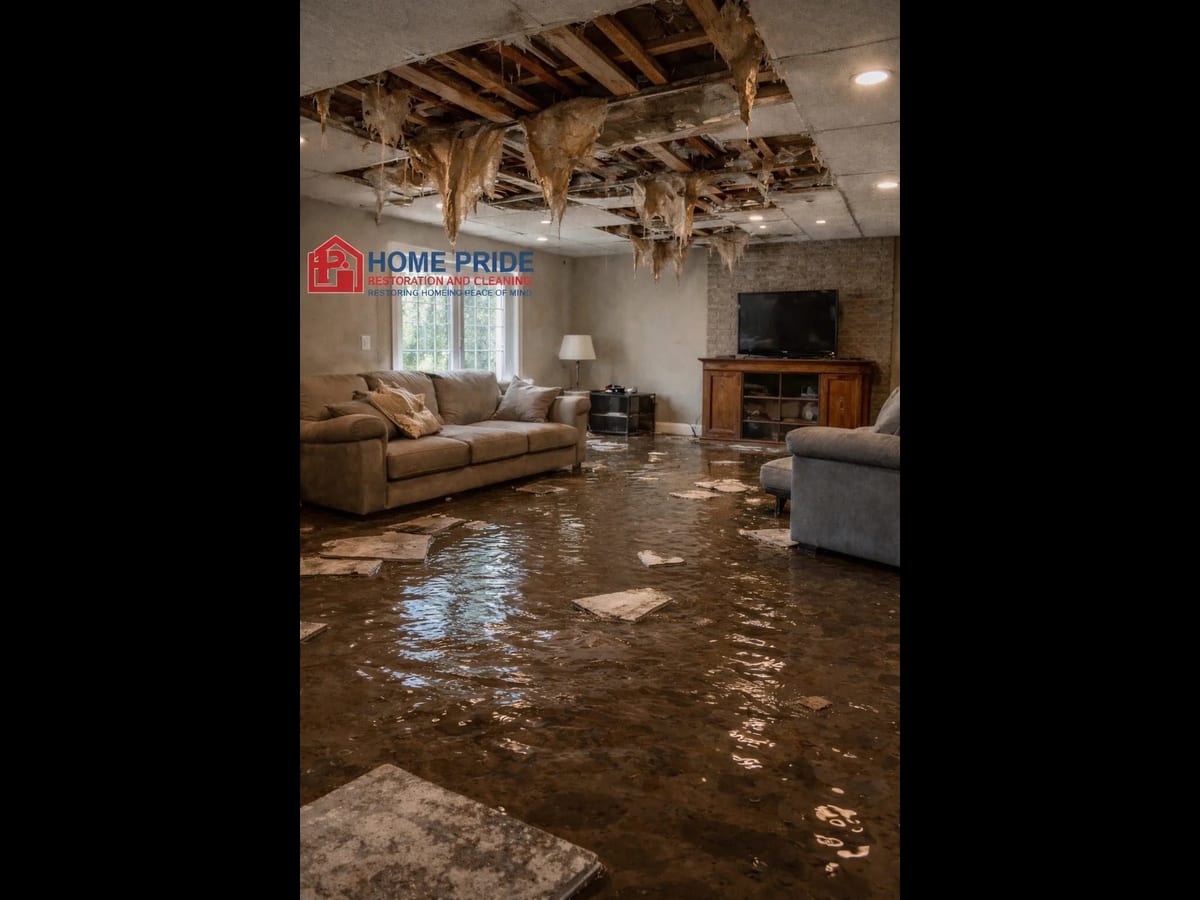
Recent job photo from Home Pride Restoration.
Who do you call first, a plumber or a restoration company?
Call a plumber first to physically stop the source, then call a water damage restoration company right after, ideally within the same hour. A plumber fixes the pipe; a restoration crew extracts the water and starts drying the structure, and neither job substitutes for the other.
Think of it as two separate problems happening at once. The plumber’s job ends when the leak stops. But water has already soaked into your drywall, subfloor, and baseboards, and that keeps damaging the house and feeding mold growth whether or not the pipe is fixed. The EPA notes mold can begin growing within 24 to 48 hours on wet building materials, so the clock on water extraction starts the moment the water hits the floor, not when the plumber shows up.
This is the part Home Pride Restoration handles: truck-mounted water extraction, structural drying with air movers and LGR dehumidifiers, and documentation of the loss for your insurance claim. They don’t do the plumbing repair itself, but once the source is stopped, their crew’s job is making sure the water doesn’t turn into a bigger, moldier, more expensive problem three weeks from now. If you’re not sure whether the damage is bad enough to need both, a quick burst pipe emergency checklist walks through what to check before you decide.
What happens in the first 24 hours after you call?
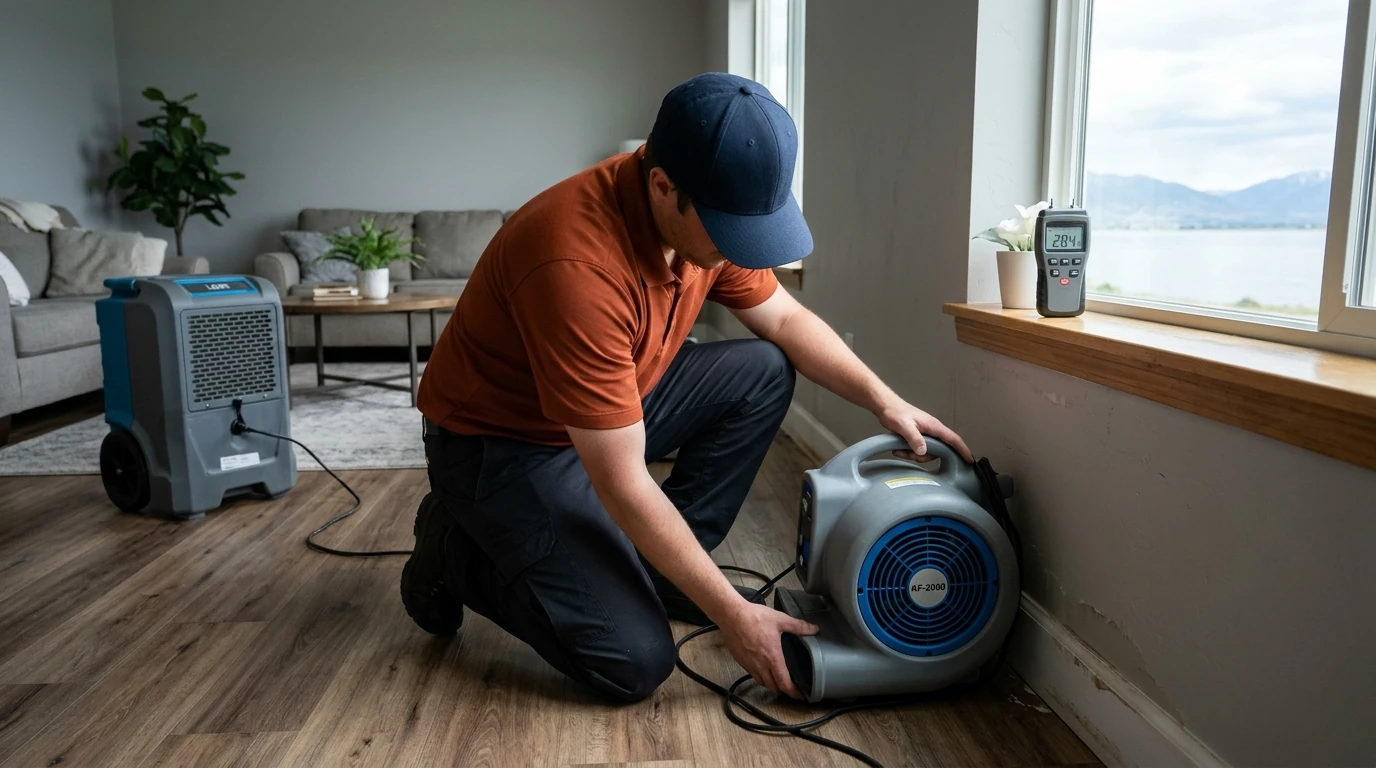
A restoration crew arriving at a fresh burst pipe starts with extraction, then moves straight into moisture mapping and equipment placement, usually within the same visit. The goal is getting wet materials dry before the 24 to 48 hour mold window closes.
First, they pull standing water with truck-mounted or portable extraction units. Next, a technician checks moisture levels in the drywall, subfloor, and baseboards with a moisture meter, marking how far the water traveled, often farther than it looks from the surface. Based on that mapping, they place air movers and dehumidifiers to dry the space in place where possible, and pull out materials that can’t be saved, like soaked carpet pad or swollen baseboard. Most pipe breaks are clean, Category 1 water when the crew arrives quickly, meaning it’s safe to dry rather than fully demo, but that window closes fast if the water sits. For a fuller walkthrough of what that first day looks like, see what to do in the first 24 hours after water damage.
Will homeowners insurance cover this?
Most standard homeowners policies cover sudden, accidental water damage from a burst pipe, but they typically exclude damage from gradual leaks or long-term neglect. The distinction matters: a pipe that split overnight from a hard freeze is usually covered; a slow drip you’d been meaning to fix for months usually isn’t.
Document the damage with photos before anything gets moved or torn out, and keep every receipt from the plumber and the restoration crew. Insurers expect homeowners to mitigate further damage promptly, so calling for extraction and drying quickly actually protects your claim rather than complicating it. Our full breakdown of what homeowners insurance covers for water damage goes through what adjusters typically look for, and the Insurance Information Institute outlines how standard policies treat sudden water losses versus gradual ones.
Once the water’s off and both calls are made, the rest is mostly patience. A written scope of work from the restoration crew, with moisture readings and photos, gives you something solid to hand your adjuster instead of guessing at the damage later.
About Home Pride Restoration
Home Pride Restoration has served Saratoga Springs and the surrounding Utah County area since 1997. The company is IICRC certified, with water damage restoration technicians Curt Eddy and Kimberly Bowman holding individual IICRC credentials, and operates on a 24/7 basis for water, fire, mold, biohazard, and storm damage restoration calls.
Need help now? Call Home Pride Restoration at (801) 995-2437.